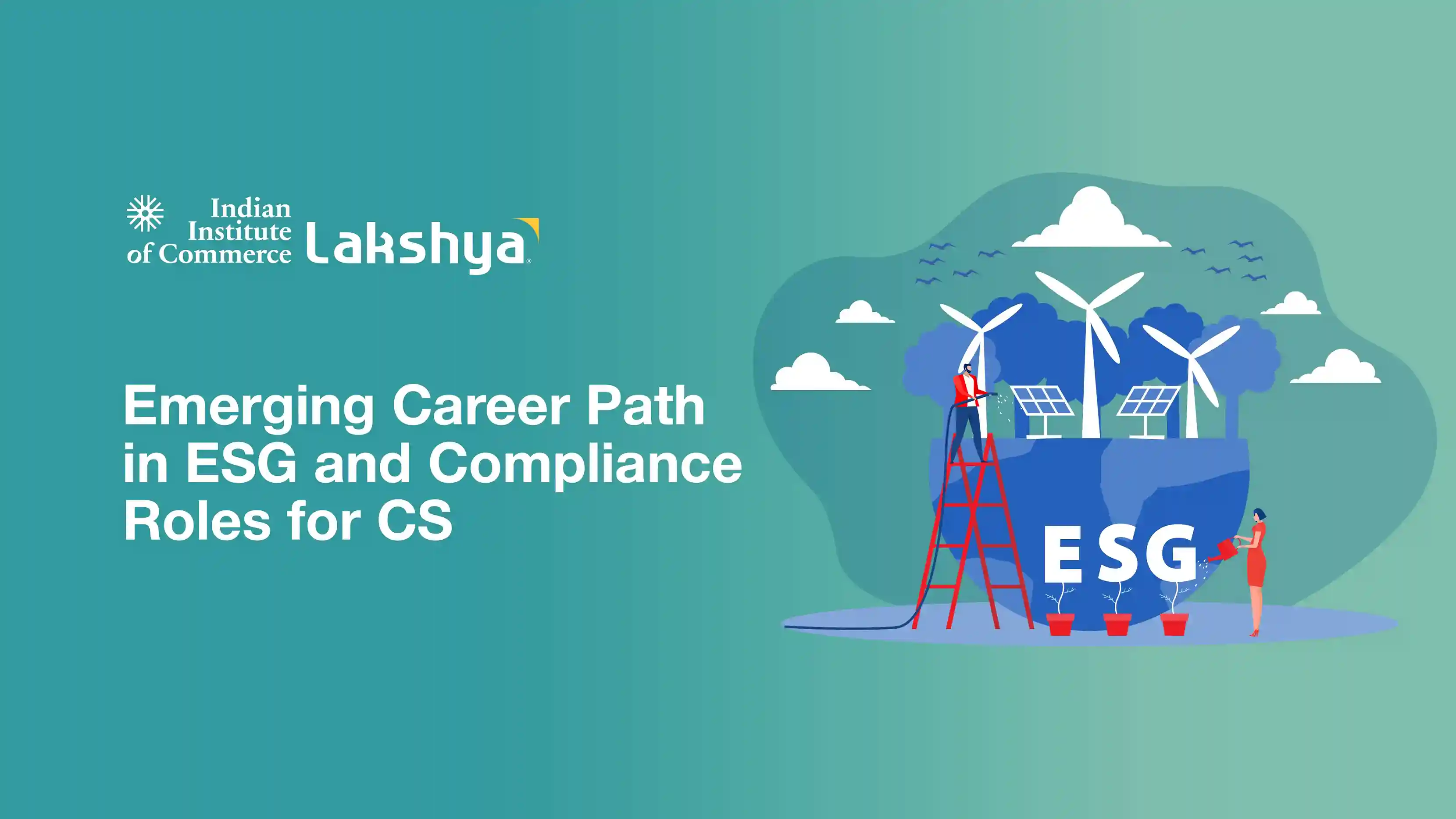
Emerging Career Path in ESG and Compliance Roles for CS
Last Updated On -24 Jul 2026
By Sajith R S
A direct approach is adopted here. If you're preparing for CS exams and you haven't heard anyone talk seriously about ESG yet, that's a gap in your coaching, not in the profession.
ESG stands for Environmental, Social, and Governance. Three years ago, most Indian companies treated it as an annual report footnote. Today, SEBI has made it a hard compliance requirement. And the kind of professional best placed to handle that requirement inside a listed company? A trained Company Secretary. Whether you've planned for it or not.
What BRSR Did to the CS Role?
SEBI's mandatory ESG disclosures and compliance roadmap, built around the Business Responsibility and Sustainability Report framework, essentially created a new workstream inside every listed company. Someone has to gather sustainability data from operations, cross-check it with what HR and finance are reporting, match it to SEBI's prescribed format, and make sure what gets published is defensible.
BRSR Core reporting and the role of Company Secretary is no longer a future consideration - it's happening now, in live companies, with real deadlines. The CS is often the person holding this together. Not because every CS signed up for it, but because the governance function owns disclosure accountability. That's just how it works.
Students who understand this early don't have to scramble to reposition later.
ESG vs Corporate Secretarial Roles
We want to be careful here because I've seen career comparison articles that oversell ESG as the exciting path versus boring secretarial work. That framing isn't accurate or fair.
Traditional secretarial compliance is stable, always in demand, and structured clearly enough that you know what the career looks like ahead of time. There's real value in that. A lot of CS professionals build long, solid careers without touching ESG specifically.
But when you compare ESG vs corporate secretarial roles on pure trajectory - particularly salary growth and seniority by mid-career - the difference starts showing around year four or five. A CS who stayed in traditional compliance work is typically a senior compliance officer by then. A CS who moved into ESG functions around the same time, even partially, is often in a sustainability reporting role or ESG advisory function with meaningfully better compensation and a wider scope of work.
That gap isn't guaranteed. It depends on where you work and what you build. But the pattern is real.
What do these roles pay at the entry level?
Salary of ESG Sustainability Manager for CS freshers entering analyst or associate-level roles sits between Rs. 4 to 7 LPA at most mid-sized Indian companies. MNCs and ESG-focused consulting firms start at Rs. 6 to 9 LPA for candidates with relevant credentials.
These numbers will keep moving up for a simple reason: SEBI's framework created demand faster than the supply of qualified people could catch up. That gap takes years to close. Right now, it's still open.
The ESG Auditor Path Nobody Talks About Enough
Specifically on how to become an ESG Auditor in India for CS professionals, this is one of the most direct and underexplored paths available right now.
SEBI has been building a framework for ESG Rating Providers and Auditors. The work involves reviewing sustainability disclosures for accuracy, checking format compliance, and verifying that governance-related data is consistent and defensible before publication. If you've done secretarial audit work, you recognise this. The domain is different; the underlying skill of reviewing disclosures against a regulatory standard is the same thing you've already trained for.
On certifications in ESG for Company Secretaries - ICSI is developing formal content and certification pathways in this area, which is the right move given how central ESG has become to the CS function. Globally, the GRI Sustainability Reporting Standards credential and the SASB FSA Credential carry genuine weight with employers in both corporate and consulting ESG roles. The CFA Institute's Certificate in ESG Investing is more finance-oriented, but useful if green finance interests you.
Pick one. Get it done. That combination of a CS qualification plus one ESG credential is enough to walk into most entry-level ESG roles with a credible profile.
Two Areas That Are Growing Quietly
The impact of Green Finance on corporate governance careers is something most students underestimate. India's green bond market has been growing steadily, and ESG-linked lending is becoming standard for large corporate borrowers. When a company issues a green bond or takes an ESG-linked loan, someone has to handle board approvals, covenant documentation, and regulatory disclosures around that financing. That work sits naturally in governance functions - which means it lands near the CS desk.
Social Audit and the role of CS in Social Stock Exchanges is another area worth knowing. SEBI's Social Stock Exchange framework requires NPOs to publish annual impact reports and go through independent social audits. CS professionals with secretarial audit exposure have transferable skills here. It's still early, competition is thin, and the regulatory structure is still forming, which is usually the right time to build familiarity.
Neither of these requires you to switch tracks immediately. Just knowing they exist helps you make smarter choices when opportunities appear.
Can You Actually Get to Chief Sustainability Officer?
Transitioning from Compliance Officer to Chief Sustainability Officer sounds like a stretch. But look at who actually holds CSO roles in Indian companies, and you'll find a lot of people from governance, legal, and compliance backgrounds. Not environmental scientists. Not MBA generalists. People who already knew how to take a regulatory obligation and make it functional inside a real organisation.
That institutional skill - building internal processes around external requirements is something CS training specifically develops. The knowledge gap is ESG domain literacy, which is learnable. Three to four years of deliberate exposure to BRSR reporting, one solid certification, and genuine involvement in your company's sustainability disclosures is a credible path toward a CSO role at a mid-sized company. Slower at the large ones. But not theoretical.
If You're Still in the Qualification Stage
You don't need to have this figured out before your exams. But a little awareness now saves a lot of repositioning later.
Read SEBI's BRSR framework once, properly. It's publicly available. When a secretarial audit comes up in your preparation, take it seriously - the skills map directly onto ESG audit work, and most students don't make that connection until they're already working. Structured programs like IIC Lakshya help students build this career awareness during preparation itself, so the career planning doesn't happen in isolation from the exam work.
The CS professionals running ESG compliance teams in 2030 are qualifying now. Most just haven't put those two things together yet. The ones who do, early, won't regret it.
Also Read:
- CS After B.Com: A Complete Guide to Building a Career in Corporate Law and Governance
- Company Secretary Scope in India: Career, Opportunities, and Future Growth
- CS Executive & Professional Pass Percentage – Full Analysis
- Top Recommended Books for CS Exams: Executive & Professional
- CS Professional Level Syllabus 2026: Complete Guide
FAQs
Is ESG a stable career option for CS freshers right now?
Yes, SEBI's mandatory disclosure requirements have created consistent demand that's still outpacing supply.
Do I need extra certification to get ESG roles after CS?
Not strictly, but a GRI or ICSI ESG credential makes your application noticeably stronger.
What's the actual difference between an ESG Auditor and a Sustainability Manager?
Auditors independently verify ESG disclosures; Sustainability Managers run ESG strategy and reporting from inside the company.
Has ICSI formally added ESG to the CS professional development framework?
Yes, ICSI has introduced ESG modules and is building toward structured certification offerings.
Q5. How realistic is a shift from compliance to ESG within a few years of qualifying?
Very realistic, most CS professionals make a meaningful transition within two to four years with targeted upskilling and hands-on BRSR involvement.
Related Blogs