
CPA After M.Com
Last Updated On -19 Aug 2026
By IIC Lakshya

After completing an M.Com degree, many students begin exploring professional certifications that can enhance their career prospects in accounting and finance. One of the most globally recognised qualifications for accounting professionals is the CPA (Certified Public Accountant). Pursuing CPA after M.Com can be a strategic move for graduates who want to expand their expertise and work with multinational organizations.
The CPA qualification, administered by the American Institute of Certified Public Accountants, is widely respected in the global accounting industry. It focuses on areas such as financial reporting, auditing, taxation, and business regulations, making it highly relevant for professionals seeking international career opportunities.
Why Pursue CPA After M.Com?
An M.Com degree provides strong academic knowledge in accounting, finance, and business management. However, many employers today also look for professional certifications that demonstrate practical expertise and global accounting standards.
CPA complements an M.Com degree by adding specialised knowledge and global credibility. It also helps professionals develop advanced analytical skills and a deeper understanding of international financial regulations.
For students aiming to work with multinational corporations or global accounting firms, CPA can significantly improve career prospects.
Eligibility for CPA After M.Com
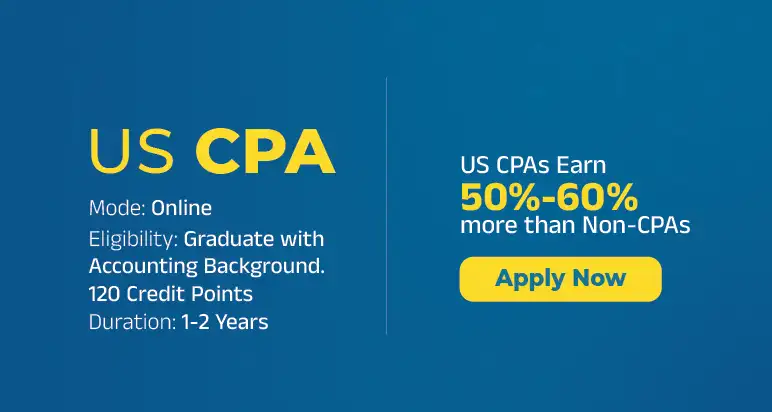
M.Com graduates generally meet the educational requirements needed to pursue CPA. However, CPA eligibility varies slightly depending on the US state board through which a candidate applies.
Typically, candidates need:
-
A bachelor’s degree or higher qualification
-
A specific number of accounting and business credits
-
Approval from a US state board of accountancy
Since M.Com is a postgraduate degree in commerce, it often helps candidates fulfill the required credit criteria, although evaluation by a credential assessment agency may still be required.
CPA Exam Structure
The CPA exam consists of four sections designed to test a candidate’s knowledge across key accounting and business areas.
These sections include:
-
Financial Accounting and Reporting (FAR)
-
Auditing and Attestation (AUD)
-
Regulation (REG)
-
Business Environment and Concepts (BEC)
Candidates must pass all four sections within the allowed timeframe to earn the CPA qualification.
How Long Does CPA Take After M.Com?
One of the major advantages of CPA is its relatively shorter completion time compared to many other accounting qualifications.
With consistent preparation, most candidates complete the CPA exam within 12 to 18 months. The exact timeline depends on the candidate’s study schedule and professional commitments.
Career Opportunities After CPA
CPA certification opens the door to a wide range of career opportunities in accounting, auditing, taxation, and financial consulting. Professionals with CPA qualifications are highly valued by multinational companies, consulting firms, and global accounting networks.
Common career roles include:
-
Auditor
-
Tax Consultant
-
Financial Analyst
-
Accounting Manager
-
Compliance Specialist
-
Finance Director
CPA professionals are especially sought after by companies that follow US accounting standards or operate internationally.
Salary Potential After CPA
CPA certification significantly improves earning potential compared to holding only an M.Com degree. In India, CPA-qualified professionals working in multinational firms often receive competitive salaries, particularly in roles related to financial reporting and regulatory compliance.
Globally, CPAs are among the most respected and well-compensated professionals in the accounting industry.
Is CPA After M.Com Worth It?
For students who want to build a global career in accounting and finance, pursuing CPA after M.Com is a valuable investment. The qualification strengthens technical knowledge, enhances credibility, and improves career mobility.
When combined with academic qualifications such as M.Com, CPA provides both theoretical and professional expertise—an attractive combination for employers in the finance sector.
Elevating Your Career: M.Com to CPA
Transitioning from an M.Com to a US CPA designation is a strategic move that bridges your academic foundation with the specialized, global technical expertise demanded by top-tier multinational corporations. By leveraging the industry-aligned mentorship at IIC Lakshya, you can master the CPA’s rigorous financial reporting and auditing standards, effectively positioning yourself for high-impact leadership roles like Finance Director or Controller. This professional qualification not only maximizes your earning potential but also provides the international mobility necessary to thrive in today's interconnected finance sector.
FAQs on CPA After M.Com
Can I pursue CPA after completing M.Com?
Yes, M.Com graduates generally meet the educational eligibility requirements to pursue CPA.
Is CPA better than M.Com alone?
CPA adds professional expertise and global recognition, which can significantly improve career opportunities.
How long does CPA take after M.Com?
Most candidates complete the CPA exam within 12 to 18 months with consistent preparation.
Can CPA help me work abroad?
Yes, CPA is globally recognised and valued by multinational organizations and international accounting firms.
Do I need work experience for CPA?
Some US state boards require work experience to obtain the CPA license, although exam eligibility may not always require it.
Related Blogs