Top 10 Courses After MCom in 2026: Fees, Duration & Careers
Last Updated On -29 Sep 2026
By IIC Lakshya

So, you have finally tossed that graduation cap in the air. You have your Master of Commerce (MCom) degree in hand. First off, congratulations! That is no small feat. You have spent years crunching numbers, understanding balance sheets, and diving deep into economic theories.
But let's undertand the reality. The celebration often comes with a side serving of panic. You are standing at a career pathway with multiple options to choose, looking at the different career path you might be wondering, "What to do after M.Com ?"
It is a common dilemma among the fresh MCom graduates. An MCom is a fantastic foundation, but in today's high-competitive corporate world, it is often treated as the minimum requirement rather than the complete requirement. To truly stand out, command a higher salary, or land that corner office, you often need a specialized professional qualification to go with it.
Whether you dream of working in one of the Big 4, managing global risks, or becoming a CFO, the right course can be your rocket fuel. To save you from endless Google searches and confusion, We have curated a list of the top 10 courses after MCom that are trending in 2026.
1. Chartered Accountancy (CA) – The Indian Gold Standard
Let us start with the titan of commerce courses in India. If you are serious about accounting, auditing, and taxation, the CA is still the most prestigious badge you can wear. It is rigorous, it demands dedication, but the respect it commands is unparalleled.
For an MCom graduate, the good news is you don't have to start from scratch. You get a direct entry route, skipping the Foundation level.
Eligibility
As a commerce post-graduate, if you have secured a minimum of 55% marks in your MCom, you are eligible for the Direct Entry Scheme. This means you can jump straight into the Intermediate level.
Duration
Approximately 3 years. This includes the Intermediate exams, the mandatory 2 years of practical training (articleship) as per the new scheme, and the Final exams.
Approximate Fees
The registration and exam fees payable to ICAI are relatively low, roughly ₹50,000 to ₹70,000 over the entire course. However, coaching fees can range from ₹1.5 Lakh to ₹3 Lakh depending on the institutes you choose.
Key Subjects
- Advanced Accounting
- Corporate and Other Laws
- Taxation (Direct & Indirect)
- Auditing and Ethics
- Financial Management & Strategic Management
Career Prospects & Salary
A qualified CA can work anywhere, audit firms, banks, corporate finance teams, or their own practice. Starting salaries for fresh CAs typically range from ₹8 Lakh to ₹12 Lakh per annum, with rapid growth potential.
2. ACCA (Association of Chartered Certified Accountants) – The Global Passport
Think of ACCA as the global cousin of the Indian CA. Recognized in over 180 countries, this course is perfect if you see yourself working in MNCs or moving abroad. It is flexible, comprehensive, and very highly regarded in the UK, Canada, Dubai, and Singapore.
The best part? Your MCom degree earns you significant exemptions.
Eligibility
You can register after 12th grade, but as an MCom graduate, you are eligible for exemptions in up to 9 out of the 13 papers (depending on the university). This is a massive advantage.
Duration
Because of the exemptions, an MCom graduate can often finish ACCA in just 1 to 1.5 years.
Approximate Fees
Total costs (including registration, subscription, exam fees, and coaching) usually fall between ₹2 Lakh to ₹3.5 Lakh.
Key Subjects
- Strategic Business Reporting
- Strategic Business Leader
- Advanced Financial Management
- Advanced Audit and Assurance
- Performance Management
Career Prospects & Salary
ACCA members are in high demand by the Big 4 (Deloitte, PwC, EY, KPMG) and multinational banks. You can expect a starting package of ₹6 Lakh to ₹9 Lakh per annum in India, with significantly higher packages overseas.
3. CMA USA (Certified Management Accountant)
If you prefer making financial decisions over auditing them, CMA USA is your calling. Unlike traditional accounting which looks at the past (auditing), management accounting looks at the future (budgeting, forecasting, strategy). It is a short, crisp, and high-impact qualification.
Eligibility
A bachelor's degree is the minimum requirement, so your MCom makes you over-qualified in a good way. You also need two years of relevant work experience, which can be completed after passing the exams.
Duration
This is one of the fastest certifications. Most students complete the two exams in 6 to 9 months.
Approximate Fees
The total cost is around ₹1 Lakh to ₹1.5 Lakh, covering IMA membership, entrance fees, exam fees, and study materials.
Key Subjects
- Financial Planning, Performance, and Analytics
- Strategic Financial Management
- Cost Management
- Internal Controls
- Corporate Finance
Career Prospects & Salary
CMAs work in corporate finance, financial planning and analysis (FP&A), and costing. Companies like Amazon, Apple, and Accenture hire CMAs aggressively. Expect a starting salary of ₹7 Lakh to ₹10 Lakh per annum.
4. CPA (Certified Public Accountant) – The US Gold Standard
The CPA is to the United States what CA is to India. It is the highest accounting credential in the US. With more US-based companies establishing their finance back-offices in India, the demand for CPAs here has exploded.
Eligibility
This is tricky. To sit for the CPA exam, you generally need 120 credits, but to get the license, you need 150 credits. In the US education system, one year of university equals 30 credits. An Indian BCom (3 years) + MCom (2 years) usually gives you enough credits to meet the 150-credit rule comfortably.
Duration
There are only 4 exams. Dedicated students often finish them in 12 to 18 months.
Approximate Fees
It is an expensive investment. Between exam fees, international testing fees, and review courses (like Becker or Miles), expect to spend ₹3 Lakh to ₹4 Lakh.
Key Subjects
- Auditing and Attestation (AUD)
- Financial Accounting and Reporting (FAR)
- Taxation and Regulation (REG)
- Business Analysis and Reporting (BAR) / Information Systems (ISC) / Tax Compliance (TCP)
Career Prospects & Salary
CPAs are highly paid. You can work in US taxation, US GAAP auditing, and financial consulting. Starting salaries often hover around ₹8 Lakh to ₹11 Lakh per annum.
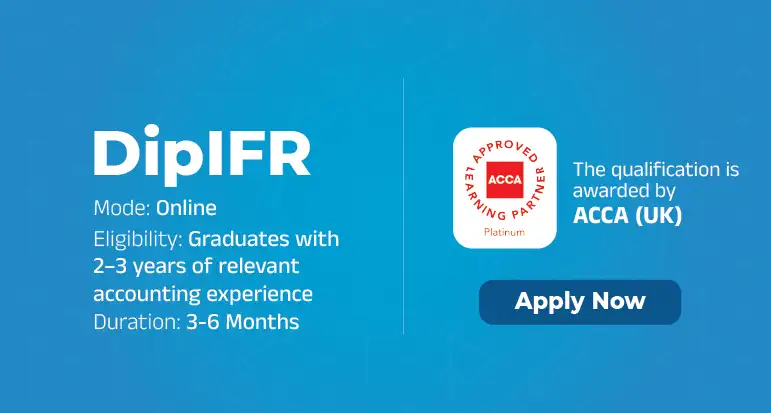
5. Dip IFRS (Diploma in International Financial Reporting) – The Specialist
The world of accounting speaks one language: IFRS (International Financial Reporting Standards). As India converges its accounting standards (Ind AS) with IFRS, companies are desperate for experts who understand these complex global rules. This diploma by ACCA is a fantastic value-add to your MCom.
Eligibility
If you are an MCom graduate, you usually need 2 years of relevant accounting experience to register for this diploma. If you are already a CA, you can join immediately.
Duration
It is a single exam held twice a year. You can prepare for it in 3 to 6 months.
Approximate Fees
Very affordable. The exam fee is around £185 (approx. ₹20,000), plus coaching costs. Total: ₹40,000 to ₹50,000.
Key Subjects
- International Financial Reporting Standards (IFRS)
- Consolidated Financial Statements
- Financial Reporting Presentation
Career Prospects & Salary
This is usually a secondary qualification that boosts your primary degree. It can hike your salary by 20-30% if you are working in financial reporting.
6. CFA (Chartered Financial Analyst) – The Investment Banker's Dream
If your heart beats for stock markets, portfolio management, and equity research, forget everything else and look at the CFA. It is widely considered the toughest and most respected finance designation in the world.
Eligibility
You need a bachelor's degree to register. As an MCom, you are fully eligible. No prior work experience is needed to start Level 1.
Duration
There are three levels (Level I, II, III). On average, it takes candidates 2.5 to 4 years to clear all three.
Approximate Fees
It varies based on exchange rates and registration timing, but the budget is roughly ₹2.5 Lakh to ₹3.5 Lakh for all three levels combined.
Key Subjects
- Ethical and Professional Standards
- Quantitative Methods
- Economics
- Financial Statement Analysis
- Equity Investments & Fixed Income
- Derivatives & Alternative Investments
Career Prospects & Salary
CFAs work as equity research analysts, portfolio managers, and investment bankers. Entry-level pay is strong, often starting at ₹6 Lakh to ₹12 Lakh, but senior charter-holders earn exponentially more.
7. MBA in Finance – The Corporate Leader
Sometimes, you want to move beyond pure numbers and into management. An MBA in Finance teaches you how to run a business, manage people, and understand marketing and operations alongside finance. However, the value of an MBA depends heavily on where you do it.
Eligibility
50% in graduation/post-graduation and a valid score in entrance exams like CAT, XAT, GMAT, or MAT.
Duration
Usually a 2-year full-time program.
Approximate Fees
This varies wildly. A top-tier IIM might cost ₹20 Lakh to ₹25 Lakh, while tier-2 colleges might cost ₹8 Lakh to ₹12 Lakh.
Key Subjects
- Corporate Finance
- Marketing Management
- Human Resource Management
- Business Strategy
- Operations Research
Career Prospects & Salary
An MBA from a top B-school is a golden ticket. You can enter leadership roles, consulting, or general management. Salaries can range from ₹10 Lakh to ₹25 Lakh+ per annum depending on the institute's brand value.
8. Company Secretary (CS) – The Compliance Guardian
Corporate governance is a massive buzzword today. Companies need strict adherence to legal norms, and the Company Secretary is the guardian of these norms. If you have an inclination towards law and theory rather than practical accounts, this is for you.
Eligibility
Post-MCom, you can directly enter the Executive Programme (Level 2), skipping the entrance test (CSEET).
Duration
2.5 to 3 years.
Approximate Fees
Similar to CA, the institutional fees are low (approx ₹30,000 to ₹40,000), but coaching costs will add to this.
Key Subjects
- Company Law
- Securities Laws & Capital Markets
- Economic, Business and Commercial Laws
- Tax Laws
- Corporate Restructuring
Career Prospects & Salary
Every listed company in India is legally required to have a CS. You can become a Compliance Officer or Legal Advisor. Starting salaries range from ₹5 Lakh to ₹8 Lakh per annum.
9. FRM (Financial Risk Manager) – The Risk Expert
The 2008 financial crisis taught the world one thing: Risk Management is non-negotiable. FRM, offered by GARP (USA), creates experts who can predict, analyze, and mitigate financial risks. It is a niche but highly paid field.
Eligibility
There are no educational prerequisites to sit for the exam, but to get certified, you need 2 years of work experience in risk management.
Duration
Two parts (Part I and Part II). You can realistically finish both in 1 year.
Approximate Fees
Around ₹1.2 Lakh to ₹1.5 Lakh.
Key Subjects
- Foundations of Risk Management
- Quantitative Analysis
- Market Risk Measurement
- Credit Risk Measurement
- Operational and Integrated Risk Management
Career Prospects & Salary
Banks, insurance companies, and consulting firms hire FRMs. You can work as a Risk Analyst or Credit Manager. Salaries start at ₹7 Lakh to ₹11 Lakh per annum.
10. PhD or M.Phil in Commerce – The Academic Route
Not everyone wants to work in a corporate glass building. Some of you have a passion for teaching, research, and academia. If you love digging deep into subjects and want to shape the next generation of students, a Doctorate is the path.
Eligibility
A Master's degree (MCom) with at least 55% marks. You usually need to clear the UGC-NET (National Eligibility Test) to apply for PhD programs in Indian universities.
Duration
A PhD is a marathon, taking 3 to 5 years to complete.
Approximate Fees
In government universities, fees are nominal (₹20,000 to ₹50,000 per year). Private universities charge significantly more.
Key Subjects
- Research Methodology
- Advanced Statistical Analysis
- Thesis writing on specialized topics (e.g., Microfinance, Banking Reforms, Consumer Behavior)
Career Prospects & Salary
Clearing UGC-NET and getting a PhD opens the door to becoming an Assistant Professor. In government colleges, starting salaries are governed by pay commissions and are quite lucrative, often starting at ₹55,000 to ₹70,000 per month plus benefits.
Final Thoughts: Which One Should You Pick?
Choosing the right courses after Mcom is crucial for the career growth. If you love the logic of balance sheets and want a safe, prestigious Indian career, CA is your home. If you dream of working in London or Dubai, pack your bags for ACCA. If you want to analyze stock trends, CFA is the only way to go. And if you want to lead teams and manage businesses, aim for an MBA.
Pro Tip: Forge your path where you want to go, don't follow what the other people are doing. Look at the syllabus of these courses. Read a few chapters. See what excites you. You are going to spend the next few years studying this material. make sure it's something you actually enjoy.
Your MCom was the foundation. These courses are giving the career growth you are looking for. The market in 2026 is looking for specialists, not generalists. Pick your niche, work hard, and the career you dream of is entirely within your reach. IIC Lakshya is there to help you to achieve your goal and help you to take the informed decision regarding your career.
Good luck!
Related Blogs