
Best Courses After BCom in 2026
Last Updated On -08 Aug 2026
By IIC Lakshya
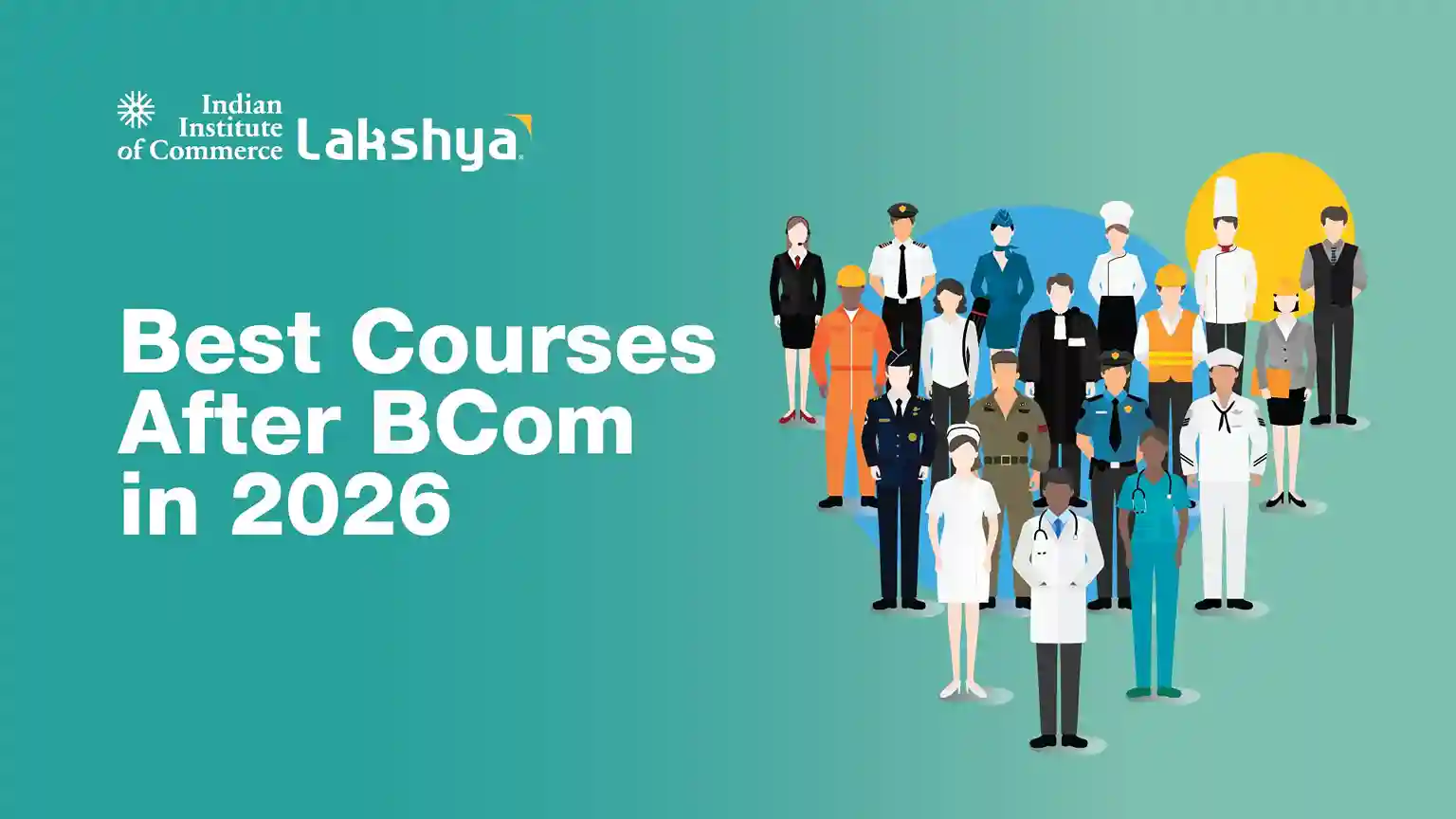
Completing a BCom which is also known as Bachelor of Commerce is a major achievement for the students building their careers in accounting, finance, taxation, auditing, corporate law, banking, and business management. A BCom degree gives you a strong foundation in subjects like financial accounting, business economics, business law, taxation, and management principles.
However, in today’s competitive job market, many students realize that BCom alone may not be enough to secure high-paying roles, rapid promotions, or global career opportunities. Employers now prefer candidates who are professionally certified, skill-oriented, and industry-ready.
That's the reason why pursuing the right professional course after BCom can completely transform your career. Whether you want to become a Chartered Accountant, work in multinational companies, enter corporate leadership, or build expertise in taxation and compliance, there are multiple options available.
In this comprehensive guide, we will explore the best courses after BCom.. We will also cover the career path of the Bcom student whether they want to go for the Management role of the finance or in Banking sector. Courses after Bcom will be dependent on the job roles, salary potential, and the career path you are targeting in the long run.
Why Should You Do a Course After BCom?
A BCom degree gives you theoretical knowledge, but professional courses add specialization, credibility, and practical expertise and build a strong foundation in the academic topics in commerce. In many cases, these courses tend to be different based on the level of the job role, an entry-level job and getting a high-growth career role.
Here are the biggest reasons to pursue a professional finance certification or course after BCom:
- Financial Professional qualifications make your resume stronger and open many opportunities in the top Multinational companies, Big 4 firms, banks, and financial consulting companies.
- Financial Certified professionals generally earn more than Financial non-certified graduates, especially in the job roles like audit, taxation, financial analysis, and corporate finance.
- With the right qualification, you can move to senior roles like Finance Manager, Tax Consultant, Financial Controller, or Compliance Head much faster, which is ideal for long term career growth.
- Courses like ACCA, CMA USA, CPA, and EA are globally recognised and can help you build an international career in finance and management.
- Professional certifications build trust, especially in finance roles where accuracy, compliance, and ethics matter.
Top Career Paths After BCom
Before choosing a financial certification or course, it is important to understand the major career paths available after BCom. Most professional courses fall under these categories:
- Accounting & Audit (CA, ACCA, CPA)
- Management Accounting & Corporate Finance (CMA India, CMA USA)
- Taxation (CA, EA, CPA)
- Corporate Law & Compliance (CS)
- Investment & Financial Markets (CFA, MBA Finance)
- Business Leadership & Management (MBA)
- Skill-Based Careers (Financial Modelling, Data Analytics, SAP)
Now, let’s explore the best financial courses after Bcom in detail.
1) ACCA (Association of Chartered Certified Accountants)
ACCA is one of the most popular international professional accounting qualifications. It is widely recognized across the UK, UAE, Singapore, Canada, Australia, and many other countries. Choose ACCA after Bcom if you want to work for the Global finance companies.
BCom students who already have a strong foundation in accounting and finance, making ACCA a smooth next step. Many universities and BCom programs also help students understand core concepts that are useful for ACCA papers.
ACCA covers a broad range of topics, including Financial Accounting and Reporting, Audit and Assurance, Taxation, Performance Management, Financial Management, Business Strategy and Leadership, Ethics and Professional Skills
ACCA-qualified professionals can work in the audit firms, Multinational companies and with the global finance teams, Banking, financial services, consulting companies, corporate finance departments
Popular Job Roles After ACCA
- Financial Accountant
- Auditor / Audit Associate
- Tax Consultant
- Finance Analyst
- Risk and Compliance Executive
- Financial Controller (with experience)
- Finance Manager (with experience)
Who Should Choose ACCA?
ACCA is best for BCom students who are looking for international career opportunities, prefer flexible exam scheduling. Want to work in MNCs or abroad Want a professional qualification with global recognition
2) CA Chartered Accountancy
Chartered Accountancy (CA) is one of the most respected professional courses in India. It is regulated by ICAI and is known for its deep expertise in finance, taxation, auditing, and corporate laws.
CA is ideal for BCom students who want a strong professional identity and authority in India. It is also the most powerful qualification for those who want to start their own practice in audit and taxation (as per local rules).
While preparing for CA, CA course can cover Advanced Accounting, Auditing and Assurance, Direct Tax (Income Tax), Indirect Tax (GST), Corporate and Economic Laws, Financial Management and Strategic Finance and Reporting.
A CA can work in the Big 4 firms that are Deloitte, PwC, EY, KPMG. The career scope is not limited to Big4, but also they can work in the Corporate finance departments, Banks, financial institutions. A CA can do independent tax and audit practices, and work on the regulatory bodies.
Popular Job Roles After CA
The popular roles after Chartered Accountant in Practice are Tax Consultant, Statutory Auditor, Internal Auditor, Financial Controller, Finance Head / CFO
Who Should Choose CA?
CA is best for students who
- Want strong recognition in India
- Want authority in audit and taxation
- Are ready for a challenging but rewarding course
- Want long-term growth in finance leadership
3) CMA India (Cost and Management Accountant)
CMA India, regulated by ICMAI, is a strong professional course focused on cost accounting, management accounting, budgeting, and corporate finance.
If you enjoy subjects like costing, budgeting, and performance analysis, CMA India is an excellent option. It is highly valuable in manufacturing, FMCG, and corporate finance roles.
With CMA India you will learn Cost Accounting and Cost Control, Strategic Management, Corporate Financial Reporting, Budgeting and Forecasting, Performance Management, Financial Risk Management, Business Laws and Ethics
CMAs are hired in the Manufacturing industries, FMCG, retail companies, corporate finance teams, Cost audit and management departments, Business planning and budgeting teams
The job after CMA include Cost Accountant, Management Accountant, Budget Analyst, Cost Controller, Finance Executive, Financial Planning Executive
Who Should Choose CMA India?
CMA India is best for students who want to build their career in corporate finance and costing roles. CMA Students who [refer management accounting over audit. CMA India is ideal for the users who want strong career opportunities in Indian industries.
4) CMA USA (Certified Management Accountant)
CMA USA is an internationally recognized certification offered by IMA (USA). It focuses on management accounting and strategic finance. CMA USA is popular because it can be completed faster compared to many long professional courses and offers strong global career opportunities. In the CMA USA you will learn.
In the CMA USA you will learn Financial Planning and Analysis (FP&A), Cost Management, Budgeting and Forecasting, Performance Management, Internal Controls, Decision-Making and Strategic Finance.
In terms of career scope, CMA USA professionals work in the Multinational Companies and global finance teams, FP&A departments and Corporate strategy teams, Consulting and analytics roles.
The famous job Roles After CMA USA are Financial Analyst, FP&A Analyst, Cost Analyst, Finance Business Partner, Management Accountant, experienced Finance Manager
Who Should Choose CMA USA?
CMA USA is ideal for students who want global corporate finance roles and interested in analytics, budgeting and business strategy and looking for the faster international certification.
CS (Company Secretary)
CS (Company Secretary) is a highly respected professional course regulated by ICSI. It focuses on corporate laws, governance, compliance, and legal frameworks.
Why CS After BCom?
There are many reason to choose the CS after BCom, If you are interested in law, compliance, corporate governance, and board-level responsibilities, CS is one of the best options after BCom. In the Company Secretary course a student learns about Company Law, Corporate Governance, Securities Laws. Compliance Management, Legal Drafting and Documentation, Secretarial Audits
If you choose CS as a career path, you got an opportunity to work in the Corporate legal and compliance departments, Listed companies and corporate groups, Legal consulting firms, Secretarial audit firms
Job Roles After CS
The common job roles after CS that is Company Secretary, Compliance Officer, Corporate Governance Advisor, Legal and Regulatory Executive, Secretarial Auditor
Who Should Choose CS?
CS is best for students who enjoy corporate law and compliance. CS is ideal for the students who are looking for a combination of the legal + corporate career path. Also the Company secretary role is ideal for the student who wants strong career opportunities in corporate governance.
CPA (Certified Public Accountant)
CPA is a globally recognized accounting qualification, especially valuable in the USA, Canada, and Middle East markets. It focuses on accounting, auditing, taxation, and reporting.
Why CPA After BCom?
CPA is a great choice for students who want global recognition and career opportunities in international accounting and audit roles.
Career Scope After CPA
- Auditor
- Financial Accountant
- Tax Associate
- Compliance Specialist
-
Finance Analyst
Best For
Students who want international accounting roles and strong professional value.
EA (Enrolled Agent) – US Taxation Certification
EA Enrolled Agent is an IRS-authorized credential focused entirely on US taxation. It is a top course for students who want to build a career in US tax.
Why EA After BCom?
EA is ideal for students who want a specialized taxation career and want to enter the job market quickly.
Career Scope After EA
- US Tax Associate
- Tax Analyst
- Tax Preparer
- Compliance Executive
-
IRS Representation Specialist
Best For
Students who want careers in US taxation and remote/global opportunities.
MBA (Finance)
An MBA in Finance is ideal for students aiming for management roles and leadership positions.
Career Scope After MBA Finance
- Finance Manager
- Investment Banker
- Business Analyst
- Corporate Finance Executive
-
Relationship Manager
Best For
Students who want management and leadership careers in finance.
CFA (Chartered Financial Analyst)
CFA is one of the most respected certifications for investment banking and financial markets.
Career Scope After CFA
- Investment Analyst
- Portfolio Manager
- Equity Research Analyst
-
Risk Analyst
Best For
Students interested in finance markets and investments.
Skill-Based Courses After BCom
Short-term courses can boost employability quickly:
- Financial Modelling
- Advanced Excel
- Tally + GST
- Power BI
- Data Analytics
-
SAP FICO
These skills are highly valuable when combined with professional certifications.
Future-Proof Finance Career with Professional Growth
Secure a competitive advantage in global markets by mastering advanced financial strategy and compliance with IIC Lakshya. Our industry-aligned training programs provide the essential analytical insights, leadership skills, and practical expertise required to excel in high-growth corporate finance roles. Elevate your professional trajectory through our result-driven mentorship and gain the credibility needed to thrive as a future-ready finance leader.
Conclusion
After BCom, the right professional course can take your career to the next level. Whether you choose ACCA for global accounting, CA for top-level authority in India, CMA India or CMA USA for corporate finance, or CS for corporate compliance, each option has strong scope and career growth potential.
The best choice depends on your interests, strengths, and long-term career goals. With proper guidance, consistent effort, and the right training, you can build a high-growth career in finance, accounting, taxation, or corporate management.
If you want expert guidance to choose the right course after BCom and build a successful career, IIC Lakshya is there to help you with training, mentorship, and complete support.
See Also
FAQs on Courses after B.Com
What are the best professional courses to pursue after B.Com?
After B.Com, students can choose from professional courses like CA, ACCA, CPA, CMA (USA), CS, CFA, or opt for postgraduate options such as M.Com or MBA, depending on their career goals in accounting, finance, taxation, or management.
Can I pursue global professional courses after B.Com?
Yes. B.Com graduates are eligible for several global certifications such as ACCA, CPA (USA), CMA USA, and CFA, many of which also offer exemptions for commerce graduates, helping reduce study time.
Which course after B.Com offers better global career opportunities?
Courses like ACCA, CPA, CMA USA, and CFA are internationally recognised and offer opportunities in multinational companies, global accounting firms, and finance roles across countries like the US, UK, Middle East, and Europe.
Is it better to pursue a professional course or an MBA after B.Com?
It depends on career objectives. Professional courses focus on technical expertise in accounting and finance, while an MBA is more suited for leadership, strategy, and management roles. Many students also choose to combine both at different stages of their career.
How should I choose the right course after B.Com?
The right course depends on factors such as career interests, time commitment, exam structure, global exposure, cost, and long-term goals. Understanding each course’s syllabus, recognition, and job outcomes helps in making an informed decision.
Related Blogs