
ACCA Career Path in Taxation and Cross-Border Advisory
Last Updated On -05 Oct 2026
By Sajith R S
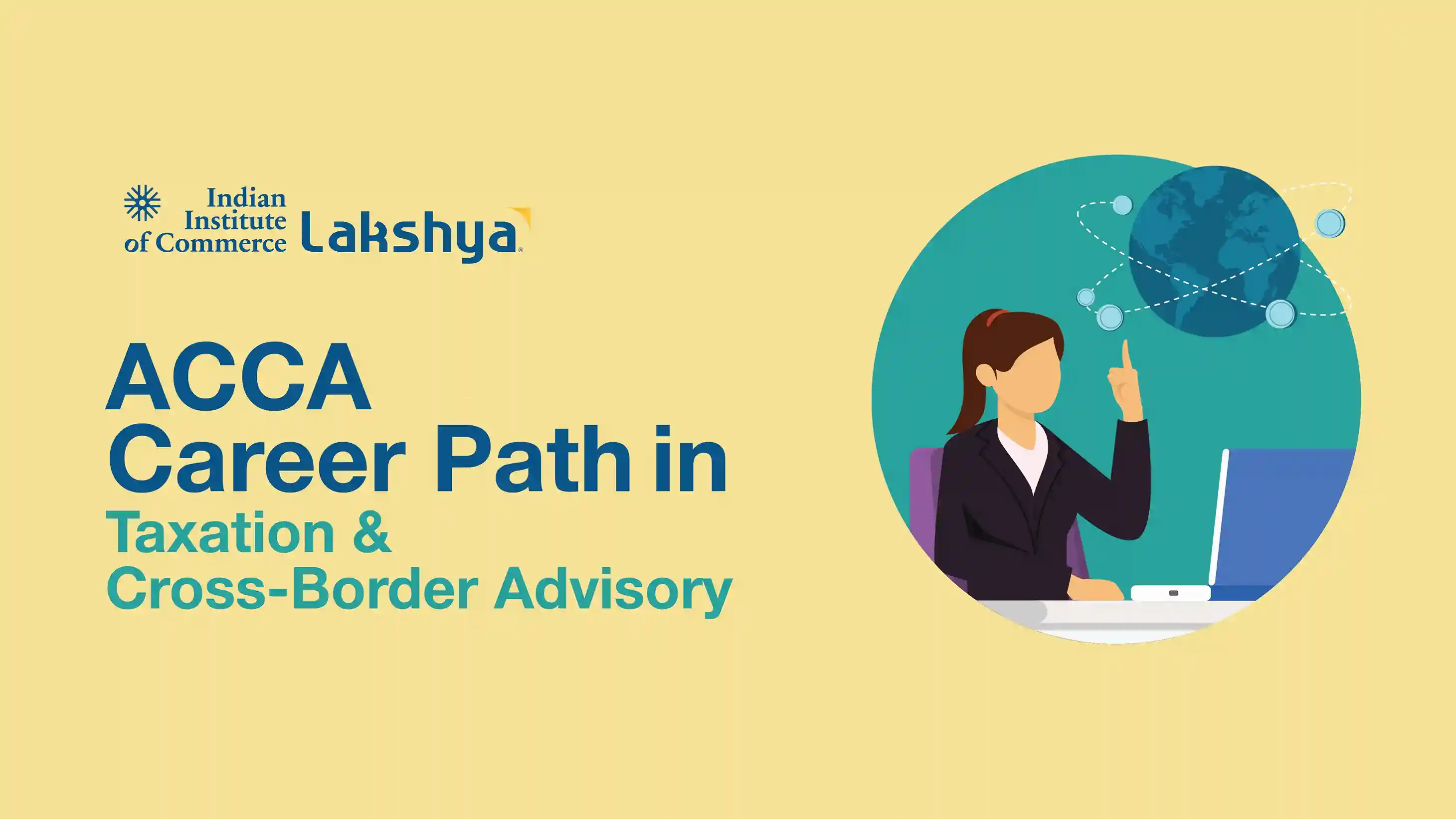
Ask any ACCA student what they plan to do after qualifying, most will say audit, some will say finance, maybe a few will mention management accounting. Taxation barely gets a mention. And that's honestly a missed opportunity, because the international taxation career path that opens up through ACCA is one of the more underrated directions in the whole qualification.
This isn't for everyone. But if numbers plus law plus global business complexity sounds interesting to you keep reading.
So Why Pick Taxation at All
When you're clearing papers one by one, it's easy to treat ACCA as a checklist. Most students don't really think about specialisation until they're at the Strategic Professional level. By then, the optional paper choices land in front of you and suddenly it matters a lot.
The Advanced Taxation paper (ATX) sits at that stage. It's one of the harder options, not because the content is impossible but because it asks you to think rather than recall. Students who go in expecting a memory-based exam come out disappointed. The paper wants you to apply - what does this tax rule actually mean for this client, in this situation?
Here's an ACCA advanced taxation paper tip that doesn't get said enough: stop treating Budget documents like they're someone else's problem. Read the Finance Act summaries. Follow what changes year to year and ask yourself, why did this change? That habit alone will take you further in ATX than solving fifty past papers will.
What Cross-Border Tax Advisory Even Is
People hear "cross-border transaction tax advisory" and imagine it's some rarefied thing that only global firms deal with. It's not. Not anymore.
Here's a real situation: an Indian mid-size manufacturing company sets up a subsidiary in Germany. Now there are transactions between them - services, royalties, goods. Each of those transactions has a tax angle. Which country taxes what? At what rate? Is there a treaty that changes the picture? That's cross-border advisory. It's happening at companies of all sizes, not just MNCs.
The double taxation avoidance agreement scope is right at the centre of this work. India currently has DTAAs with over 90 countries, these agreements basically decide which country gets to tax a particular type of income, and whether the taxpayer can claim credit for what they already paid elsewhere. A working professional or student who genuinely understands how DTAAs operate has something concrete to offer in a tax advisory conversation. That's not a small thing.
Actual Jobs Worth Knowing About
Let's get specific. The vague "many opportunities exist" framing isn't useful, so here's what actually exists:
Transfer Pricing: This is probably the most structured entry point. Transfer pricing consultant salary at the entry level (0–2 years) in India sits roughly between ₹5–9 LPA at mid-size firms. At Big 4 or large MNC tax teams with 5–8 years of experience, you're looking at ₹20 LPA and above. The work is about ensuring related-party transactions - say, between an Indian subsidiary and its UK parent are priced as if they were between unrelated parties. It sounds dry. It genuinely isn't once you're inside a live case.
Global Mobility Tax: This one's grown quietly but steadily. A global mobility tax manager handles employees who move across countries and their residency, tax treaties, social security, and something called tax equalisation (making sure an employee doesn't end up worse off financially just because they relocated). Global mobility tax manager jobs are mostly in Big 4 firms and large HR consulting outfits. Indian companies sending people abroad, MNCs posting expats here both sides need this expertise.
US Tax Roles in India: Worth a separate mention. US tax consultant roles in India have expanded significantly, especially in captive centres run by American banks, insurance companies, and tech firms. Pune, Hyderabad, Bengaluru those all have these. The roles involve US individual or corporate returns, IRC provisions, sometimes US-India cross-border planning. ACCA alone won't make you a US tax specialist that you'd likely need an Enrolled Agent credential or CPA alongside but ACCA gives you a strong technical base to build from.
Here's a rough salary reference for the market right now:
|
Role |
Experience |
Approx. Range (India) |
|
Transfer Pricing Analyst |
0–2 years |
₹5–9 LPA |
|
International Tax Associate |
1–3 years |
₹6–10 LPA |
|
Global Mobility Tax Consultant |
2–5 years |
₹10–18 LPA |
|
Senior Transfer Pricing Manager |
5–8 years |
₹20–35 LPA |
|
Cross-Border Tax Advisory Lead |
8+ years |
₹35 LPA+ |
These are indicative. Big 4 firms pay more. In-house MNC tax teams often pay slightly less but offer better hours. City matters where Delhi NCR, Mumbai, Bengaluru packages will be higher than the same role in a smaller city.
The ADIT Question - Worth It or Not
Once you're in the international tax space, you'll start hearing about ADIT - the Advanced Diploma in International Taxation from CIOT (Chartered Institute of Taxation, UK). The ADIT certification after ACCA is something a good number of experienced professionals pursue when they want to go deeper.
ADIT specifically covers tax treaty law, OECD transfer pricing guidelines, and jurisdiction-focused international tax rules. International tax specialist salary in India for someone carrying both ACCA and ADIT tends to be noticeably higher, but more than the money, it signals that this is your field, not just a department you landed in.
Honest take: ADIT is not for someone still figuring out if they like tax. It's a real commitment - multiple papers, study time, costs. If you've worked in transfer pricing or cross-border advisory for a couple of years and you know this is the direction, then yes, ADIT makes strong sense. If you're still in the early exploring phase, finish ACCA, get some experience, then revisit.
Starting from ACCA Registration
If you haven't registered yet, the ACCA course registration process starts at the ACCA Global website. You submit your qualifications, go through an exemption assessment, and get placed at the right entry point. Indian students with B.Com, BBA, or CA Foundation cleared typically receive exemptions from some Foundation papers, which saves time.
From there it's Applied Knowledge → Applied Skills → Strategic Professional. If taxation is your direction, the choices at Strategic Professional matter—ATX is, practically speaking, non-negotiable if you want to pursue this path seriously.
As an ACCA Approved Platinum Learning Partner, IIC Lakshya works with students to build solid transfer pricing and international tax fundamentals from the ground up.Rather than relying on shortcuts, our structured guidance helps you make intentional paper choices, master complex DTAA concepts, and align your technical preparation directly with live market demand.
Also Read
- The ACCA Career Landscape - Exploring Companies Hiring ACCA Professionals
- Top Countries Hiring ACCA/CPA for Big 4 Jobs in 2026
- What are the ACCA Recognized Countries and Rights?
- ACCA AFM vs APM: Which Subject Is Better for Your Career?
- CFA vs ACCA: Salary, Scope & Career Comparison 2026
Frequently Asked Questions
Can ACCA alone get me into international tax roles in India?
Yes, particularly at entry and mid-levels choosing the ATX paper and getting relevant work experience makes a real difference.
What does ADIT add after ACCA?
ADIT goes deeper into international tax treaty law and transfer pricing useful for advisory roles and recognised by major global employers.
Is transfer pricing a stable career in India?
Demand has stayed consistent and the transfer pricing consultant salary at senior levels is competitive, it's one of the more reliable international tax specialisations.
Why does DTAA knowledge matter in advisory work?
DTAA scope determines which country taxes what income and at what rate without understanding this, cross-border tax advice is incomplete.
How does ACCA registration work for Indian commerce students?
Register on the ACCA Global site, get your qualifications assessed for exemptions, and begin at the appropriate level which most B.Com graduates enter at Applied Skills.
Related Blogs