
How to Get a Dual Certification in US CPA and CMA USA?
Last Updated On -12 Oct 2026
By IIC Lakshya
In today’s global finance landscape, professionals are expected to go beyond traditional accounting roles and contribute to strategic decision-making, performance management, and leadership. This is why many finance aspirants aim for a dual certification in US CPA and CMA USA. While CPA focuses on accounting, audit, taxation, and compliance, CMA emphasizes management accounting, financial strategy, and business performance. Together, they create a powerful professional profile that is highly valued across multinational corporations, consulting firms, and global finance teams.
What is US CPA and Who Conducts It?
The US CPA (Certified Public Accountant) qualification is governed by the American Institute of Certified Public Accountants. It is considered the gold standard for accounting, audit, taxation, and financial reporting, particularly under US GAAP. CPAs are trusted for statutory compliance, assurance services, and regulatory reporting in the US and international markets.
What is CMA USA and Who Conducts It?
The CMA USA (Certified Management Accountant) is awarded by the Institute of Management Accountants. CMA focuses on management accounting, financial planning, cost management, performance evaluation, risk management, and strategic decision-making. It is especially valued in corporate finance and leadership roles.
Why Choose Dual Certification in US CPA and US CMA?
CPA and CMA complement each other rather than overlap completely. CPA builds strong expertise in external reporting, audit, and compliance, while CMA strengthens internal decision-making, budgeting, forecasting, and strategy. Professionals with both credentials are capable of handling end-to-end finance functions—from regulatory compliance to boardroom strategy.
Key reasons professionals pursue both include:
-
Broader career opportunities across accounting and management finance
-
Higher earning potential over the long term
-
Eligibility for leadership and CFO-track roles
-
Strong global recognition and mobility
Eligibility for Dual Certification in US CPA and CMA USA
Eligibility for US CPA
Eligibility for CPA depends on the US state board chosen. Generally, candidates must have:
-
A bachelor’s degree or equivalent
-
Required accounting and business credits
-
Credential evaluation for international degrees
Eligibility rules vary by state, which makes state selection a crucial step.
Eligibility for US CMA
CMA eligibility is more uniform and typically requires:
-
A bachelor’s degree from a recognized institution
-
Two years of relevant professional experience (can be completed before or after exams)
There is no state-wise variation for CMA eligibility.
Recommended Pathway: CPA First or CMA First?
Most professionals prefer to pursue CPA first, followed by CMA, especially if they come from an accounting background. CPA requires deeper technical study and multiple exam sections, while CMA builds on that knowledge with a strategic focus. However, working professionals in corporate finance roles sometimes choose CMA first due to its managerial orientation.
The ideal sequence depends on:
-
Career goals
-
Academic background
-
Work experience
-
Time availability
Exam Structure for Dual Certification
US CPA Exam Structure
The CPA exam consists of four sections:
-
Auditing and Attestation (AUD)
-
Financial Accounting and Reporting (FAR)
-
Regulation (REG)
-
Business Environment and Concepts (BEC)
All four sections must be cleared within a defined time window.
CMA USA Exam Structure
The CMA exam consists of two parts:
-
Part 1: Financial Planning, Performance, and Analytics
-
Part 2: Strategic Financial Management
The CMA USA syllabus focuses heavily on real-world business scenarios and analytical thinking.
How Long Does It Take to Complete Both CPA and CMA?
With disciplined planning, candidates can complete both certifications within 2.5 to 3.5 years. CPA typically takes 12–18 months, while CMA can be completed in 8–12 months. Overlapping preparation strategies, especially in areas like financial analysis and performance management, can further optimize timelines.
Preparation Strategy for Dual Certification
Balancing two globally demanding certifications requires a clear strategy. Candidates should:
-
Complete one qualification at a time
-
Align study schedules with exam windows
-
Use integrated learning where concepts overlap
-
Maintain consistency rather than intensity
Working professionals often benefit from structured coaching and realistic timelines to avoid burnout.
Career Scope After US CPA and CMA USA
Professionals with dual certification can pursue roles such as:
-
Finance Manager or Controller
-
Strategic Finance Analyst
-
Internal Audit Head
-
Compliance and Risk Manager
-
CFO-track leadership roles
These professionals are highly valued in multinational corporations, Big 4 firms, global shared service centers, and consulting organizations.
Is Dual Certification Worth the Effort?
While earning both CPA and CMA requires time, effort, and commitment, the long-term benefits are substantial. Dual-certified professionals enjoy better role flexibility, stronger leadership positioning, and greater resilience in a rapidly changing finance environment. For those aiming for senior finance roles with global exposure, the investment is often well worth it.
Maximizing Career Impact with CPA and CMA USA
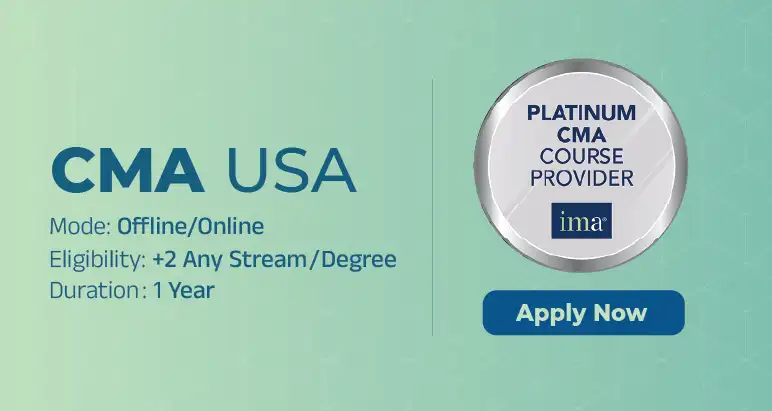
Securing dual certification in US CPA and CMA USA provides a comprehensive professional foundation, blending high-level statutory compliance with strategic financial management expertise. By leveraging the industry-aligned, expert-led training at IIC Lakshya, a Platinum CMA Course Provider where you can effectively navigate the technical nuances of both programs, optimizing your study pathways to achieve these globally recognized designations efficiently. This powerful combination significantly enhances your leadership potential, positioning you for elite roles in multinational corporations, Big 4 firms, and global CFO-track trajectories.
FAQs on US CPA and CMA USA Dual Certification
Can I pursue US CPA and CMA USA together?
Yes, both certifications can be pursued sequentially or alongside work, provided eligibility criteria are met.
Which is better to do first, CPA or CMA?
Most candidates prefer CPA first due to its technical depth, followed by CMA for strategic skills.
How long does it take to complete both CPA and CMA?
On average, 2.5 to 3.5 years with disciplined preparation.
Does dual certification increase salary potential?
Yes, professionals with both CPA and CMA often command higher salaries and faster career growth.
Is dual certification suitable for Indian professionals?
Yes, Indian professionals with accounting or finance backgrounds are well-suited for both CPA and CMA.
Related Blogs