
How to Become an IFRS Consultant from an Accountant?
Last Updated On -04 Aug 2026
By IIC Lakshya

Table of Contents
- Acquire the Right Credentials
- Mastering the Key Technical Standards
- Key Differences: Accountant vs IFRS Consultant
- Building Relevant Experience
- Transitioning to Consulting Roles
- Useful Resources to Get Started
- Skills Required to Become an IFRS
- Career Scope and Growth Opportunities
- Elevating Your Career as an IFRS Consultant
- Wrapping Up!
Students and working professionals planning to create a career in the finance and accounting industry must develop several educational, technical, and professional skills, along with a deeper understanding of International Financial Reporting Standards (IFRS). There are significant career opportunities across the global platform, leading to a successful career and higher opportunities.
Acquire the Right Credentials
To become an IFRS consultant, the first step for all aspiring candidates is to build strong educational, technical, and professional qualifications. If you have recognised and popular financial credentials, employers will give you preference. Below are some of the popular qualifications:
- ACCA
- CA
- CPA
- CMA
- IFRS Certification
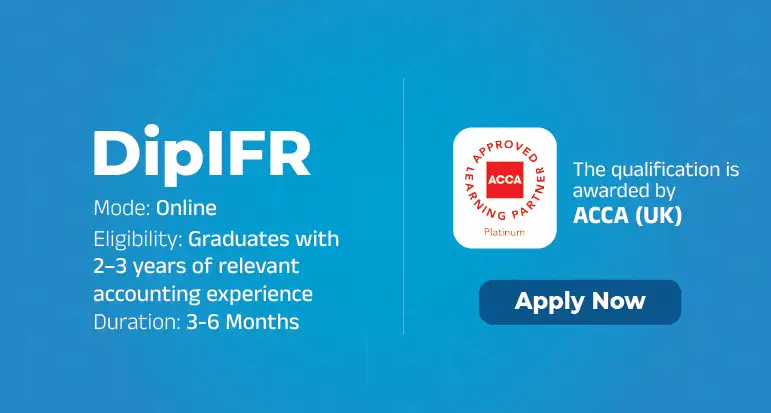
- DipIFR - Diploma in IFRS
Professionals can get specialised knowledge in the International Accounting Standards through these professional certifications. The following aspects will improve for candidates with professional experience in consulting roles:
- Technical credibility
- Global recognition
- Employer confidence
- Career opportunities
Students planning early career specialisation can begin learning IFRS concepts during graduation or professional accounting studies. Learn more about IFRS certification after BCom to develop future career paths.
Mastering the Key Technical Standards
An IFRS consultant must thoroughly understand international accounting standards. Technical expertise forms the foundation of IFRS consulting careers. Below are some of the significant IFRS standards:
- IFRS 15 - Revenue from Contracts with Customers
- IFRS 16 - Property Leases
- IAS 16 - Property, Equipment, and Plant
- IAS 36 - Impairment of Assets
- IAS 1 - Presentation of Financial Statements
- IAS 2 - Inventories
It is not just about memorising these standards; instead, they need to learn about the practical implications for businesses. You can learn about busting the crazy myths for DipIFRS to develop better standard knowledge. This involves learning:
- Financial statement preparation
- Revenue recognition
- Lease accounting
- Consolidation procedures
- Fair value measurement
Key Differences: Accountant vs IFRS Consultant
Although both roles belong to the finance and accounting industry, accountants and IFRS consultants perform different responsibilities. Here are some key differences in the tabular format:
|
Accountant |
IFRS consultant |
|
|
Building Relevant Experience
To become a successful IFRS consultant, candidates need to develop practical experience as employers value such professionals. Learn about the IFRS history and its development in relation to the Global Accounting Standards. Accountants can build relevant experience through:
- Financial Reporting Projects
- Audit assignments
- Consolidation work
- IFRS transition projects
- Internal controls
- External audit exposure
Transitioning to Consulting Roles
Once aspiring candidates have developed practical experience and acquired technical knowledge, they are ready to transition into IFRS-based consulting roles. Common IFRS consulting roles include:
- IFRS Analyst
- Financial Reporting Consultant
- Technical Accounting Specialist
- Advisory Consultant
- Audit & Assurance Consultant
- Financial Compliance Consultant
IFRS experienced professionals may work in:
- Big Four firms
- Consulting companies
- Shared service centres
- Multinational companies
- Consulting companies
With industry seminars, LinkedIn optimisation, and networking, professionals can smoothly transition into consulting jobs. Additionally, they need to have strong communication skills as it is quite important for this job position to interact with senior management and clients. Learn about the countries using IFRS to understand the effective Accounting Standards on a global scale.
Useful Resources to Get Started
Here are some significant resources that all aspiring professionals need to work in IFRS consulting job opportunities. Below are some of the resources:
Professional Certifications
Below is a list of professional programs that provide structured IFRS learning career paths. These programs are:
- ACCA DipIFR
- ACCA
- CPA
- CA
Online IFRS Platforms
Professionals and students can use the following online IFRS platforms. Develop a better insight into the objectives of IFRS through professional practices. These resources improve conceptual understanding in the consulting industry:
- Financial reporting webinars
- Online IFRS courses
- Technical accounting workshops
IFRS Publications
Below are some of the significant reading materials that aspiring accountants and professionals must study to pursue the IFRS consulting career:
- IFRS updates
- IASB publications
- Financial reporting journals
Practical Exposure
Students and professionals must participate in building practical expertise. Below are the available networking opportunities:
- Audit engagements
- Reporting projects
- Financial statement analysis
Skills Required to Become an IFRS
Below are the significant skills that are required to become an IFRS. Students and professionals must develop professional skills in addition to the technical accounting knowledge they already possess.
Analytical Thinking
IFRS consultants must develop analytical thinking skills because they analyse complicated accounting situations. Furthermore, they also recommend suitable solutions for the same.
Problem-Solving Ability
Consultants, at times, have to face challenging compliance situations in businesses. They must develop problem-solving skills so that they can offer practical solutions. Read about how to become an IFRS specialist after developing various professional and technical skills.
Communication Skills
Professionals and students must develop communication skills because, as consultants, it is their responsibility to explain technical concepts to auditors, management teams and clients. This will help overall business performance on a large scale.
Adaptability
The IFRS standards constantly evolve, and all students and professionals must keep updated. They must develop adaptability to improve their consulting effectiveness by being aware and updated on all IFRS standards and regulations, leading to enhanced career growth potential.
Attention to detail
All students and professionals planning to become IFRS consultants must have attention to detail skills because accuracy is necessary. To perform effective financial reporting, analysis, and compliance work, they must be accurate in their calculations.
Career Scope and Growth Opportunities
On a global scale, the demand for IFRS professionals keeps increasing. It is due to the need for businesses that are operating across international borders to evaluate all financial and operational functions. This is where the IFRS consultants come in. Below is the list of industries that are hiring IFRS consultants:
- Banking
- Manufacturing
- Technology
- Consulting
- Financial services
- Audit firms
Experienced IFRS consultants may progress into roles such as:
- Financial Reporting Manager
- Technical Accounting Manager
- Finance Controller
- IFRS Advisory Lead
- Director - Financial Reporting
Global opportunities also increase significantly for professionals with strong IFRS expertise.
Elevating Your Career as an IFRS Consultant
To succeed as an IFRS consultant, professionals must master technical standards and gain practical experience through IIC Lakshya, which provides the essential training for global finance roles. By integrating analytical thinking, regulatory compliance, and robust problem-solving skills, you can effectively navigate complex accounting transitions. This specialized path unlocks significant career growth, positioning you as an expert capable of delivering strategic advisory services across diverse international industries.
Wrapping Up!
In conclusion, students and professionals who are planning to transition from an accounting position to an IFRS consultant position must work on their practical experience, communication skills, analytical skills, and IFRS standards learning. With the transition comes technical specialisation, advisory-focused roles, and global exposure. Learn more about the same if you are a Commerce student and a working professional in the finance and accounting industry through this blog.
Read More
- 20 Tips to Handle Work-Life Balance While Preparing for DipIFRS
- CPA vs DipIFRS
- Implementing IFRS in India: Key Steps and Challenges
- The Uses of IFRS Explained: Purpose and Significance
- Role of IFRS in Performance Management and Financial Control
Frequently Asked Questions on From accountant to IFRS consultant: Career roadmap
Why should Commerce students learn IFRS?
Commerce students must learn the IFRS standards and practices because it helps in improving global career opportunities in accounting and finance.
What software knowledge do IFRS consultants?
IFRS consultants must develop software knowledge, such as Excel, financial reporting, and ERP systems.
Why are IFRS standards important?
The IFRS standards are important as it improves the financial reporting transparency and consistency.
Can fresh graduates become IFRS consultants?
No, fresh graduates must begin with audit or accounting roles before they transition to consulting positions in the future.
Is practical experience important in IFRS consulting?
Practical experience is significant in IFRS consulting because it leads to improvements in consulting ability and technical understanding.
Related Blogs