
ACCA Requirements 2026
Last Updated On -16 Sep 2026
By IIC Lakshya
The Association of Chartered Certified Accountants (ACCA) is one of the most respected global accounting and finance qualifications. It prepares professionals for careers in audit, taxation, finance management, consulting, and business strategy. Before starting the ACCA journey, it’s crucial to understand the ACCA requirements, including eligibility criteria, exams, exemptions, and practical experience expectations. This detailed guide breaks down everything you need to know to register, plan your pathway, and progress confidently through the ACCA qualification.
What is ACCA and Why Its Requirements Matter?
ACCA stands for Association of Chartered Certified Accountants. It is a UK-based global qualification recognised in 180+ countries. ACCA equips candidates with a blend of technical knowledge, practical skills, ethical understanding, and professional competence.
The ACCA requirements ensure that qualified members:
-
Have strong accounting fundamentals
-
Can apply financial concepts in real business scenarios
-
Understand ethics and professional conduct
-
Have practical experience that complements academic learning
Meeting these requirements is essential not just to earn the ACCA designation, but also to be capable and job-ready in global finance environments.
Entry Routes and Eligibility Requirements
ACCA offers flexible entry options to suit different educational backgrounds:
Standard Entry (After 12th / A-Levels / Senior Secondary)
-
You must have passed 12th or equivalent
-
English language proficiency is required
-
Some foundation subjects example, Maths are recommended for smoother progress
Students with strong school backgrounds often begin from Applied Knowledge level.
Graduate Entry (Direct Entry Route)
Graduates and postgraduates with recognised degrees may directly enter at higher levels of ACCA. Depending on your degree and subjects, you could receive exemptions from certain ACCA papers — shortening your journey.
Mature / Work Experience Entry
Even without formal qualifications, mature candidates with relevant work experience may be allowed to register, subject to ACCA appraisal.
The ACCA Qualification Structure
ACCA is divided into three levels:
Applied Knowledge
-
Business and Technology (BT)
-
Management Accounting (MA)
-
Financial Accounting (FA)
These papers build foundation accounting and business understanding.
Applied Skills
-
Corporate and Business Law (LW)
-
Performance Management (PM)
-
Taxation (TX)
-
Financial Reporting (FR)
-
Audit and Assurance (AA)
-
Financial Management (FM)
These subjects test core professional competence.
Strategic Professional
-
Strategic Business Leader (SBL)
-
Strategic Business Reporting (SBR)
-
Two optional papers out of:
-
Advanced Financial Management (AFM)
-
Advanced Performance Management (APM)
-
Advanced Taxation (ATX)
-
Advanced Audit and Assurance (AAA)
-
This level adds strategic thinking and leadership skills essential for senior roles.
ACCA Exemptions and How They Work
Students with prior qualifications (e.g., CA, CFA, ACCA foundation diplomas, university degrees) may be eligible for exemptions from certain ACCA Applied Knowledge and Applied Skills papers.
Exemptions are granted based on:
-
Syllabus overlap
-
Accredited partner qualifications
-
Recognised global degrees
Applying for exemptions saves study time and reduces exam load — accelerating your ACCA path.
ACCA Exam Requirements
ACCA exams are computer-based and offered globally at authorised centers. Key exam requirements include:
-
You must register as an ACCA student
-
Pay exam fees for each paper separately
-
Follow ACCA exam schedules and deadlines
-
Clear all exams within the ACCA time limits
There is no fixed pass order, but some strategic pathways make preparation more effective.
Practical Experience Requirement (PER)
Academic success alone does not complete ACCA. You must also satisfy the Practical Experience Requirement (PER):
PER Requirements
-
Minimum of 36 months supervised work experience
-
Must be verified in ACCA’s online PER tool
-
Experience must cover performance objectives in areas like:
-
Ethics and professionalism
-
Governance, risk, and internal control
-
Financial reporting
-
Leadership and management
-
PER ensures that you can apply ACCA knowledge in real workplace scenarios.
Ethics and Professional Skills Module
This mandatory module builds your:
-
Ethical mindset
-
Communication ability
-
Strategic thinking
-
Professional confidence
It must be completed alongside exams and PER to receive full ACCA membership.
Membership Requirements
To become a full ACCA member, you must complete:
-
All ACCA exams (Applied Knowledge to Strategic Professional)
-
Practical Experience Requirement (PER)
-
Ethics and Professional Skills Module
Once done, you earn the ACCA designation and become part of a global professional community.
Timeline and Time Limits
There is no strict expiry on ACCA exams, but once you pass your first exam, you must complete the remaining papers within 10 years.
For PER, experience documentation is required before applying for full membership.
Why ACCA Requirements Are Career-Focused
ACCA requirements are designed to create professionals who are:
-
Technically strong
-
Conceptually clear
-
Strategically minded
-
Ethical and professional
-
Globally employable
This combination makes ACCA members valuable in roles like finance manager, auditor, consultant, CFO, tax advisor, business analyst, and more.
Mastering the ACCA: A Roadmap to Global Finance
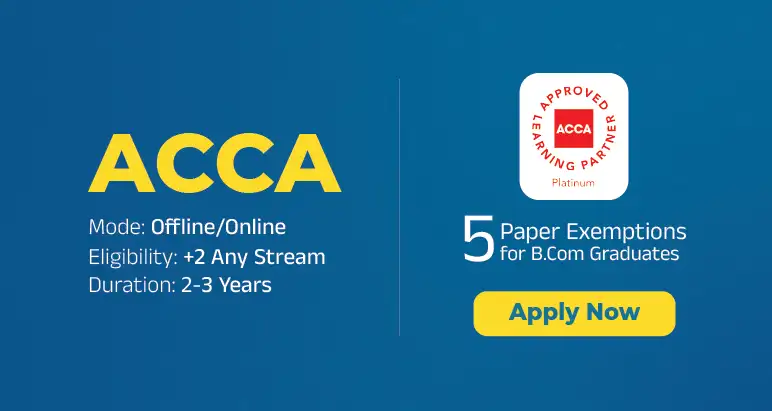
Fulfilling all ACCA requirements from mastering core technical subjects across Applied Knowledge, Applied Skills, and Strategic Professional levels to completing the Ethics and Professional Skills Module and logging 36 months of supervised Practical Experience (PER) is the blueprint for building an international career in finance and accounting. Navigating exemptions, managing exam progression, and tracking performance objectives requires strategic planning and consistent academic execution. As an ACCA Approved Platinum Learning Partner, IIC Lakshya provides personalized exemption evaluations, comprehensive exam preparation, and expert mentorship to help you satisfy every milestone seamlessly and qualify as a globally recognized finance leader.
FAQs on ACCA Requirements
Who can register for ACCA?
Anyone with 12th pass or an equivalent qualification can register, with additional entry routes for graduates and professionals.
How many levels are there in ACCA?
There are three levels: Applied Knowledge, Applied Skills, and Strategic Professional.
Do I need work experience for ACCA membership?
Yes, a minimum of 36 months of supervised practical experience is required.
Can ACCA be completed fully online?
Yes, registration, study materials, exams, and PER documentation can be managed online, though exams are taken at authorized centers.
Is ACCA recognized globally?
Yes, ACCA is recognised in over 180 countries and is highly respected by global employers.
Related Blogs