BSc with CA: Can Science Students Pursue CA Successfully?
Last Updated On -24 Sep 2026
By Sajith R S
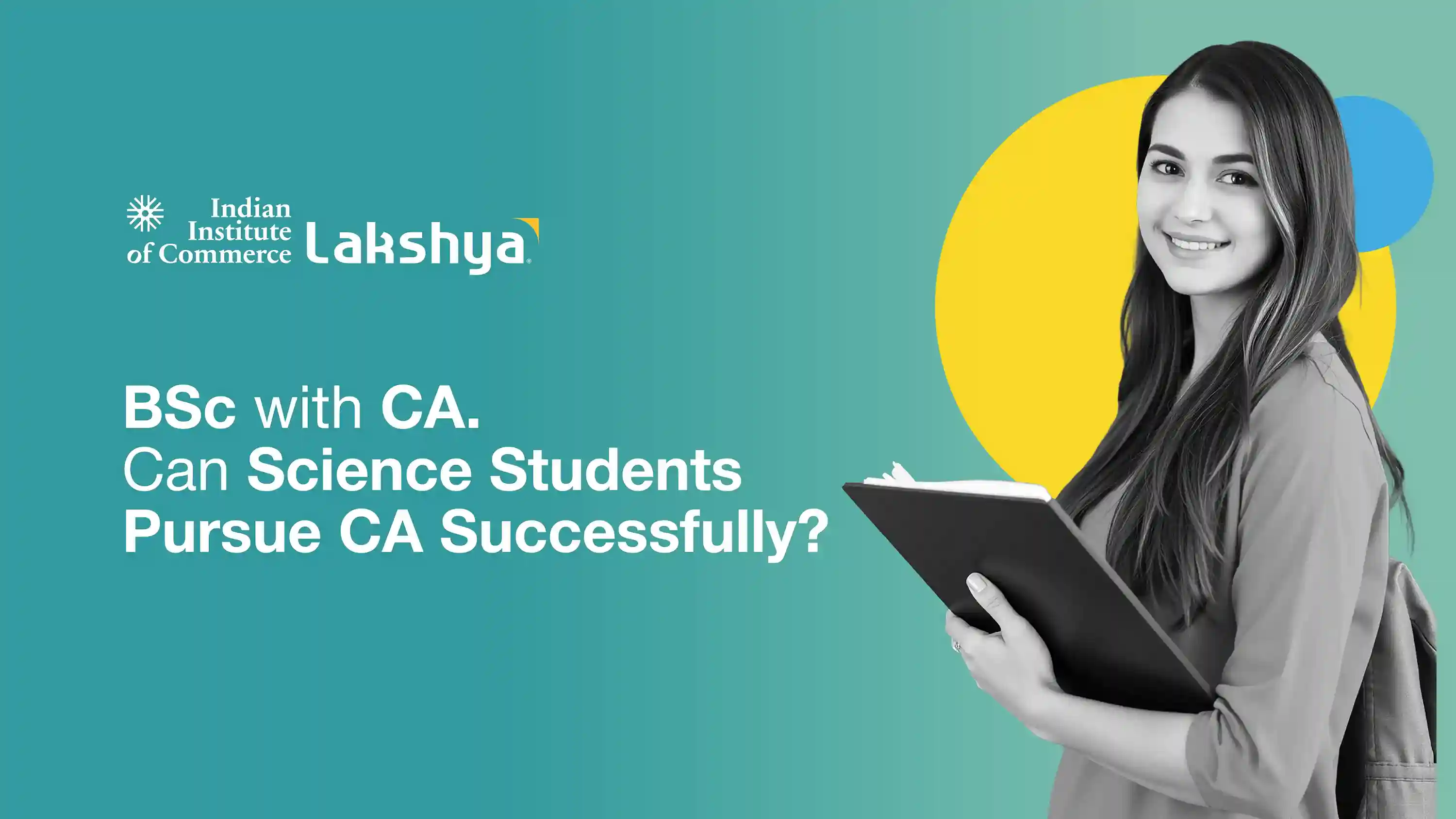
Yes, science students can absolutely pursue CA successfully after 12th, graduation, or even while doing a BSc. The CA route does not require a commerce background, but it does demand strong discipline, regular study, and a clear plan. In fact, many students from science streams have built successful CA careers by learning accounting basics step by step.
Can science students become a CA?
Yes. A science student can enter the CA course through the same route as any other student after 12th, provided they meet the ICAI eligibility rules. No restriction says only commerce students can apply.
For many students, the biggest question is not eligibility but confidence. The good news is that the CA course is learnable from scratch if you are willing to build the basics properly.
CA course for science stream students
The CA course is open to students from any stream. If you are from science and want to shift into accounting, taxation, audit, or finance, CA can be a practical career move.
You can start after 12th with CA Foundation, or after graduation through the direct entry route if you meet the required conditions. That makes it a flexible option for students doing a BSc or working professionals looking for a career change.
Science student to CA journey challenges
The journey is possible, but it does come with a few common challenges.
Lack of accounting background
Science students often start without exposure to accounting terms like journal entries, trial balance, balance sheet, or GST. This can make the first few weeks feel unfamiliar.
Fear of commerce subjects
Many students worry that commerce students will always have an advantage. In reality, the advantage is mostly in early familiarity, not in final ability.
Adjustment to theory and practice
Science study patterns are often based on formulas, lab work, and structured problem-solving. CA requires a mix of theory, application, law, and case-based thinking.
Time management pressure
Students doing BSc and CA together need careful scheduling. Without a routine, both courses can suffer.
Difficulty level of CA for a science background
The CA course is challenging for everyone, not just science students. The difficulty level is not about your stream alone; it depends more on consistency, revision, and exam strategy.
A science background may actually help in some ways. Many science students are used to disciplined study, analytical thinking, and solving complex problems. These skills are useful in audit, costing, and financial analysis.
Are science students better at CA than commerce students?
Not automatically, but they can perform just as well. Commerce students may have a head start in basics, while science students often bring strong logic, focus, and analytical habits.
In CA, success comes more from preparation quality than from stream background. A well-prepared science student can easily outperform a commerce student who studies casually.
BSc to CA direct entry scheme
If you are already pursuing or have completed a BSc, the direct entry route may be available depending on your qualification and ICAI rules. This route can save time because you may not need to start from the Foundation in some cases.
Before choosing this path, check the latest ICAI eligibility criteria carefully. A simple verification can save months of confusion later.
CA Foundation after 12th science
If you have just completed 12th science, the most common entry point is the CA Foundation. This is the standard route for students who want to begin immediately after school.
The Foundation level tests basic accounting, law, mathematics, economics, and logical reasoning. A science student can prepare for it successfully with a fresh start and the right study method.
How to prepare for the CA Foundation from a science background?
The smartest approach is to begin with fundamentals and avoid rushing.
Start with basic accounting for science students
Before jumping into full CA material, learn core accounting concepts like:
- Accounting equation.
- Journal entries.
- Ledgers and trial balance.
- Final accounts.
- Basic financial statements.
A strong base removes fear and makes advanced topics easier.
Build a daily study habit.
Even 2 to 4 focused hours a day can create momentum if used properly. Regular revision matters more than long, random study sessions.
Use simple language resources.
For beginners, short notes, concept videos, and guided classes are often more effective than bulky reference books. This is where structured coaching can help, especially for students who want clear explanations and exam-oriented practice.
Practice with mock tests
CA is not only about reading. You must solve questions, write answers, and test your speed under exam conditions.
One exam-style hint: if you can explain a concept in simple words, you are likely understanding it properly.
Can a BSc student manage CA successfully?
Yes, many students do. The key is planning.
If you are doing a BSc along with CA
You will need a timetable that protects both college exams and CA preparation. Start early, avoid backlog, and revise weekly.
If you have completed a BSc already
You may be able to use the graduation route, depending on eligibility. This can be a smart option if you decide on CA later.
If you are a working professional
CA can still be a strong upskilling option if you want to move into finance, audit, taxation, or compliance roles. A disciplined study plan and the right coaching support can make the journey manageable.
What makes science students succeed in CA?
Science students often succeed when they treat CA like a new skill, not a subject they should already know.
Useful strengths they already have
- Analytical thinking.
- Discipline from school or college routines.
- Ability to study difficult content for long hours.
- Comfort with problem-solving.
What must they build?
- Accounting language.
- Comfort with business terminology.
- Answer-writing practice.
- Exam strategy and revision habits.
How does structured coaching help?
A good CA coaching environment can reduce confusion, especially for students from science backgrounds. Attention-driven batches, regular doubt clearing, and exam-oriented planning make the transition smoother.
For many learners, support from a coaching system like IIC Lakshya can help them stay consistent, because the biggest problem is often not intelligence but direction.
Final word
A science student can become a CA successfully, and BSc students can absolutely pursue the course with proper planning. The real deciding factors are interest, consistency, and a methodical approach to learning the basics. If you are serious about finance and willing to build from zero, CA can be a powerful and rewarding career path.
Read Also:
- Courses after CA that will help you achieve a Higher Salary
- Ultimate Guide to CA course
- How to become an Investment Banker after CA?
- CA vs MBA in Finance
FAQs
Can science students become CA without commerce in 12th?
Yes, science students can apply for CA after 12th through the regular Foundation route if they meet ICAI eligibility requirements.
Is CA difficult for students with a science background?
It can feel new at first because of accounting and law subjects, but many science students succeed with regular practice and proper guidance.
Can I do BSc and CA together?
Yes, many students manage both with a strict timetable, early preparation, and steady revision.
Is direct entry available after a BSc?
Depending on your qualification and ICAI rules, graduates may be eligible for the direct entry route, so it is worth checking the latest criteria.
Which is better after 12th science, CA or engineering?
It depends on your interest. Choose CA if you want finance, audit, taxation, and business careers; choose engineering if you prefer technical and scientific fields.
Related Blogs