What is a Demat Account?
Last Updated On -05 Aug 2026
By IIC Lakshya
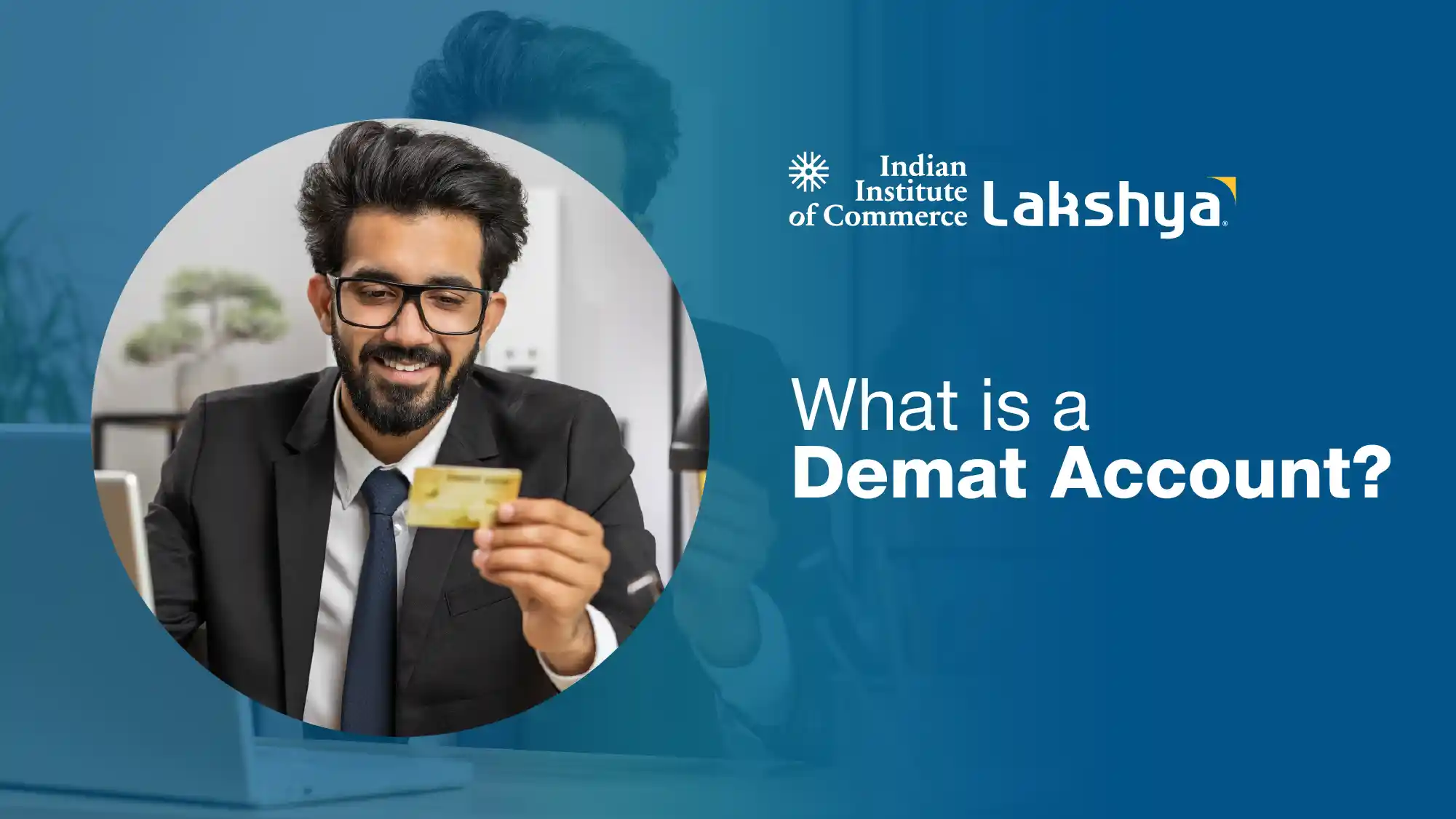
The Demat account, short for a dematerialized account, offers investors the relief of holding shares and securities electronically instead of physically. For all the newbie investors or anyone planning to buy stocks, bonds, or mutual funds, understanding how a demat account works is significant. The Demat account was introduced in India in 1996 by the Securities and Exchange Board of India (SEBI), especially for transactions on the National Stock Exchange (NSE). It revolutionized the trading system by making it more secure, efficient, and paperless.
The Demat account works like a bank account but for investments like stocks, bonds, and mutual funds.
Watch this Video About the Demat Account and its Key Features
What is the Full-form of Demat?
The full-form of Demat is Dematerialization and it means the conversion of physical share certificates and other financial securities into an electronic format, eliminating the need for paper-based certificates. This process makes transactions easy to maintain and readily accessible. Anyone interested in participating in investments can open a Demat account with a depository participant.
What is a Depository Participant (DP)?
A depository participant works as an intermediate link between investors and depositories in India. Any financial institution, like a bank or a financial service provider.
There are two central depositories in India:
- NSDL (National Securities Depository Limited)
- CDSL (Central Depository Services Limited)
Popular depository participants in India:
- Banks: ICICI Bank, HDFC bank, SBI, Kotak Mahindra bank
- Broker: Zerodha, Upstox, Angel One, Groww, Sharekhan
Key Features of a Demat Account
A Demat account provides several benefits to the users, from offering accessibility to eliminating any need for physical certificates.
Here are the key features of a Demat account:
- Electronic holding of securities eliminates the risk of theft or damage.
- Quick transactions
- Smooth fund transfers between trading and bank accounts
- Storage of multiple assets in one place
- Regulated by SEBI
- Option for nomination
- No restrictions on buying or selling shares
- Less paperwork costs
- Tracking of portfolio online
How Does a Demat Account Work?
A Demat account is straightforward to open and access. You must follow simple procedures to open the Demat account once you enter the trading realm.
Here is how a Demat account works:
- Open a demat account with a depository participant like a bank or any financial institution linked to NSDL or CDSL.
- Once the Demat account is opened, link it with a trading account. The trading account is for buying/selling shares, while the Demat account holds them.
- When a “buy” or “sell” request is made on the trading account, the depository participant forwards the request to the stock exchange.
- For example, if the request is to “buy” shares, the depository account forwards the order to the equity market; if the demand is met, the stock is subtracted from the seller account and added to the buyer account.
- The buyer and seller may have depository participants with different depositories.
Types of Demat Account
Three types of Demat accounts in India are categorized based on the individual's residency status and trading requirements.
The different types of Demat accounts are listed below:
1. Regular Demat Account
- The regular Demat accounts are for Indian residents.
- They are used for buying, holding, and selling shares, mutual funds, bonds, and other securities.
- They are linked to the trading account for stock market transactions.
2. Repatriable Demat Account
- This is one of the two types of NRI demat accounts
- This allows the transfer of funds abroad if you are an NRI
- The account must be linked with a non-resident external bank account to transfer funds.
- The RBI's portfolio investment scheme (PIS) regulates the investments.
3. Non-Repatriable Demat Account
- The Non-Repatriable Demat Account is also for NRIs, but funds cannot be transferred abroad.
- The account must be linked with a non-resident external bank account to transfer funds.
- This is used for managing the Indian income sources like rent and dividends, or salary.
What are the Demat Account Charges?
Some brokerage firms offer free Demat account opening; however, there are charges related to account maintenance and transaction processing.
The different Demat account charges are listed below:
1. Annual Maintenance Charges (AMC)
- The charges are annual for maintaining the account
- The charges range from INR 200 to 1,000 per year; however, some brokers offer zero AMC for the first time or maybe a lifetime.
- The depositories, NSDL or CDSL, determine the charges based on the investor’s holdings.
2. Custodian Fees
- This one-time fee is charged for the maintenance of securities, which is passed on to investors.
- Many brokers waive this fee for retail investors.
3. Demat and Remat Charges
- The Demat charges are for converting physical shares to electronic form: INR 5 to 50 per certificate.
- The Remat charges are for converting electronic shares back to physical form: INR 10 to 50 per certificate.
What are the uses of a Demat Account?
A Demat account is necessary for investors and traders in the stock market by helping in holding and managing securities.
The key uses of a Demat account are listed below:
- Holding the securities digitally
- Smooth selling and buying of stocks
- Quick credit of shares and funds after transactions
- No need to submit documents physically
- Less paperwork costs
- Easy portfolio management
- Shares and securities can be used as collateral for loans
- Holds multiple financial instruments
Modern Investment with Digital Asset Management
Understanding the mechanics of a Demat account is a vital step for any individual aiming to excel in the contemporary financial landscape. Mastering how electronic securities are held and transferred is essential for maintaining accurate corporate accounting records and managing high-value investment portfolios with precision. At IIC Lakshya, we provide comprehensive professional commerce coaching that simplifies these digital trading frameworks through expert-led, practical training. Equip yourself with the technical knowledge and strategic mentorship needed to thrive in the capital markets by joining our premier institute.
Read More
Want to learn more about trending and informational topics in commerce? Check out the Latest Commerce Blogs and stay updated.
Frequently Asked Questions (FAQs)
Are Demat accounts necessary for stock market trading?
Yes, a Demat account is necessary for investing in stocks and other securities in India.
Can one person have multiple Demat accounts?
Yes, definitely. One person can have multiple Demat accounts with different brokers.
But they have to be linked to the PAN card.
Is there any difference between a trading account and a Demat account?
Yes, there is. A trading account is used to buy and sell stocks, whereas a Demat account holds shares and securities digitally after purchase.
Can my physical share certificates be put into a Demat account?
Yes, the process of dematerialization converts the physical share certificates. You need to submit a request form to the depository participant. After processing, the shares are credited to the Demat account.
Related Articles