

CPA Licence Renewal
Last Updated On -26 Nov 2026
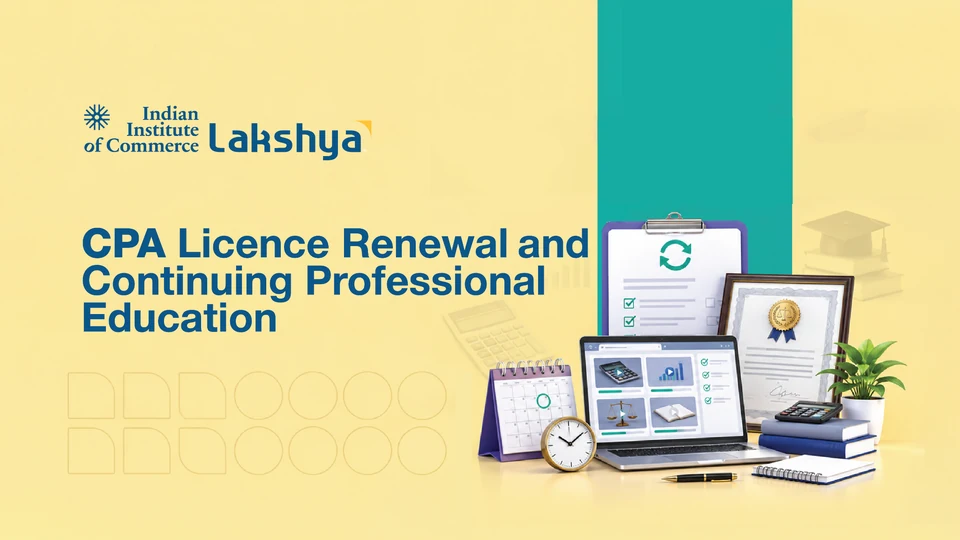
A Certified Public Accountant (CPA) licence requires more than passing the Uniform CPA Examination and meeting the initial licensing requirements. Once licensed, CPAs must maintain their professional standing by renewing their licence, completing Continuing Professional Education (CPE) and complying with the regulations of the relevant state board of accountancy.
For candidates and qualified professionals in India who hold or plan to obtain a US CPA licence, understanding these ongoing requirements is essential. The US does not have one universal CPA licence renewal system. Each state or jurisdiction establishes its own rules for renewal frequency, CPE hours, ethics education, reporting periods, fees and inactive status.
A CPA who fails to meet the applicable requirements may face late fees, restrictions on practice, an inactive or expired licence, or additional requirements to restore the licence. Understanding the process early can help professionals maintain their credentials while managing full-time employment and international career commitments.
What Is CPA Licence Renewal?
CPA licence renewal is the process of extending the validity of a CPA licence through the relevant state board of accountancy. It usually involves submitting a renewal application, paying the prescribed fee and confirming that the applicable continuing education and other regulatory requirements have been met.
Passing all four sections of the CPA Exam does not automatically give a candidate an indefinite right to practise as a licensed CPA. Candidates must first satisfy the licensing requirements of their chosen jurisdiction. After obtaining the licence, they must continue meeting that jurisdiction's rules.
The renewal process varies depending on where the licence was issued and whether the CPA maintains an active, inactive or another recognised status. Professionals should therefore use the official licensing authority for their specific jurisdiction rather than relying on a general CPA renewal checklist.
How Often Must a CPA Licence Be Renewed?
A CPA licence may need to be renewed annually, biennially or on another schedule specified by the licensing jurisdiction. There is no single renewal cycle that applies to every US CPA.
For example, Ohio renews CPA licences on a three-year cycle, while California requires active licence holders to complete continuing education within a two-year renewal period. These differences demonstrate why CPAs must verify their own renewal dates and reporting periods.
The renewal deadline may also differ from the end date of the CPE reporting period. A CPA should record both dates and complete the required education early enough to resolve any documentation or reporting issues before submitting the renewal application.
Who Is Responsible for CPA Licence Renewal?
The state board of accountancy that issued the licence is responsible for determining the applicable renewal requirements. The National Association of State Boards of Accountancy (NASBA) provides resources and supports the accountancy licensing system, but individual state boards establish and administer their own licensing rules.
CPAs can generally find their renewal instructions, fee schedules, CPE requirements and application portals through the relevant board's official website. Professionals who hold licences in multiple jurisdictions should check each licence separately because the requirements may differ.
What Is Continuing Professional Education (CPE) for CPAs?
Continuing Professional Education is structured learning that helps licensed CPAs maintain and develop the knowledge and skills required for professional practice. Depending on the jurisdiction, CPE may cover accounting, auditing, taxation, ethics, financial reporting, technology, business law, risk management and other relevant professional subjects.
CPE is intended to keep CPAs informed about changing accounting standards, regulatory requirements, professional responsibilities and developments in business and technology. For many active licence holders, completing the required CPE credits is a condition of licence renewal.
The required number of credits and the subjects that qualify vary by jurisdiction. A course that qualifies for CPE credit in one state may not satisfy every requirement in another, particularly where specific ethics, accounting and auditing or regulatory courses are mandatory.
How Many CPE Hours Does a CPA Need?
Many US jurisdictions require approximately 80 to 120 CPE hours over a two- or three-year reporting period, but the exact requirement depends on the state and licence status. Some jurisdictions also impose annual minimums or subject-specific credit requirements.
The following examples illustrate the differences:
| Jurisdiction | Example of CPE requirements |
|---|---|
| Ohio | Generally 120 CPE credits over a three-year reporting period, with additional subject-specific requirements for applicable licence types |
| California | At least 80 hours during a two-year renewal period for an active licence, including ethics and other applicable subject requirements |
| Indiana | Generally 120 hours over a three-year reporting period, with annual minimums and specified accounting, auditing and ethics requirements |
These are examples, not universal rules. Requirements can change, and special provisions may apply to first-time renewals, inactive licences, particular practice activities or other circumstances. Always confirm the current rules with the relevant state board before planning your CPE schedule.
Which Subjects Count Towards CPA CPE?
Acceptable CPE subjects generally relate to maintaining or improving professional competence. The precise list of approved subject areas and the rules for calculating credits are established by the applicable jurisdiction.
Common CPE subject areas include:
-
Accounting and financial reporting: Updates on accounting standards, financial statements and reporting requirements.
-
Auditing and assurance: Audit methodology, professional standards, evidence gathering and quality management.
-
Taxation: Tax law changes, compliance requirements and tax planning.
-
Professional ethics: Ethical responsibilities, independence, professional conduct and regulatory obligations.
-
Technology and data analytics: Cybersecurity, data analysis, automation and technology used in accounting and finance.
-
Business and financial management: Risk management, financial analysis, internal controls and relevant management topics.
A course's relevance to accounting does not automatically guarantee that it qualifies for CPE credit. Check the provider's eligibility, the course's approval status where required and any limits on particular learning formats before enrolling.
How to Renew a CPA Licence
Renewing a CPA licence generally involves checking the renewal deadline, completing the required CPE, submitting the renewal application and paying the applicable fee. The exact sequence and supporting documents depend on the licensing authority.
A practical renewal process begins well before the licence expires. This allows time to confirm credit eligibility, complete missing education, obtain certificates and address any discrepancies in the board's records.
Step 1: Check Your Licence Status and Renewal Date
Start by reviewing your licence record through the state board's official website. Confirm whether your licence is active, inactive, expired or subject to any additional conditions.
Record the renewal deadline and the CPE reporting period that applies to your licence. Do not assume that the reporting period begins on the date you obtained the licence or that every renewal follows the calendar year.
Step 2: Calculate Your Remaining CPE Credits
Compare your completed education with the board's requirements. Count the credits earned during the correct reporting period and verify that you have satisfied any annual minimums or subject-specific conditions.
For example, a jurisdiction may require a particular number of ethics credits in addition to a total CPE requirement. Completing the overall credit total without meeting the ethics requirement may leave the licence holder ineligible for renewal.
Step 3: Maintain Evidence of Completion
Retain certificates, transcripts and other acceptable records for every qualifying CPE activity. Documentation may include the course title, provider, completion date, credit hours and confirmation of participation.
Some boards require supporting documents only when a licence holder is selected for an audit or when applying for a particular status change. Others may require documents during the application process. Follow the instructions for your jurisdiction and retain records for the prescribed period.
Step 4: Submit the Renewal Application
Complete the renewal application through the designated state board portal. Provide the required information and attest to meeting the applicable licensing and CPE requirements.
Do not report credits that you have not completed or assume that an application has been approved simply because it has been submitted. If the board requests additional information, respond within the stated deadline.
Step 5: Pay the Renewal Fee and Confirm Your Status
Pay the applicable renewal fee and any required charges. After submission, check the board's system to confirm that the renewal has been processed and that your licence status is correct.
Keep the confirmation for your records. If the licence still appears expired or inactive after submission, contact the board rather than assuming that the payment alone has resolved the issue.
What Happens If You Miss the CPA Licence Renewal Deadline?
Missing a CPA renewal deadline can result in late fees, an expired licence, restrictions on professional practice or additional requirements to restore the licence. The consequences depend on the jurisdiction, the length of the lapse and whether the required CPE was completed on time.
A missed deadline should be addressed promptly. Continuing to use the CPA designation or provide services that require an active licence may create regulatory problems if the licence is no longer in good standing.
Can an Expired CPA Licence Be Renewed?
An expired CPA licence may be eligible for renewal or reinstatement, but the process depends on the state board's rules. Some jurisdictions allow a straightforward late renewal within a specified period, while others require additional applications, fees, education or approval.
The board may also require the CPA to complete outstanding CPE or meet specific reactivation conditions before returning to active status. A long lapse can involve more demanding requirements than a short delay.
Contact the licensing authority as soon as possible to establish the correct process. Do not assume that paying a late fee alone will restore the right to practise.
Can You Continue Working With an Expired CPA Licence?
Whether you can continue working depends on the duties you perform, the legal requirements of the jurisdiction and your current licence status. Some accounting or finance employment may not require an active CPA licence, while regulated services or representing yourself as an actively licensed CPA may be restricted.
Before continuing any work that depends on an active licence, confirm the applicable rules with the state board. Employers may also impose their own credential requirements even when a particular role is not legally restricted.
Can a CPA Keep an Inactive Licence Without Completing CPE?
Some jurisdictions offer an inactive, non-practising or similar licence status that reduces or removes certain CPE obligations. However, the conditions and restrictions depend on the state board, and inactive status does not necessarily mean that every use of the CPA designation or every professional activity is permitted.
This option may be relevant to CPAs who have moved into roles that do not require an active licence, taken a career break or stopped providing regulated services. Before changing status, confirm the application process, designation rules and conditions for returning to active practice.
What Is the Difference Between Active and Inactive CPA Status?
An active licence generally allows a CPA to practise within the scope permitted by the relevant jurisdiction, subject to meeting applicable requirements. An inactive or non-practising status may limit professional activities and change the continuing education obligations.
The distinction matters because a CPA working in corporate finance may have different licensing needs from a professional providing regulated public accounting services. The job title alone does not determine whether an active licence is required; the actual services performed and applicable rules are important.
How Can an Inactive CPA Return to Active Status?
Returning to active status may require an application, payment of fees, completion of specified CPE and compliance with any additional board requirements. Some jurisdictions prescribe particular accounting, auditing, taxation or ethics credits for reactivation.
A CPA planning to return to practice should review these requirements before accepting responsibilities that depend on an active licence. Planning the education in advance can help avoid delays and ensure that the credits meet the board's criteria.
CPA CPE Requirements for International CPAs in India
CPAs living and working in India generally need to follow the continuing education and renewal rules of the US jurisdiction that issued their licence. Living outside the United States does not automatically remove the obligation to maintain the licence.
For Indian professionals employed by multinational companies, global capability centres, accounting firms or finance teams, CPE can often be planned around work commitments. However, they must confirm that their chosen learning activities qualify under the relevant board's rules.
Can Indian CPAs Complete CPE Online?
Online CPE may be available through recognised providers, professional associations and other eligible learning platforms. Whether a course qualifies depends on the provider, course format, documentation and the rules of the licensing jurisdiction.
Before enrolling, verify that the course meets the applicable requirements. Check whether the board accepts self-study, webinars, live online sessions or other formats, and whether any limits apply to the number of credits earned through a particular method.
Does Working in India Affect CPA Licence Renewal?
Working in India does not automatically change the renewal cycle or CPE requirements attached to a US CPA licence. The licence remains governed by the issuing jurisdiction unless the professional completes an approved status change or other relevant licensing process.
International CPAs should keep their contact details updated, monitor board notifications and retain access to the relevant licensing portal. They should also check whether their employer requires an active licence for the position they hold.
How to Plan CPA CPE Without Disrupting Your Job
The most manageable approach is to spread CPE across the reporting period instead of completing all the required hours shortly before renewal. A planned schedule makes it easier to select relevant courses, meet annual minimums and address any subject-specific requirements.
Start by dividing the total credits across the years in your reporting period. Then allocate time for mandatory ethics or technical subjects and leave room for unexpected work commitments or courses that do not qualify as expected.
A practical plan should include:
-
An annual credit target: Set a target that meets the board's minimums and keeps you on track for the overall requirement.
-
Relevant learning topics: Choose courses that support your current responsibilities and future career goals.
-
Approved or eligible providers: Confirm course eligibility before paying for a programme.
-
Regular recordkeeping: Save certificates and update your CPE tracker after each completed activity.
-
A pre-renewal review: Check your credit totals, dates and documentation well before the application deadline.
CPE should support professional development as well as licence compliance. Selecting useful courses can help CPAs stay current with accounting standards, regulatory changes and emerging finance technologies while fulfilling their renewal obligations.
Frequently Asked Questions
Is CPA Licence Renewal Mandatory?
CPA licence renewal is required to maintain an active licence in jurisdictions that impose renewal obligations. The exact process depends on the state board, licence status and applicable professional requirements.
How Many CPE Credits Are Required to Renew a CPA Licence?
The number varies by jurisdiction. Some states require 80 credits over two years, while others require 120 credits over three years. Annual minimums, ethics education and other subject-specific requirements may also apply.
Can I Renew My CPA Licence Without Completing CPE?
If CPE is mandatory for your licence status, you generally cannot renew an active licence without meeting the applicable requirements. Some jurisdictions provide inactive or non-practising status options, but eligibility and restrictions vary.
What Happens If I Fail a CPA CPE Audit?
Failure to provide acceptable evidence of completed CPE can lead to regulatory consequences, which may include additional requirements, penalties or action affecting the licence. Keep accurate records and respond to any audit request within the deadline set by the board.
Can I Complete CPA CPE From India?
Yes, online and other eligible learning options may be available to CPAs based in India. You must confirm that the course and provider meet the rules of the US jurisdiction that issued your licence.
Do CPA Licence Renewal Fees Remain the Same Every Year?
Not necessarily. Renewal fees and related charges are set by the relevant licensing authority and may change. Check the current fee schedule before submitting your application.
Where Can I Check My CPA Licence Renewal Requirements?
Use the official website of the state board of accountancy that issued your licence. It is the authoritative source for renewal deadlines, CPE requirements, application procedures, fees and licence-status rules.
Related Blogs