
CPA Licence Requirements
Last Updated On -26 Nov 2026
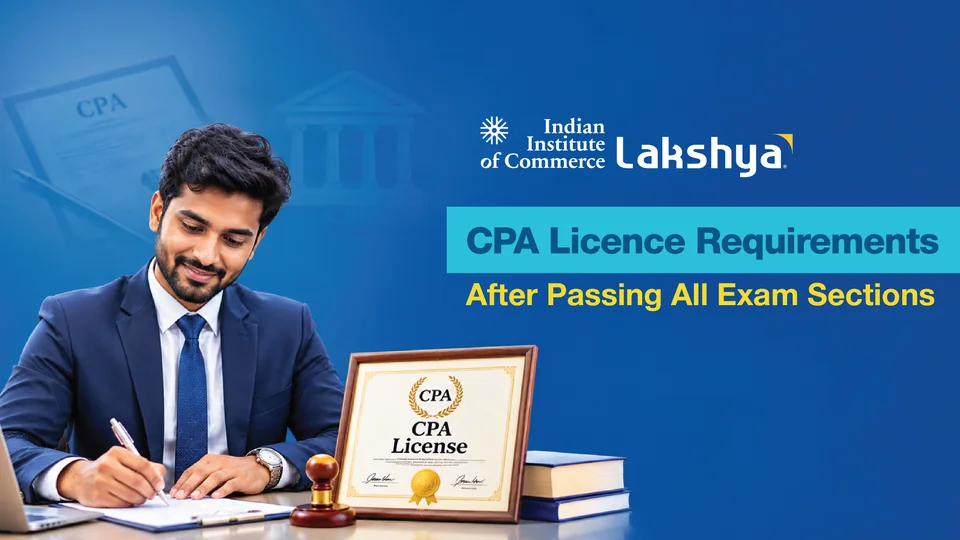
Passing all four sections of the US Certified Public Accountant (CPA) Exam is a major achievement, but it does not automatically make a candidate a licensed CPA. Candidates must also satisfy the education, professional experience, ethics and administrative requirements established by the state board of accountancy or licensing jurisdiction through which they intend to obtain their licence.
The final licensing process can differ considerably depending on the candidate's academic qualifications, work experience and chosen jurisdiction. Some candidates may need additional accounting credits or supervised experience, while others may need to complete an ethics examination, submit verification documents or undergo a background check. Understanding these requirements early helps candidates move from passing the CPA Exam to obtaining their professional licence without unnecessary delays.
What Happens After Passing All Four CPA Exam Sections?
After passing all four CPA Exam sections, candidates must complete the remaining licensing requirements and submit an application to the relevant licensing authority. Passing the examination demonstrates that candidates have met the examination component, but it does not confirm that every other requirement has been fulfilled.
The Uniform CPA Examination consists of three Core sections, Auditing and Attestation (AUD), Financial Accounting and Reporting (FAR), and Taxation and Regulation (REG)—and one Discipline section chosen from Business Analysis and Reporting (BAR), Information Systems and Controls (ISC), or Tax Compliance and Planning (TCP).
Once all four sections have been passed, candidates should review their education records, confirm their qualifying work experience and determine whether an ethics course or examination is required. They should also check the validity of their exam credits and any deadlines associated with applying for licensure.
The next step is to identify the state or jurisdiction where they intend to become licensed. NASBA and the state boards provide guidance on licensing procedures, but the requirements and final licensing decisions depend on the applicable jurisdiction.
CPA Licence Requirements After Passing the Exam
CPA licence requirements generally include qualifying education, relevant professional experience, completion of any required ethics assessment and an approved licence application. The exact combination of requirements varies by jurisdiction, so candidates must verify the rules that apply to their circumstances.
Educational Requirements
Educational requirements for CPA licensure depend on the jurisdiction and the candidate's academic qualifications. Many traditional CPA licensing pathways require 150 semester hours of college education, including specified accounting and business coursework, but alternative pathways are being introduced in some jurisdictions.
Candidates who were eligible to sit for the CPA Exam under a lower educational threshold may still need to complete additional coursework before receiving their licence. Passing all four exam sections does not automatically waive any outstanding education requirement.
For candidates who studied outside the United States, academic credentials may need to be evaluated to determine their US equivalency and whether they satisfy the relevant accounting and business credit requirements. An international degree evaluation for examination eligibility does not necessarily establish that all licensing education requirements have been met.
Candidates should review their transcripts and obtain confirmation from the relevant licensing authority before assuming that their education is complete.
Work Experience Requirements
Work experience is a key requirement for CPA licensure, and most jurisdictions require candidates to demonstrate relevant accounting or financial experience before receiving a licence. The required duration, type of work and verification process vary by state.
Many traditional pathways require approximately one year of qualifying experience, while some jurisdictions require longer periods or permit alternative combinations of education and experience. Depending on the rules, qualifying experience may include public accounting, corporate accounting, financial reporting, taxation, internal audit or other approved accounting-related work.
Some jurisdictions require experience to be supervised or verified by a licensed CPA. Others accept certain types of non-public accounting experience, teaching, self-employment or part-time work under specific conditions.
Candidates should confirm whether their existing employment counts towards the requirement, whether a supervisor must sign off on their experience and what documentation must be submitted. Work completed before passing the exam may qualify in some jurisdictions, provided it meets the applicable rules.
CPA Ethics Exam or Ethics Course
Some jurisdictions require candidates to complete a separate ethics examination or approved ethics course before obtaining their CPA licence. This requirement is distinct from passing the four sections of the Uniform CPA Examination.
The AICPA Professional Ethics comprehensive course is accepted by many jurisdictions, but it is not the universal option for every candidate. Certain state boards prescribe their own ethics courses, examinations or additional state-specific requirements.
Candidates should confirm whether their jurisdiction requires an ethics assessment, which course or examination is accepted, the minimum passing score and the deadline for completion. They should also check whether the assessment must be completed within a specified period before submitting the licence application.
Background Checks and Other Administrative Requirements
CPA licensing authorities may require background checks, identity verification, disclosures and other administrative documentation as part of the application process. The exact requirements depend on the jurisdiction.
Candidates may need to submit official transcripts, examination records, employment verification forms, ethics results and information about their professional or legal history where required. Some jurisdictions also require fingerprints or other background-screening procedures.
Applicants should answer all application questions accurately and provide supporting documents in the format requested by the board. Missing documents, incomplete disclosures or discrepancies in personal information can delay the approval process.
How to Apply for a CPA Licence After Passing the Exam
Candidates can apply for a CPA licence by confirming their jurisdiction's requirements, assembling the required documents and submitting a complete application through the relevant licensing authority. The application process may involve NASBA Licensing Services or a state board, depending on the jurisdiction.
Step 1: Confirm Your Licensing Jurisdiction
Start by identifying the jurisdiction in which you intend to obtain your CPA licence. The jurisdiction through which you took the CPA Exam does not necessarily have to be the jurisdiction where you ultimately seek licensure, but transferring scores or changing jurisdictions may involve additional procedures.
Review the licensing requirements of the intended jurisdiction before applying. Pay particular attention to education, experience, ethics, residency requirements where applicable and any deadlines associated with previously passed exam sections.
Step 2: Verify Your Education and Experience
Check whether you have met all required education credits and qualifying experience. If your examination eligibility was assessed before you completed the full licensing education requirement, you may need an additional academic credential evaluation or coursework.
Candidates should also confirm that their work experience meets the required duration and type of experience. Obtain the necessary verification from an eligible supervisor or employer and ensure that the supporting forms are completed correctly.
Step 3: Complete the Ethics Requirement
If the jurisdiction requires an ethics course or examination, complete the approved programme and ensure that the result is recorded or submitted in the required manner.
Do not assume that passing an ethics examination automatically updates your licensing application. Some authorities require candidates to arrange the submission of results or provide proof of completion.
Step 4: Submit the Licence Application and Supporting Documents
Submit the application through the state board or authorised licensing service. Depending on the jurisdiction, you may need to provide education records, experience verification, examination details, ethics results, identity information and other supporting documents.
Pay the applicable application and licensing fees, and retain confirmation of submission. If the licensing authority requests additional information, respond within the specified timeframe to prevent unnecessary delays.
Step 5: Wait for Licence Approval
After submitting the application, monitor its status and respond to any requests for clarification or missing documentation. Processing times vary according to the jurisdiction, application volume and completeness of the supporting records.
Candidates should not represent themselves as licensed CPAs until the relevant authority has approved their application and the licence has been issued. Passing the examination and holding an active CPA licence are separate milestones.
How Long Does It Take to Get a CPA Licence After Passing the Exam?
The time required to obtain a CPA licence after passing all four exam sections depends on whether the candidate has already completed the education, experience and ethics requirements. Candidates who have met every requirement and submit complete documentation may progress more quickly than those who still need additional coursework or qualifying work experience.
For example, a candidate who has already completed the required education, accumulated sufficient verified experience and passed the required ethics examination may only need to complete the application process. Another candidate who has passed the CPA Exam but still needs to fulfil a work experience requirement may need considerably longer.
Application processing time is also influenced by the licensing authority's procedures, document verification and any background checks. Candidates should consult the relevant board for current processing estimates rather than rely on a universal timeline.
CPA Licence Fees After Passing All Exam Sections
The cost of obtaining a CPA licence depends on the jurisdiction and the outstanding requirements the candidate must fulfil. Passing all four exam sections does not eliminate the separate costs associated with the licensing application.
Potential expenses include:
-
Initial CPA licence application fees.
-
Academic credential evaluation fees, where required.
-
Ethics course or examination fees.
-
Costs associated with background checks or fingerprinting, where applicable.
-
Additional coursework needed to satisfy educational requirements.
-
Fees for obtaining official transcripts or employment verification documents.
These expenses are separate from the CPA Exam application and examination fees already paid. Candidates should review the latest fee schedule issued by their licensing authority and budget for any outstanding requirements before submitting their application.
CPA Exam Pass vs CPA Licence: What Is the Difference?
Passing the CPA Exam and obtaining a CPA licence are two distinct stages of the qualification process. Exam completion confirms that the candidate has passed the required examination sections, while licensure confirms that the candidate has met the additional requirements imposed by the relevant jurisdiction.
A candidate who has passed all four sections but has not completed the required work experience, education or ethics assessment may not yet be eligible for a licence. The candidate must satisfy those outstanding requirements before the licensing authority can approve the application.
This distinction is particularly important for international candidates and those applying for accounting roles that specifically require an active CPA licence. Employers may distinguish between candidates who have passed the exam and those who are fully licensed, so applicants should describe their status accurately.
Frequently Asked Questions
Can I become a CPA immediately after passing all four exam sections?
No. Passing all four sections fulfils the examination requirement, but candidates must also satisfy the applicable education, experience, ethics and administrative requirements before receiving their licence.
Do I need work experience after passing the CPA Exam?
Not necessarily. Some jurisdictions accept qualifying experience earned before or during exam preparation, provided it meets their rules. Candidates should verify the required duration, type of experience and supervision or verification requirements.
Is the CPA Ethics Exam mandatory for everyone?
No. Ethics requirements vary by jurisdiction. Some require an approved ethics examination or course, while others prescribe different ethics requirements or do not require a separate pre-licensure ethics exam.
Can international candidates apply for a US CPA licence after passing the exam?
Yes, international candidates can apply if they meet the education, experience, examination and other requirements of the jurisdiction in which they seek licensure. They may need an evaluation of their international academic credentials and documentation verifying their qualifying experience.
Can I apply for a CPA licence in a different state from the one where I took the exam?
In many cases, yes. However, candidates must satisfy the receiving jurisdiction's licensing requirements and follow its procedures for transferring examination records. They should verify the process before submitting an application.
Does passing all four CPA Exam sections guarantee a job as a CPA?
No. Passing the exam is an important professional milestone, but it does not guarantee employment or automatically grant a licence. Career opportunities depend on licensing status, experience, technical skills, employer requirements and the candidate's chosen career path.
Related Blogs