

What Is an MBA + ACCA Integrated Course?
Last Updated On -27 Nov 2026
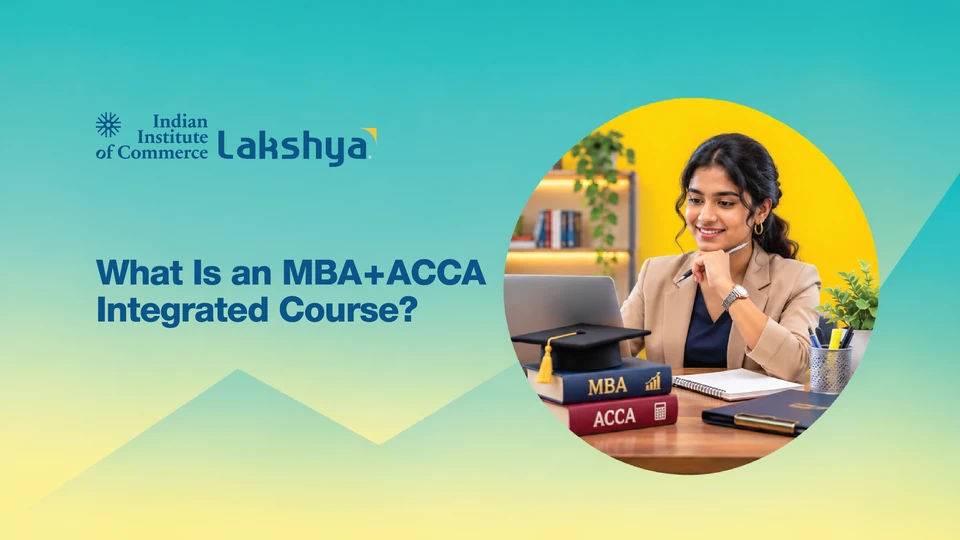
An MBA + ACCA integrated course combines postgraduate management education with preparation for the ACCA (Association of Chartered Certified Accountants) professional qualification. It is designed for graduates who want to develop business management skills alongside specialised knowledge of accounting, financial reporting, auditing, taxation and financial management. Instead of pursuing an MBA and ACCA through completely separate study plans, students follow a structured pathway in which relevant subjects and ACCA preparation are incorporated into the programme.
The integrated format can help students build a stronger understanding of both business operations and financial decision-making. However, the course structure, number of ACCA paper exemptions, fees and qualification requirements vary by institution. Understanding these details is important before choosing an MBA + ACCA programme.
What Is an MBA + ACCA Integrated Course?
An MBA + ACCA integrated course is a postgraduate programme that combines an MBA degree with structured preparation for the ACCA qualification. The MBA component develops knowledge of management, business strategy, organisational behaviour and corporate decision-making, while the ACCA component focuses on professional accounting and finance.
The two components complement each other. An MBA helps students understand how businesses operate, allocate resources and plan for growth. ACCA develops the technical skills required to interpret financial statements, evaluate performance, understand audit procedures and apply financial reporting standards.
Depending on the institution, ACCA subjects may be taught alongside MBA modules, and eligible students may receive exemptions from certain ACCA examinations. This can reduce the number of examinations they need to take, provided the programme and their academic record meet ACCA's applicable exemption requirements.
It is important to understand that the integrated course does not automatically award ACCA membership. Students must complete the remaining examinations and other applicable professional requirements to become ACCA members.
How Does an MBA + ACCA Integrated Programme Work?
An MBA + ACCA programme works by aligning university-level management education with ACCA subject preparation within a planned academic schedule. Students generally study MBA modules over several semesters while completing the relevant ACCA preparation included in the programme.
The exact structure depends on the university and its ACCA integration arrangement. Some programmes incorporate eligible ACCA subjects directly into the MBA curriculum, while others provide separate professional coaching alongside university classes.
MBA Subjects Covered in the Programme
The MBA component develops an understanding of management principles and how different business functions contribute to organisational performance. Although the curriculum varies by institution, common subjects may include:
-
Financial and managerial accounting
-
Principles of economics and business environment
-
Marketing management
-
Organisational behaviour and human resource management
-
Business strategy and leadership
-
Operations management
-
Financial markets and corporate finance
-
Business analytics and quantitative techniques
-
Entrepreneurship and management research
These subjects help students understand the wider business context in which financial decisions are made. For example, a student studying corporate finance may learn how businesses evaluate investments, while strategy and analytics modules can help them understand how financial information supports long-term planning.
ACCA Subjects Covered in the Programme
The ACCA component focuses on professional accounting and finance knowledge. Under the current ACCA qualification structure, the syllabus includes subjects across Applied Knowledge, Applied Skills and Strategic Professional levels.
Depending on the programme and applicable exemptions, students may study areas such as:
- Financial Accounting and Management Accounting
- Corporate and Business Law
- Taxation
- Financial Reporting
- Performance Management
- Audit and Assurance
- Financial Management
- Strategic Business Reporting
- Strategic Business Leadership
- Advanced specialist subjects in areas such as taxation, audit, performance management or financial management
The exact subjects and examinations remaining after exemptions depend on the programme's approved exemption status and ACCA's assessment of the student's eligibility. Students should confirm the current paper mapping rather than assume that every MBA + ACCA course provides the same exemptions.
What Is the Duration of an MBA + ACCA Integrated Course?
An MBA + ACCA integrated course commonly follows a two-year MBA structure in India, although the overall time needed to complete the ACCA qualification may depend on the programme, exemptions and examination progress. The integrated format allows students to work towards both pathways during overlapping periods rather than treating them as entirely separate courses.
During the programme, students complete university assessments and prepare for the ACCA examinations applicable to their pathway. Their timetable may include MBA lectures, ACCA classes, assignments, revision sessions and examination preparation.
The actual completion time depends on several factors:
- Number of exemptions: Eligible students may not need to sit every ACCA examination.
- Examination performance: Students may need additional preparation time if they do not pass an examination on the first attempt.
- Programme design: Some institutions integrate more ACCA preparation into the academic timetable than others.
- Study workload: Managing university assignments alongside professional examination preparation requires consistent planning.
- Professional experience: ACCA membership also requires relevant practical experience, which may be completed alongside or after academic study, subject to ACCA rules.
Students should distinguish between the duration of the MBA degree and the time required to complete all ACCA membership requirements. Finishing the MBA does not, by itself, mean that the ACCA qualification is complete.
Who Is Eligible for an MBA + ACCA Integrated Course?
Graduates who meet the university's admission requirements can generally apply for an MBA + ACCA integrated course. Many programmes accept students with a bachelor's degree in commerce, business, finance or another discipline, although minimum marks, entrance examinations and other admission conditions vary by institution.
Students from a commerce background may find accounting and financial management topics familiar, but a commerce degree is not necessarily mandatory for every programme. Applicants from other academic backgrounds should check the eligibility criteria of their preferred university.
Before applying, students should verify:
- The minimum marks required in their bachelor's degree.
- Whether an entrance examination or interview is required.
- Which university awards the MBA degree.
- Whether ACCA tuition is included in the programme.
- Which ACCA examinations are eligible for exemptions.
- Whether registration, examination and exemption fees are included in the quoted course fee.
Meeting the MBA admission requirements does not automatically guarantee exemptions from ACCA examinations. Exemptions depend on ACCA's applicable rules and the student's eligible qualifications.
What Are the Benefits of an MBA + ACCA Integrated Course?
The main benefit of an MBA + ACCA integrated course is the opportunity to develop management knowledge and professional accounting skills through a coordinated study pathway. This combination can be relevant to graduates who want to understand both the financial details of a business and the wider decisions that influence its performance.
Combines Management and Technical Finance Skills
An MBA provides a broad understanding of business functions, leadership and strategy, while ACCA focuses more deeply on accounting, audit, taxation, financial reporting and financial management. Studying both can help students connect financial information with business decisions.
For example, a financial analyst may need to interpret a company's financial statements, but understanding business strategy also helps explain why its revenue, costs or investment priorities are changing. The combined learning pathway can support this broader perspective.
May Reduce the Number of ACCA Examinations Required
Eligible students may receive exemptions from certain ACCA examinations through an approved integrated programme. This can reduce the number of papers they need to sit compared with a route that provides no exemptions.
However, exemptions are not identical across all MBA + ACCA programmes. Students should confirm the exact papers covered, the remaining examinations and any exemption fees before enrolling. They should also check whether the programme's exemption arrangement remains applicable to their intended registration period.
Provides a Structured Study Pathway
Studying the MBA and ACCA components within one planned programme can help students organise their academic workload. Rather than coordinating separate institutions, timetables and preparation plans independently, students may receive an integrated schedule for university subjects and professional examination preparation.
The effectiveness of this arrangement depends on teaching quality, faculty support, the assessment calendar and the time allocated for revision. A well-structured timetable can help, but students still need to prepare consistently for both university assessments and ACCA examinations.
Supports Multiple Finance and Business Career Directions
The combined curriculum can be relevant to careers that require financial expertise alongside an understanding of business operations. Depending on their skills, experience and completed qualifications, graduates may explore opportunities in financial analysis, management accounting, reporting, audit, consulting and corporate finance.
The MBA component can also support an interest in leadership and broader management responsibilities. However, the qualification combination does not guarantee a particular job title, salary or promotion. Outcomes depend on factors such as practical experience, employer requirements, technical ability and recruitment performance.
What Career Opportunities Are Available After an MBA + ACCA Course?
An MBA + ACCA pathway can prepare students to pursue roles in accounting, financial analysis, reporting, audit, management accounting and business finance, depending on their progress through the professional qualification and their experience. The two components provide complementary knowledge, but specific roles may require additional qualifications, experience or professional membership.
Some potential career directions include:
Financial Analyst
Financial analysts evaluate financial statements, business performance, budgets and investment opportunities. The accounting knowledge developed through ACCA can help them interpret financial information, while MBA subjects can provide a broader understanding of business strategy and market conditions.
Management Accountant
Management accountants support internal planning, budgeting, cost analysis and performance evaluation. They help managers understand financial results and make informed operational decisions. ACCA study can develop relevant technical knowledge, while the MBA can strengthen the broader management perspective.
Financial Reporting Professional
Financial reporting professionals work on the preparation, analysis and review of financial statements and related disclosures. Knowledge of financial reporting standards and accounting principles is particularly relevant to this career direction.
Audit and Assurance Professional
Audit and assurance roles involve evaluating financial information, reviewing controls and assessing whether reporting follows applicable requirements. ACCA provides relevant professional training, although eligibility for particular responsibilities depends on the employer, jurisdiction and applicable professional rules.
Corporate Finance Professional
Corporate finance roles may involve financial planning, capital allocation, investment analysis and business valuation. The combined knowledge of financial management and business strategy can be useful for students pursuing these areas.
Finance Business Partner
Finance business partners work with other departments to interpret financial performance, evaluate business plans and support management decisions. This role requires more than accounting knowledge; communication, analytical thinking and commercial awareness are also important.
The suitability of each role depends on the student's completed examinations, practical experience and employer expectations. Completing an MBA + ACCA integrated programme alone does not establish eligibility for every senior finance position.
How Is an MBA + ACCA Different from a Regular MBA?
An MBA + ACCA integrated course combines management education with a professional accounting pathway, whereas a regular MBA focuses on business management and the chosen specialisation. The key difference is the additional professional accounting curriculum and the opportunity to progress towards ACCA membership.
A regular MBA may be more suitable for someone interested in general management, marketing, operations or entrepreneurship. An MBA + ACCA pathway may be more relevant to a graduate who wants specialised accounting and finance knowledge alongside management education.
The comparison should go beyond course names. Students should examine the university's reputation, curriculum, faculty, total fees, placement support, practical learning opportunities and the exact ACCA exemptions available. A specialised MBA in finance may already include substantial financial coursework, but it does not automatically provide the same professional qualification pathway as ACCA.
What Should You Check Before Choosing an MBA + ACCA Course?
Students should evaluate the academic degree, ACCA integration and total cost separately before choosing an MBA + ACCA programme. The term integrated course can describe different arrangements, so the details matter more than the label.
Consider these factors before making a decision:
- University and degree recognition: Confirm which institution awards the MBA and verify its recognition and accreditation status through the relevant official sources.
- ACCA exemption details: Ask for a clear list of the papers for which exemptions are available and confirm the arrangement with ACCA.
- Remaining qualification requirements: Understand the examinations, Ethics and Professional Skills Module and practical experience requirements that apply to your pathway.
- Complete fee structure: Check tuition, ACCA registration, examination and exemption fees, study materials and possible retake costs.
- Teaching and academic support: Review faculty expertise, class schedules, revision support, mock assessments and doubt-clearing arrangements.
- Practical exposure: Look for internships, industry projects, case studies and opportunities to develop workplace skills.
- Career and placement support: Check the roles offered, employer relationships and placement information. Ask for specific details instead of relying only on broad salary or placement claims.
- Workload and flexibility: Understand how MBA assignments, university examinations and ACCA preparation fit into the academic calendar.
A programme that offers fewer exemptions may still suit a student if it provides strong teaching, relevant practical exposure and a suitable university degree. The right choice depends on the overall learning experience and the student's long-term career objectives.
Frequently Asked Questions
Is an MBA + ACCA integrated course worth pursuing?
An MBA + ACCA integrated course can be worthwhile for graduates who want management education alongside specialised accounting and finance training. Its value depends on the programme's quality, total cost, exemption arrangement and relevance to the student's career goals.
Can I pursue an MBA and ACCA at the same time?
Yes, an integrated programme is specifically designed to coordinate MBA study with ACCA preparation. Students should check how the academic timetable, university assessments and ACCA examinations are organised before enrolling.
Does completing an MBA + ACCA course make me an ACCA member?
No. Completing the MBA and integrated coaching does not automatically confer ACCA membership. Students must satisfy the applicable ACCA examination requirements, complete the Ethics and Professional Skills Module and meet the Practical Experience Requirement, including the relevant experience and performance objectives.
How many ACCA paper exemptions are available with an MBA?
The number of exemptions depends on the programme, the institution's applicable exemption arrangement and the student's qualifications. Some integrated programmes offer exemptions for several papers, but students should verify the exact number and the papers covered rather than assume that every programme provides the same exemptions.
Can students from a non-commerce background apply for an MBA + ACCA course?
Yes, some programmes accept graduates from different academic backgrounds. However, eligibility depends on the university's admission requirements. Students without previous accounting knowledge may need additional preparation to become comfortable with the technical subjects.
What jobs can I pursue after an MBA + ACCA integrated course?
Potential career paths include financial analyst, management accountant, financial reporting professional, audit and assurance professional, corporate finance analyst and finance business partner. The roles available to a graduate depend on their skills, work experience, examination progress and the requirements of the employer.
Related Blogs