
MBA + ACCA Course Details
Last Updated On -27 Nov 2026
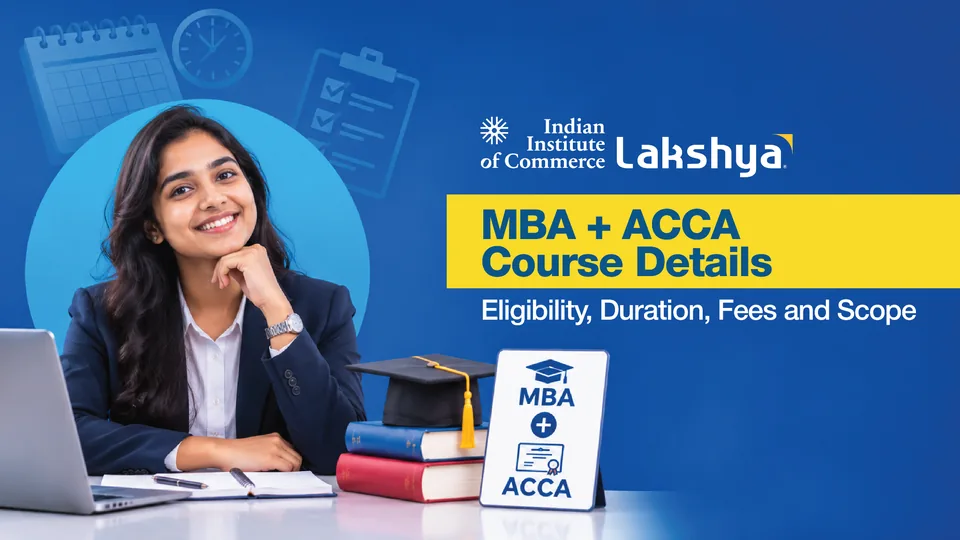
An MBA + ACCA integrated course combines postgraduate management education with professional accounting and finance studies. It is designed for students who want to understand how businesses operate while developing technical expertise in financial reporting, taxation, auditing, performance management and corporate finance. The programme brings together two complementary areas of learning: business management and professional accountancy.
The course structure varies across institutions, particularly in terms of duration, fees, university curriculum and ACCA examination exemptions. Understanding these differences helps students evaluate whether an integrated programme aligns with their academic background, budget and career plans.
What Is an MBA + ACCA Course?
An MBA + ACCA course combines a Master of Business Administration degree with preparation for the Association of Chartered Certified Accountants (ACCA) qualification. The MBA develops business and management knowledge, while ACCA focuses on technical accounting, financial management, taxation, audit and related professional competencies.
The MBA curriculum generally covers areas such as business strategy, organisational behaviour, marketing, economics, operations and leadership. The ACCA component provides a more specialised understanding of financial information, reporting standards, business performance and financial decision-making.
These areas complement each other in the workplace. A finance professional may need to analyse financial statements, prepare forecasts and explain business performance to management. Technical accounting knowledge helps establish the accuracy of financial information, while management education helps connect that information to wider organisational objectives.
An integrated programme may also provide exemptions from eligible ACCA examinations, depending on the institution's arrangements and the student's qualifications. However, completing the MBA does not automatically confer ACCA membership.
MBA + ACCA Course Eligibility
Eligibility for an MBA + ACCA course generally depends on the admission requirements of the university offering the MBA degree. Most postgraduate programmes require applicants to hold a recognised bachelor's degree, while minimum marks, entrance examinations and other conditions vary by institution.
Students with undergraduate degrees in commerce, accounting, finance or business administration may already have a foundation in subjects relevant to the programme. Graduates from other disciplines may also be eligible, depending on the university's admission policy.
Before applying, students should check whether the programme requires an entrance test, an interview or a minimum academic score. They should also verify which institution awards the MBA degree and whether the programme includes ACCA tuition, examination preparation and any applicable exemption arrangements.
Admission to an MBA programme and eligibility for ACCA exemptions are separate matters. A student may qualify for admission but still need to complete certain ACCA examinations because exemptions depend on the relevant academic qualifications and ACCA's assessment criteria.
MBA + ACCA Course Duration
An MBA + ACCA integrated course commonly takes around two years when the MBA follows a conventional four-semester structure. However, the total time required to complete the ACCA qualification depends on the programme's design, the examinations remaining after exemptions and the student's progress.
The MBA component is usually organised semester by semester. Students study management and business subjects alongside accounting and finance modules that may align with parts of the ACCA syllabus. Some institutions coordinate professional examination preparation with the academic calendar, while others provide additional classes outside regular university teaching.
The time required to complete ACCA can differ from the duration of the MBA. Students may need additional time to sit remaining examinations, complete the Ethics and Professional Skills Module and fulfil ACCA's practical experience requirements.
For this reason, students should distinguish between completing the integrated academic programme and becoming an ACCA member. The former refers to the university course, while the latter requires meeting the applicable professional qualification requirements.
MBA + ACCA Course Fees
The fees for an MBA + ACCA course depend on the university, programme structure, teaching arrangements and services included in the overall package. The total cost may be higher than that of a standalone professional qualification because students are also paying for postgraduate management education.
The main cost components may include MBA tuition, ACCA registration, annual subscription, examination fees, exemption fees and study materials. Some institutions include professional coaching and learning resources in their programme fees, while others charge separately for particular services.
The number of ACCA examinations a student needs to take can affect the overall cost. Eligible exemptions may reduce the number of examinations required, but exemption fees may still apply. Students should therefore compare the complete cost of each route rather than relying only on the advertised tuition fee.
Payment plans, scholarships and education financing may also influence affordability. Before enrolling, students should obtain a clear breakdown of university charges and ACCA-related expenses, including the potential cost of examination retakes and any additional academic requirements.
MBA + ACCA Syllabus and Course Structure
The MBA + ACCA syllabus combines management subjects with accounting and finance topics relevant to the ACCA qualification. The exact curriculum depends on the university and the way it integrates professional examination preparation into the postgraduate programme.
MBA Subjects
The MBA component focuses on understanding organisations, managing resources and making business decisions. Common subject areas include:
-
Financial and managerial accounting
-
Business economics
-
Marketing management
-
Organisational behaviour and human resource management
-
Business strategy and leadership
-
Operations management
-
Corporate finance
-
Business analytics and quantitative methods
-
Entrepreneurship and project management
These subjects develop a broad understanding of how businesses function. For example, corporate finance examines funding and investment decisions, while business strategy considers how organisations compete, allocate resources and pursue growth.
ACCA Subjects
The ACCA component focuses on professional knowledge and skills in accounting, finance and business. The current qualification structure includes Applied Knowledge, Applied Skills and Strategic Professional examinations, subject to the applicable qualification rules.
Relevant subject areas include:
-
Financial Accounting and Management Accounting
-
Corporate and Business Law
-
Taxation
-
Financial Reporting
-
Performance Management
-
Audit and Assurance
-
Financial Management
-
Strategic Business Reporting
-
Strategic Business Leadership
-
Advanced specialist subjects
Not every student will need to sit every examination. The papers remaining depend on applicable exemptions and the student's progress through the qualification. Since programme structures and professional requirements can change, the current syllabus and exemption mapping should be verified before enrolment.
ACCA Exemptions in an MBA + ACCA Course
ACCA exemptions allow eligible students to skip certain examinations when their previous education covers the required knowledge and meets ACCA's exemption criteria. The number of exemptions available through an MBA + ACCA programme depends on the institution, the specific programme and the student's academic background.
Exemptions can reduce the number of examinations a student must complete, potentially shortening the examination pathway. However, students should check which papers are covered rather than assuming that an MBA automatically provides exemptions from all introductory or applied-level examinations.
Exemptions may also involve fees, and students should consider whether they have sufficient subject knowledge to progress comfortably into the remaining papers. Skipping an examination does not remove the importance of understanding its underlying concepts, especially when those concepts support more advanced subjects.
Most importantly, ACCA membership requires more than completing examinations. Students must meet the applicable requirements for the Ethics and Professional Skills Module and practical experience, in addition to any examinations still outstanding.
MBA + ACCA Career Scope
An MBA + ACCA qualification pathway can be relevant to careers in accounting, financial analysis, audit, reporting, corporate finance and management accounting. The combination develops technical finance knowledge alongside a broader understanding of business operations and management decisions.
Financial Analyst
Financial analysts examine financial statements, budgets, forecasts and business performance to help organisations make informed decisions. Accounting knowledge supports accurate financial analysis, while management education helps professionals understand the business context behind the numbers.
Management Accountant
Management accountants support internal decision-making through budgeting, cost analysis, performance measurement and financial planning. Their work helps managers evaluate operational efficiency, monitor financial targets and allocate resources effectively.
Audit and Assurance Professional
Audit and assurance professionals review financial records, examine internal controls and assess compliance with applicable standards and requirements. ACCA study can provide relevant technical knowledge, although specific responsibilities and statutory permissions depend on the jurisdiction and applicable regulations.
Financial Reporting Professional
Financial reporting professionals prepare, review and analyse financial statements and disclosures. Their work requires an understanding of accounting standards, reporting procedures and the interpretation of financial information.
Corporate Finance Professional
Corporate finance professionals may work on investment analysis, financial planning, business valuation and capital allocation. Knowledge of corporate finance and business strategy can be useful when evaluating investment opportunities and assessing their potential impact on an organisation.
Finance Business Partner
Finance business partners work with different departments to interpret financial performance and support business planning. In addition to financial knowledge, the role requires communication skills, commercial awareness and the ability to explain complex information clearly.
Career opportunities depend on examination progress, practical experience, technical ability and employer requirements. Completing an MBA + ACCA programme does not guarantee a particular position or salary, and some senior roles require substantial professional experience.
Is an MBA + ACCA Course Worth It?
An MBA + ACCA course can be worth considering for students who want both postgraduate management education and a structured route towards a professional accounting qualification. It may be particularly relevant to those interested in combining technical finance work with business planning, financial analysis or management responsibilities.
The integrated format can provide a coordinated study plan and may offer eligible ACCA exemptions. However, students should evaluate whether they need both qualifications for their intended career. Those interested primarily in general management may prefer a different MBA specialisation, while students focused on professional accounting may find a standalone ACCA pathway more suitable.
The decision should be based on the university's recognition, curriculum quality, total fees, exemption arrangements, practical learning opportunities and career objectives. Comparing these factors can help students determine whether the integrated route offers sufficient value for the time and financial investment involved.
Frequently Asked Questions
How long does an MBA + ACCA course take?
An MBA + ACCA integrated programme commonly follows a two-year MBA structure. The time required to complete all ACCA requirements may vary depending on exemptions, examination progress and practical experience.
What is the eligibility for an MBA + ACCA course?
Applicants generally need a recognised bachelor's degree and must meet the university's admission criteria. Minimum marks, entrance tests and other requirements vary by institution.
What are the fees for an MBA + ACCA course?
Fees depend on the institution and the services included. Students should account for MBA tuition, ACCA registration, subscriptions, examinations, exemption fees and study materials when calculating the total cost.
Does an MBA + ACCA course provide ACCA exemptions?
Some integrated programmes offer exemptions from eligible ACCA examinations. The number of exemptions depends on the programme and the student's qualifications, so the current exemption status should be verified before enrolment.
What jobs can I pursue after an MBA + ACCA course?
Potential roles include financial analyst, management accountant, audit professional, financial reporting specialist, corporate finance professional and finance business partner. The roles available depend on skills, experience and employer requirements.
Does completing an MBA + ACCA course make me an ACCA member?
No. Students must complete the applicable ACCA examination requirements, the Ethics and Professional Skills Module and the Practical Experience Requirement to qualify for membership.
Is an MBA + ACCA better than pursuing ACCA separately?
An integrated programme may suit students who want management education and professional accounting studies within one coordinated pathway. Standalone ACCA may be more appropriate for those who want to focus on the professional qualification without pursuing an MBA. The better option depends on career goals, budget and the value of the additional degree.
Related Blogs