
What Does a DipIFR Holder's First IFRS-Focused Job Look Like?
Last Updated On -01 Oct 2026
By Sajith R S

Imagine your first month in a reporting team after earning DipIFR. Your manager asks you to check a lease calculation, investigate a difference between two reporting schedules, and explain an adjustment before the month-end deadline. Nobody expects you to sign off the group’s financial statements. They do expect you to show your workings and know when to ask for a review.
That is a useful picture of how many first IFRS jobs begin. The qualification can help you understand the standards, but the job tests how carefully you apply them to incomplete records, tight deadlines, and real business transactions.
If you already work in accounts or audit, you may be wondering whether DipIFR will change your duties or simply add a line to your CV. This guide looks at the work you might do, the teams that hire, and the skills employers check. It also covers eligibility and salary expectations. If you are still considering the qualification, start with the DipIFR course overview, then compare its syllabus with the roles you want.
What first IFRS jobs actually involve
Your first IFRS-focused role will usually have a broader title, such as financial reporting analyst, group reporting associate, or audit associate. Employers rarely need someone to recite standards all day. They need reliable work that helps them prepare or review financial statements.
|
Work you may receive |
What you might deliver |
|
Group reporting |
A schedule checking balances between group companies |
|
Revenue or leases |
A calculation and a short explanation of the accounting treatment |
|
Financial statement notes |
Figures and supporting records for a draft disclosure |
|
Audit support |
Evidence for an adjustment and answers to follow-up questions |
You will often work in spreadsheets or a reporting system, trace numbers back to source records, and discuss differences with colleagues. A senior accountant or manager will review your conclusions, especially where judgement matters.
ACCA designed the Diploma in International Financial Reporting to develop skills in applying standards, preparing group statements, and handling disclosures. Those aims connect closely to the work above. The diploma gives you a foundation; your first role teaches you how a particular company puts that knowledge into practice. ACCA’s DipIFR syllabus sets out these areas.
A reporting deadline, step by step
Consider a hypothetical analyst in their first reporting role. On Monday, a subsidiary sends its month-end figures. One balance differs from the amount recorded by another group company. The analyst checks invoices and exchange rates, then asks both teams to explain the gap.
Next comes a lease schedule. A contract changed during the month, so last month’s calculation may no longer be right. The analyst updates the workbook, records the assumptions, and sends it for review. By Friday, they help prepare figures for a note in the reporting pack.
The work sounds modest, but each step matters. A number without its source is hard to defend. An adjustment without a clear explanation can delay review. As you gain experience, you may take ownership of a full reporting area. At first, accuracy, documentation, and clear questions count more than speed.
Where could your first role be?
Look for the work described in the vacancy, not only for “IFRS specialist” in the title. Suitable starting points depend on your existing qualification and experience:
- Corporate reporting teams prepare financial statements, disclosures, and group reporting packs.
- Global capability centres support reporting for overseas entities. The team may work in India while following the parent company’s reporting requirements.
- Audit teams examine whether a client’s accounting treatment and disclosures have adequate support.
- Accounting advisory teams help clients with reporting questions, conversions, or complex transactions. These roles often ask for stronger prior experience.
In India, check which framework the job uses. Ind AS draws on IFRS Accounting Standards but includes differences. A role involving Indian statutory accounts may therefore need Ind AS knowledge, while a foreign parent’s group pack may use IFRS. Ask which set of accounts you will work on before accepting a role. The IFRS Foundation’s India profile explains this distinction.
Who meets DipIFR eligibility?
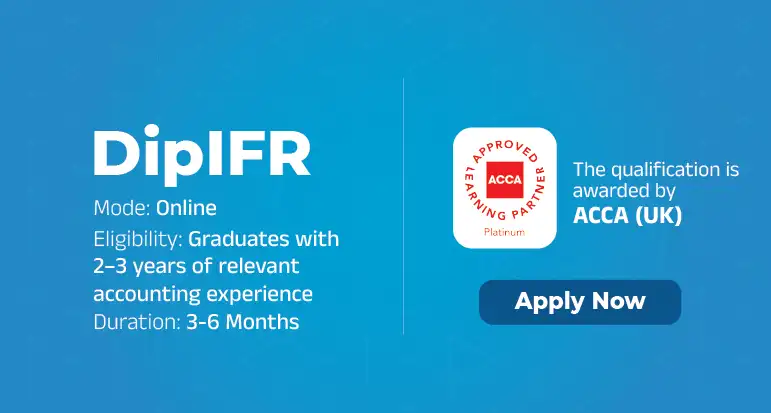
The ACCA DipIFR is aimed at people who already have accounting knowledge. A commerce degree alone does not automatically make a new graduate eligible for the exam.
ACCA’s published routes include:
- A relevant degree that meets its specified exemption conditions, plus two years of relevant accounting experience.
- Three years of relevant full-time accounting experience.
- An eligible professional accounting qualification. ACCA affiliates may also qualify.
Check your own documents and route against ACCA’s current requirements before you make a study plan. This matters particularly if you are counting on your degree to meet the first route.
DipIFR involves one applied exam, but one exam does not mean light preparation. ACCA’s published format has four compulsory questions worth 25 marks each, with three hours and fifteen minutes to complete them. Questions can combine calculations with written explanations. Practising how to explain a treatment will help you in the exam and later at work.
What will employers test beyond DipIFR?
A DipIFR certification can show that you studied international reporting. It does not replace the experience or other qualifications a vacancy requires. For example, a September 2026 EY financial accounting advisory posting in Mumbai asked for a qualified CA or equivalent and one to three years of relevant post-qualification experience. DipIFR alone would not meet those conditions.
For a first IFRS-focused move, prepare to demonstrate three things:
- Technical judgement: Explain how you would check a revenue contract, lease, or consolidation adjustment. State what information you still need.
- Evidence: Show a sample schedule or describe a real reporting task you handled. Remove confidential company information.
- Communication: Explain an accounting issue in plain English, including its effect on the numbers and who should review it.
A common mistake is filling a CV with standards but giving no example of their use. If your current job includes reconciliations or audit working papers, describe that work clearly. If you have not handled IFRS reporting yet, practise with case-based questions and be honest about the boundary between study and experience.
What can your first role pay?
People searching for a diploma in IFRS salary or diploma in IFRS ACCA salary often find a single figure. Treat it cautiously. A new DipIFR holder who already has substantial audit experience is in a different position from someone moving out of routine accounts work.
Employers set pay for the whole role. They consider your existing qualification, years of relevant work, location, reporting responsibilities, and ability to work independently. The diploma may strengthen your application for a role that uses IFRS skills. It does not guarantee a raise or a fixed salary premium.
When comparing offers, ask:
- What portion of the work involves IFRS or Ind AS reporting?
- Will you prepare schedules, review them, or both?
- Who will help you learn complex areas?
- What are the fixed pay, variable pay, and review terms?
The highest initial offer may offer little reporting exposure. A role with strong supervision and real ownership could build skills you can show when you seek your next move.
Also Read
- Career Options and Salary after Diploma in IFRS
- How Recent IFRS Standard Updates Are Affecting the DipIFRS Exam Content in 2026?
- How ACCA Is Preparing DipIFRS Students for a Reporting World Driven by Technology?
- Why Graduation Is the Right Time to Start Dip IFRS?
- How to Become an IFRS Consultant from an Accountant?
Where can the first role lead?
Your first job gives you a chance to build a record of completed reporting work. Over time, you might handle more complex consolidations, draft technical accounting notes, review junior colleagues’ schedules, or move into advisory. That progression depends on the work you do, not the date you received the diploma.
Keep a private record of the problems you solved, the standards you applied, and the results of your review. Leave out confidential figures. It will give you specific examples for future interviews and show where you still need practice.
DipIFR makes the most sense when you can connect study with reporting work you do now or want to do next. If you need help checking that fit: IIC Lakshya, an ACCA Approved Platinum Learning Partner, offers course planning and academic guidance. Bring a few job descriptions to the conversation. You can then judge whether DipIFR addresses a real gap on your path to IFRS jobs.
Related Blogs