CPA USA for IT and Non-Finance Professionals Moving Into Accounting Roles
Last Updated On -23 Jul 2026
By Sajith R S
A lot of engineers, BCA graduates and IT professionals reach a stage where writing code stops feeling like the full plan. Some want a seat on the finance team. Some want a qualification that actually means something in other countries. And a few are just tired of the same ticket queue. The US CPA shows up in almost all of these conversations. The first doubt is always the same one, though: can someone with a tech degree, no commerce background, even apply for it? Mostly yes. There are a few boxes to tick first, and it helps to know them before you spend money.
Can tech professionals sit for the CPA exam?
This is the question we get more than any other from IT folks. The honest answer is that US CPA eligibility for non-finance professionals is decided by credit hours, not by the name of your degree. The state boards in America care about how many hours of accounting and business study you have on your transcript. They do not reject you simply because your degree says "engineering" or "computer applications".
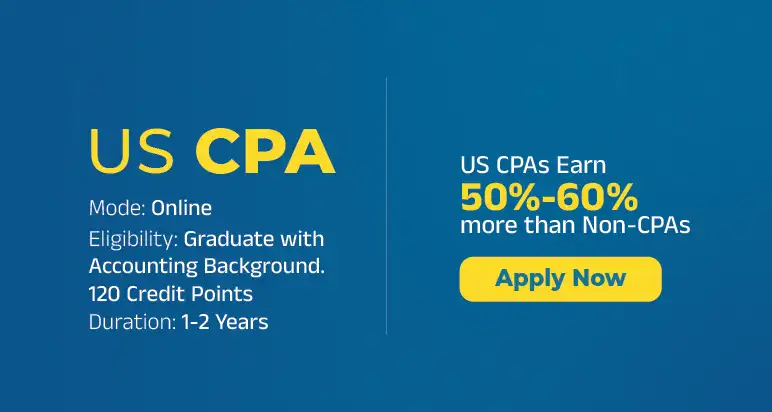
So, can tech professionals sit for the CPA exam? Yes, once the academic gap is covered. Most candidates need around 120 credits to sit and 150 to get licensed. A regular three-year Indian BCA usually lands you short on both the total count and the accounting subjects. That shortfall is fixable, but it is also where most people underestimate the effort.
The credit hours problem
Here is the part nobody warns you about early enough. Before anything, your marksheets go through an accounting credit hours evaluation for non-commerce candidates, done by an agency like NASBA or WES. They read your transcript subject by subject and tell you exactly how many accounting and business credits you actually have.
The US CPA exam requirements for BCA graduates almost always reveal a gap in core accounting. That is normal. You then close it through extra coursework. Rough idea of where people usually stand:
- B.Com graduate: often close to eligible, maybe one or two extra subjects.
- BCA or B.Tech graduate: usually needs a bridge in accounting plus extra general credits.
- MCA or MBA holder: the master's degree frequently helps push the total credits higher.
This is why CPA bridge courses for engineering graduates exist. They are short, focused accounting modules that add the missing credits so your evaluation clears. One quick caution from experience: the exact verdict depends on your specific transcript and the evaluator reading it, so two BCA graduates from the same college can sometimes get slightly different results. Plan with a small buffer.
Why is an IT background not wasted?
People assume their tech years go to zero once they switch. They don't. The CPA exam itself changed in 2024 under what is called CPA Evolution. The new structure has three core sections everyone writes, plus a choice of one discipline section. One of those discipline options is Information Systems and Controls, the ISC.
The CPA Evolution Information Systems and Controls (ISC) path is built around IT audit, data flows, system controls, and security. If you have spent years around databases, networks, or software, this is familiar ground dressed in accounting language. Choosing ISC lets a tech candidate play to their strength instead of fighting it. I'll say it plainly: for someone coming from IT, picking ISC is usually the smarter move, not the easy way out.
What does ISC actually cover?
Think system and organization controls, SOC reporting, data integrity, and the controls that sit around financial systems. A developer who has handled access permissions or audit logs already has half the intuition. The vocabulary is new. The logic mostly isn't.
From IT to accounting, in real life
Take one student, a backend developer in Pune who was decent at his job but bored. He cleared his CPA over about eighteen months while still employed, picked the ISC discipline, and moved into a risk advisory team that needed people who understood both code and controls. He did not start from zero. He repackaged what he already knew.
Then there's the other story, the quieter one. A QA tester who wanted to switch careers from IT to accounting CPA, started, then stopped twice because she tried to study all the subjects she could have skipped. Her problem was never ability. It was planned. People who figure out how to transition into corporate accounting roles smoothly almost always sort the credit evaluation and study order first, before booking a single exam.
The career side, and where to get help
The pull is real. Hybrid finance and technology career paths for CPA holders are growing fast, because companies now want finance people who are not scared of systems and data. That blend is rare, so it pays. Big 4 advisory jobs for certified public accountants increasingly look for exactly this profile in their tech risk, IT audit, and consulting teams.
If the credit math feels confusing, get a person to walk you through your own case rather than guessing from forums. You can book a free mentorship session and get your transcript looked at properly through IIC Lakshya online counselling, which saves a lot of wrong turns. A thirty-minute call about your actual marksheet beats ten hours of reading random threads.
None of this is a magic shortcut. The CPA is a serious exam, and the credit process takes patience. But for an IT person willing to do the work, the door is genuinely open. At IIC Lakshya, we've watched enough engineers make this jump to say it confidently.
Also Read
- CPA Certification After Master’s: Requirements & Preparation
- CPA After B.com
- How to Get Your CPA License?
- Key Time Management Tips for CPA Exams
- Best Books for CPA Exam Preparations
Quick FAQs
Do I need a commerce degree for the US CPA?
No. You need enough accounting and business credit hours, which can be added through bridge coursework regardless of your original degree.
Will a BCA degree be enough on its own?
Usually not. Most BCA graduates fall short on accounting credits and total hours, so extra subjects are required.
Is the ISC discipline good for IT people?
Yes. It covers IT audit, system controls, and data, which overlaps heavily with what tech professionals already do.
How long does the switch usually take?
Many working professionals finish in twelve to eighteen months, depending on study time and how many credits they need to add.
Can I keep my IT job during preparation?
Most candidates do. The exam is modular, so people study around full-time work, though it needs steady discipline.
Related Blogs