

CPA USA for CFOs in the Making - Why the C-Suite Is Increasingly CPA USA Qualified?
Last Updated On -25 Jul 2026
By Sajith R S

The CFO used to be the person who kept the books straight. Not anymore. Whoever sits in that chair now weighs in on strategy beside the CEO, takes the hard questions from investors, and ends up in front of the board on the bad days when the numbers don't add up. Big bets cross their desk too. So if that seat is where you're headed, here's a fair question to ask early: where does CPA USA for CFOs actually fit into the climb?
More people are asking it, and for good reason. Look at the leadership teams of large MNCs, US-listed companies, and global capability centres and a pattern shows up. A rising share of finance heads carry the US CPA license. Not because a certificate makes anyone a leader. Because the modern CFO job increasingly needs the exact fluency the CPA builds US GAAP controls, reporting that holds up under investor scrutiny. This article looks at what the role really involves now, why the credential keeps appearing in the C-suite and just as plainly, what it won't do for you on its own.
What does a CFO actually do today?
Ask a student what a CFO does and you'll usually hear 'manages the company's money'. Close, but a few years out of date.
A CFO today owns far more than the books. Capital allocation. Investor relations. Fundraising and, often, M&A. Forecasting that the CEO actually plans around. The board wants a story behind the numbers, not just the numbers. And when the company has US investors or a US listing, the reporting has to satisfy standards set thousands of miles away.
That last part is where a lot of strong finance people get caught out. They're brilliant at Indian accounting, then freeze when the conversation turns to US GAAP or SEC-style disclosures. The work is no longer purely domestic, and the people who rise tend to be the ones comfortable on both sides of that line.
Why do boards now ask for CPA USA for CFOs?
Here's the shift. As more Indian companies raise foreign capital, list abroad or operate as the finance engine for a US parent, the board's expectations of its finance chief change too.
They want someone who speaks the language of global investors without a translator. CPA USA for CFOs has quietly become shorthand for that. The license signals that the person can handle US reporting, sit across from an American auditor and not flinch. For a company with US money on the cap table, that's not a nice-to-have. It's close to a requirement.
You'll see this most clearly in global capability centres and US-listed firms, where the finance leadership often holds both a local qualification and the CPA. The combination, not either one alone, is what these boards have started to reward.
The part a credential won't hand you
A CPA will not make you a CFO. We've seen bright candidates collect qualification after qualification, convinced the next certificate is the missing key, while the real gaps go untouched. The corner office asks for things like no exam tests. Can you lead a team through a bad quarter? Explain a complex risk to a non-finance board in five clean sentences? Own a P&L and live with the decisions? Sit calmly in a fundraising room when the stakes are high?
Those come from years of exposure, not from passing four papers. So treat the CPA as one strong ingredient in a larger recipe. A real one, but only one. The leadership, the business sense, the nerve under pressure you build those on the job, and usually the hard way.
Where does the CPA fit on the CFO path?
The smartest move is usually to get the technical foundation locked in earlier in your career, not as a last-minute scramble when a CFO-track role appears. A CPA earned at the senior associate or manager stage gives you years to layer leadership and cross-functional experience on top of it. Leave it too late and you're trying to study for exams while also learning to lead, which rarely goes well.
One thing we tell ambitious students often: don't stack credentials, stack range. After the CPA, push for exposure outside pure accounting. Spend time in FP&A. Get close to a fundraiser. Sit in on board prep. The path to CFO runs through variety, and the qualification simply makes sure the technical base never becomes the thing holding you back.
A short note on the exam itself
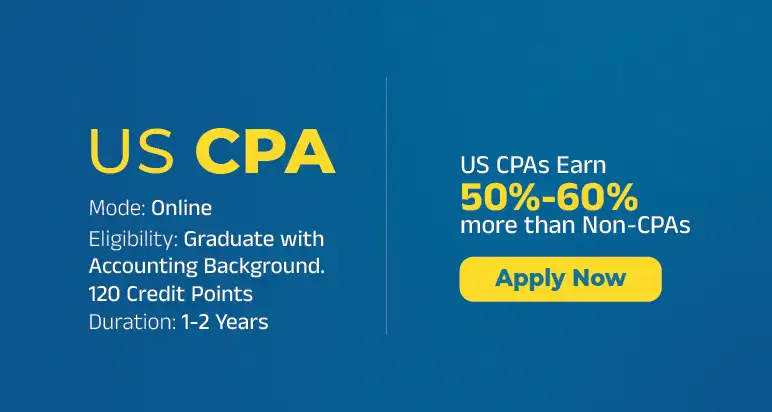
The CPA moved to a new format in 2024. You clear three core papers covering audit, financial reporting and regulation, then choose one specialist discipline that matches where you're headed. Eligibility depends on your credit hours and the US state board you apply through, and Indian degrees go through an evaluation first, so it's worth checking your standing before you plan anything. The exam is built to be done while working, which suits the kind of person already busy climbing.
Building toward the corner office
The route to a finance leadership seat has changed, and CPA USA for CFOs reflects that change rather than causing it. As companies tie themselves to global capital and global standards, the people running their finance functions need to be fluent in that world. The license is becoming part of how you prove fluency, especially in MNCs and US-linked firms.
Just don't read it as the finish line. The credential needs company. Leadership reps, time spent outside accounting, and a fair bit of patience, because this role grows on you over years rather than months. If you're early on and not sure how to order any of it, a free mentorship session or a guided counselling chat with the team at IIC Lakshya can help you map the qualification onto a plan that actually holds, rather than collecting certificates one after another and hoping.
Get the foundation right first. Then go wide.
Also Read
- How to become a CFO?
- Is CPA Worth It in India?
- How to Choose a CPA Discipline: BAR vs ISC vs TCP
- What are the exemptions available for working professionals in ACCA/CPA/CMA?
- CPA Pass Rates: How Hard Is the CPA Exam?
Frequently Asked Questions
Can CPA USA help you become a CFO?
It helps. It won't get you there by itself, though. The CPA gives you the technical and US-reporting fluency the job needs; the leadership and the wider experience are on you.
Why are more C-suite finance leaders CPA qualified?
As companies raise foreign capital or list abroad, boards want finance heads fluent in US GAAP and global standards, which the CPA signals clearly.
When should I take CPA USA for a CFO path?
Earlier is better. Clearing it at the associate or manager stage leaves you years to add the leadership and cross-functional exposure CFO roles demand.
What skills besides CPA does a CFO need?
Plenty the exam never touches. You need to lead people, allocate capital, talk to investors, own a P&L, and explain it all to a board in plain language. That comes from doing the job, not passing papers.
Is CPA USA useful for non-US companies?
Yes, especially for firms with US investors, a US listing, or global operations, where US reporting standards regularly come into play.
Related Blogs