
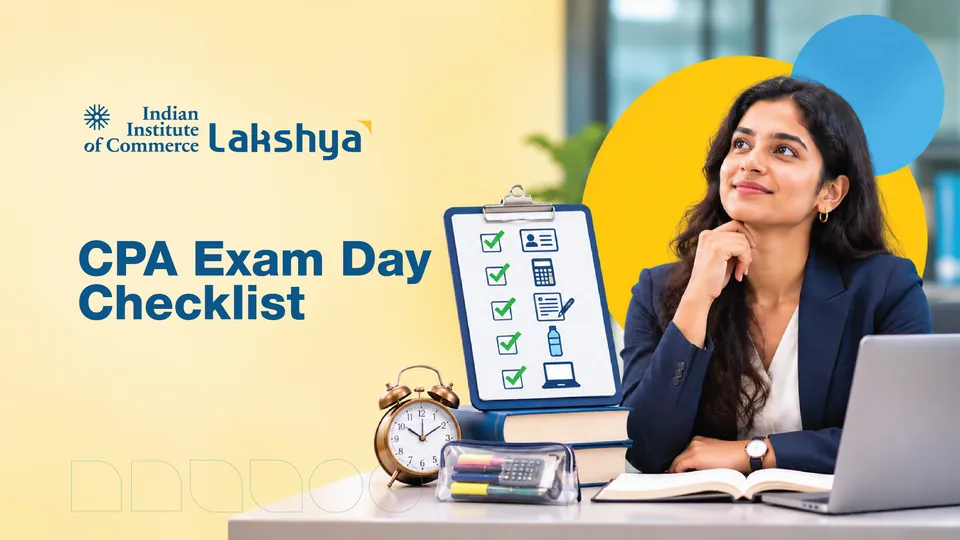
CPA Exam Day Checklist
Last Updated On -27 Nov 2026
CPA Exam day requires more than subject knowledge and revision. Candidates must arrive prepared with the correct identification, understand the test centre's security procedures and manage their time effectively throughout the examination. Missing an important document, misunderstanding check-in requirements or arriving late can create unnecessary stress on a day when concentration matters most.
A well-organised CPA Exam day checklist helps candidates verify their appointment details, prepare the required documents, follow testing rules and approach the examination with confidence. Whether taking FAR, AUD, REG or a Discipline section, candidates should confirm the latest instructions for their appointment and the relevant testing location before leaving home.
CPA Exam Day Checklist: What to Prepare Before Leaving Home
Candidates should confirm their appointment details, prepare acceptable identification and check their travel arrangements before exam day. Completing these tasks in advance reduces the risk of last-minute problems and allows candidates to focus on the examination itself.
Use this checklist the evening before your exam.
- Confirm your CPA Exam appointment date, reporting time and test centre address.
- Verify that the name on your identification matches your examination records as required by the testing authority
- Prepare the required, valid identification documents.
- Review your Notice to Schedule (NTS) and any appointment instructions.
- Check the test centre's location, travel time and parking or public transport arrangements.
- Set an alarm and plan to arrive early enough to complete check-in.
- Prepare a comfortable outfit suitable for the test centre.
- Eat a balanced meal, stay hydrated and get sufficient sleep.
- Review the current examination rules, including permitted and prohibited items.
The exact requirements can vary according to the candidate's appointment and testing location. Always follow the current instructions provided by the relevant CPA examination authority and Prometric rather than relying only on general checklists.
Documents Required for the CPA Exam
Candidates must bring acceptable identification that satisfies the examination authority's current requirements. Identification problems can prevent a candidate from being admitted, even if the exam appointment has been booked correctly.
Valid Identification
Prepare the identification documents specified in your appointment instructions. The name and other identifying details must meet the applicable testing requirements.
Before exam day, verify the following:
- Your identification is valid and has not expired.
- The name on your identification matches your examination registration as required.
- Your identification meets the accepted document and format requirements for your testing location.
- Any additional identification requirements for international candidates have been checked in advance.
Do not assume that every government-issued document is automatically accepted. Review the current Prometric and CPA examination instructions for the country where you will take the exam.
Notice to Schedule and Appointment Details
The Notice to Schedule (NTS) is an important examination document containing details associated with your authorisation to test. Candidates should review its validity and follow the instructions concerning their appointment.
Check the NTS details and your appointment confirmation before travelling. Whether you need to present a printed document or can use another permitted format depends on the current instructions, so confirm this in advance.
Keep a copy of your appointment details accessible for reference, but do not assume that an appointment confirmation can replace acceptable identification.
What Can You Bring into the CPA Exam Test Centre?
Candidates should bring only the items permitted under the current testing rules. Test centres apply security procedures, and personal belongings may need to be stored outside the examination room.
Before leaving home, review the permitted-items list provided for your appointment. Items that may be restricted include mobile phones, smartwatches, notes, books, electronic devices and personal accessories. Do not assume that an item is permitted simply because it is small or commonly used.
A practical approach is to carry only essential identification and any documents specifically required by the testing instructions. Leave unnecessary valuables and study materials at home or make arrangements to store them securely.
Candidates should also review the test centre's policies concerning lockers, breaks, food, beverages and personal belongings. These rules can affect how you prepare for the appointment, especially if you plan to take a break during the examination.
CPA Exam Check-In: What Happens at the Test Centre?
Candidates should arrive with enough time to complete the required admission and security procedures before their scheduled appointment. Check-in may involve verifying identification, confirming appointment details and completing security checks.
The exact procedure depends on the testing centre and the current examination rules. Candidates may be asked to store personal belongings, follow instructions about prohibited items and complete any required security screening.
Follow the test centre staff's instructions carefully. If you have a question about an identification document, a permitted item or a testing procedure, raise it with staff before entering the examination room.
Arriving at the reporting time specified in your appointment instructions is essential. Reaching the centre at the last minute leaves little room for traffic delays, parking problems or unexpected check-in requirements.
CPA Exam Day Time Management Strategy
Effective time management begins before the exam starts and continues throughout the testing session. Candidates should know the format of their selected section and practise distributing their time across multiple-choice questions and task-based simulations.
Each CPA Exam section has a four-hour testing duration. The most effective approach is to practise under timed conditions before exam day so that you have a realistic understanding of your pace.
Read Each Question Carefully
Read the complete question before selecting an answer or beginning a calculation. Pay attention to qualifying conditions, exceptions and words that change what the question requires.
Avoid rushing simply because a question looks familiar. A small detail in the scenario can affect the correct answer, particularly in accounting, auditing and taxation questions.
Avoid Spending Too Long on One Question
If a question becomes unusually time-consuming, apply a consistent strategy for moving forward while following the examination interface's rules. Spending too much time on one difficult question can reduce the time available for other questions and simulations.
Practise recognising when you need to move on and when a question deserves additional attention. Your approach should balance accuracy with the need to complete the examination within the available time.
Keep Track of Your Progress
Monitor the time remaining and the work left to complete. The goal is to maintain a steady pace rather than rush through the examination or spend too long on a single section of the test.
Your practice sessions should help you establish a realistic time-management approach. Avoid experimenting with a completely new strategy on exam day.
What Should You Do During the CPA Exam?
Candidates should focus on answering questions carefully, following test centre instructions and maintaining concentration throughout the examination. A familiar routine can help reduce distractions and prevent avoidable errors.
-
Read the complete question and identify exactly what is being asked.
-
Check relevant facts and figures before beginning calculations.
-
Use the available examination tools according to the instructions.
-
Review calculations and responses when time permits.
-
Follow all security and break procedures.
-
Ask test centre staff for assistance if a technical or procedural problem occurs.
If you experience a computer issue or another disruption, notify the test centre staff promptly and follow their instructions. Do not attempt to resolve a technical issue independently if doing so would violate the examination rules.
Candidates should also remember that breaks and the handling of the examination timer are governed by the applicable rules. Understand these arrangements before the test rather than making assumptions during the session.
Last-Minute CPA Exam Revision: What to Review and What to Avoid
The final revision session should reinforce familiar concepts and clarify a few important points rather than introduce large amounts of unfamiliar material. Last-minute preparation is most useful when it reduces uncertainty without creating unnecessary stress.
Focus on:
-
Key concepts and technical rules you have already studied.
-
Common mistakes identified during mock examinations.
-
Important formulas or calculation methods relevant to your section.
-
Areas where you repeatedly misinterpreted questions.
-
The exam format and time-management approach you practised.
Avoid trying to complete entire new chapters on the morning of the exam. Do not use the final hours to compare your preparation with other candidates or repeatedly check predicted scores. These activities can increase anxiety without meaningfully improving readiness.
Allow enough time to travel, eat and complete check-in procedures. A calm, organised start is more useful than squeezing in one more revision session at the expense of punctuality or concentration.
CPA Exam Day Checklist for International Candidates
International candidates should verify the requirements for their specific testing location well before exam day. The acceptable identification documents, appointment procedures and other administrative requirements may differ by country or testing arrangement.
Candidates taking the CPA Exam in India or another country outside the United States should pay particular attention to identification requirements, name matching, appointment details and the current rules applicable to their test centre.
Check the following before travelling:
- Confirm that your appointment is valid for the selected testing location.
- Review the current identification requirements for international candidates.
- Verify that your name and identification details meet the examination rules.
- Check the test centre's address and travel arrangements.
- Review the appointment instructions for reporting time and permitted items.
- Confirm any country-specific or test-centre-specific requirements.
Do not rely on another candidate's experience as proof that the same documents or procedures will apply to you. Confirm the current instructions for your own appointment.
Common CPA Exam Day Mistakes to Avoid
Most exam day problems can be reduced through advance preparation and careful attention to the testing instructions. Candidates should avoid the following mistakes:
-
Arriving late: Traffic, parking and check-in delays can create unnecessary pressure. Plan to reach the centre with a reasonable time buffer.
-
Bringing unacceptable identification: Verify the accepted documents and name-matching rules before exam day.
-
Assuming all personal items are permitted: Check the official rules and avoid carrying unnecessary devices or study materials.
-
Changing your exam strategy at the last minute: Use the approach practised during mock examinations.
-
Skipping meals or sleep: Fatigue and hunger can make concentration more difficult.
-
Spending too long on one question: Monitor the time remaining and maintain a steady pace.
-
Ignoring technical or procedural problems: Inform test centre staff promptly and follow their instructions.
The aim is to remove preventable distractions so that your preparation and subject knowledge can guide your performance.
Frequently Asked Questions
What should I bring to the CPA Exam?
Bring the acceptable identification documents required by your appointment instructions and any additional documents explicitly specified by the examination authority. Check the current rules before exam day because requirements can vary by location.
Do I need to bring my CPA Exam NTS?
Candidates should review their NTS and appointment instructions before travelling. The NTS contains important examination authorisation details, but the requirement to present a printed copy or use another format depends on the current instructions.
How early should I arrive for the CPA Exam?
Arrive according to the reporting time specified in your appointment instructions and allow enough time for travel and check-in. Reaching the test centre early helps reduce the risk of being delayed by traffic or security procedures.
Can I bring my phone or smartwatch into the CPA Exam?
Personal electronic devices are generally restricted in the examination room, and test centres have specific security procedures for belongings. Review the current permitted-items rules and follow the test centre's instructions for storing restricted items.
How long is the CPA Exam?
Each CPA Exam section has a four-hour testing duration. Candidates should practise with the relevant examination format and develop a time-management strategy before exam day.
Can I take a break during the CPA Exam?
Break arrangements depend on the examination rules and the available options within the testing interface. Review the current instructions before exam day so that you understand how breaks work and whether they affect the testing timer.
What happens if I forget my identification on CPA Exam day?
If you cannot meet the identification requirements, you may not be admitted to the examination. Contact the test centre or relevant examination support service for guidance, but do not assume that an alternative document will be accepted without confirmation.
What should I do if I experience a technical problem during the CPA Exam?
Notify test centre staff immediately and follow their instructions. Reporting the issue promptly allows the centre to address the problem according to the applicable examination procedures.
What should I revise on the morning of the CPA Exam?
Review a few familiar concepts, important rules and mistakes identified during practice. Avoid attempting to learn large amounts of new material, and leave sufficient time for travel, check-in and preparation before the examination begins.
Related Blogs