ACCA Course in UAE
Last Updated On -30 Sep 2026
By Nishtha Singh

"Is ACCA a good choice in the UAE?" With the Gulf firmly established as a global centre for finance, trade, and business, this question comes up constantly among students and working professionals in the region. The short answer is yes — the ACCA qualification has become one of the most sought-after credentials in the UAE, valued by employers ranging from the Big 4 to fast-growing local businesses. This blog explains the scope, career paths, salary potential, and the specific reasons ACCA holds such strong value across the UAE.
Why ACCA Is in Demand in the UAE?
The UAE hosts the regional headquarters of countless multinational firms, all four of the Big 4 accountancy networks, major banks, and a thriving ecosystem of small and medium enterprises. Every one of these organisations needs finance professionals who understand international standards and can operate in a cross-border environment. Because ACCA is globally recognised and built around International Financial Reporting Standards (IFRS) — the framework UAE businesses use — ACCA members fit naturally into the region's commercial landscape.
Demand has grown further with regulatory change. The introduction of VAT and, more recently, corporate tax in the region has increased the need for qualified accountants who can handle compliance, reporting, and advisory work. This has made internationally qualified professionals more valuable than ever.
Career Scope for ACCA in the UAE
Roles Available
ACCA members and part-qualified students work across a wide range of finance functions in the UAE. Common roles include auditor, financial analyst, management accountant, tax consultant, internal auditor, financial controller, and finance manager. As you gain experience and complete the qualification, senior positions such as finance director become realistic targets.
Employers
The Big 4 — Deloitte, PwC, EY, and KPMG — are among the most active recruiters of ACCA talent, but they're far from the only ones. Multinational corporations, regional conglomerates, banks, financial services firms, and consulting practices all seek ACCA professionals. The concentration of these employers in Dubai and Abu Dhabi creates a genuinely competitive market for qualified candidates.
Tax-Free Income
One of the biggest financial draws of the UAE is tax-free personal income. This significantly boosts your take-home pay compared to many other markets, meaning the same nominal salary stretches considerably further. For ambitious finance professionals, this is a meaningful long-term advantage.
Why Study ACCA for a UAE Career?
Several features make ACCA especially well-suited to the UAE. Its international recognition means your qualification travels with you across the Gulf and beyond, giving you mobility if you later want to move within the region or internationally. Its IFRS-based syllabus mirrors exactly how UAE businesses prepare their accounts, so what you learn is directly applicable. And its flexible exam structure allows you to study while working, which suits professionals already based in the region who can't step away from employment.
How to Build the Path for ACCA in UAE?
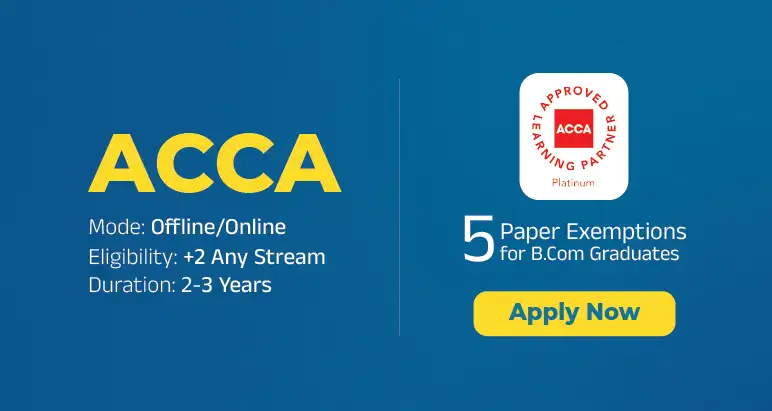
Students can begin ACCA after completing 12th (with qualifying marks) or after graduation, often with exemptions if they already hold a relevant degree. Alongside the exams, you complete the Ethics and Professional Skills module and fulfil the practical experience requirement. Ideally, you gain that experience within a UAE-based finance role, which builds region-specific exposure and local professional connections at the same time. Many students in the UAE study part-time through approved learning providers while working full-time, spreading the cost and gaining experience simultaneously.
Challenges to Be Aware Of: ACCA in UAE
It's worth being realistic. The UAE market is competitive, and while ACCA opens doors, employers still value practical experience and soft skills alongside the qualification. The Strategic Professional papers are demanding, and balancing them with a full-time job requires discipline. Choosing top-tier academic mentorship makes navigating these challenges and clearing your exams far more achievable. As an ACCA Approved Platinum Learning Partner, IIC Lakshya provides world-class coaching, flexible learning modules, and expert guidance to help you master the curriculum, build relevant professional competencies, and launch a lucrative, tax-free finance career in the UAE.
Read More:
Frequently Asked Questions (FAQs)
Is ACCA recognised in the UAE?
Yes. ACCA is widely recognised across the UAE and highly valued by the Big 4, multinational corporations, banks, and consulting firms. Its alignment with IFRS makes it particularly relevant to how UAE businesses operate.
Can I earn well as an ACCA in the UAE?
Salaries are competitive, and combined with the UAE's tax-free personal income, take-home earnings are strong. Earning potential rises significantly as you complete the qualification and gain experience.
Can I study ACCA while working in the UAE?
Yes. ACCA's flexible structure is specifically designed to let candidates study alongside full-time employment, which is how many professionals in the region complete it.
Related Blogs