
Career Opportunities in Accounting Standards and Policy
Last Updated On -04 Aug 2026
By Sagnika Sinha
If you are planning to develop a career in accounting standards and policy roles, you must learn all about Accounting Standards. It is the foundation of financial reporting as every company, be it small or a multinational corporation, they will need to prepare reliable financial statements and be compliant with all accounting standards and regulations.
For students and working professionals working in finance and accounting, there are huge opportunities related to accounting standards and policy roles. They have skills related to technical accounting and problem-solving, helping businesses to operate efficiently.
Build a Career in Accounting Standards and Policy
This is why continuing learning is so important. Furthermore, it also guides you through the opportunities that are waiting for you in the accounting vs finance degree. Below are the phases through which you have to go when you are preparing for a career in accounting standards and policy roles.
Phase 1: Foundation & Technical Proficiency (Years 1-4)
This is the foundational base for everyone who has chosen this career path to build knowledge and practical experience. In this phase, you will develop a deeper understanding and insight into financial reporting, accounting principles, and regulatory requirements.
Entry-Level Roles
It can also be the level where a lot of IT and non-finance professionals can move into accounting roles. Most professionals begin in positions such as:
- Junior Accountant
- Accounting Analyst
- Finance Executive
- Consolidation Associate
- IFRS Associate
- Graduate Accountant
- Audit Associate
- Financial Reporting Associate
In these roles, professionals get exposed to day-to-day activities related to the preparation of financial statements and the application of accounting standards.
Key Tasks
Your responsibilities during this phase may include:
- Preparing journal entries
- Assisting with month-end and year-end closing
- Supporting statutory audits
- Reconciling accounts
- Preparing financial statements
- Maintenance of accounting records and documentation
- Applying accounting standards
- Assisting with IFRS reporting
- Preparing working papers
- Supporting internal controls
Professionals can develop a strong technical foundation, knowledge, and expertise for future specialization. Through important finance and accounting exams in July 2026, professionals can decide on their preparation strategies.
Core Certifications Required
Here are some of the significant and valuable certifications:
- ACCA
- Chartered Accountants (CA)
- CPA
- CMA
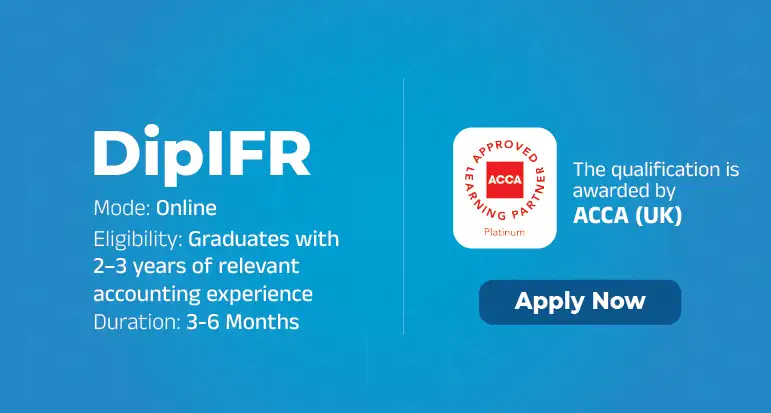
- Diploma in IFRS (DipIFR)
In addition to professional qualifications, employers appreciate strong skills in:
- Microsoft Excel
- ERP systems (SAP, Oracle)
- Financial reporting
- Accounting software
- Data analysis
Phase 2: Specialization (Years 5-9)
This is the phase where professionals gain practical experience while specializing in financial reporting and technical accounting. Let’s explore these roles:
Mid-Level Roles
Typical roles include:
- Accounting Policy Analyst
- IFRS Specialist
- Technical Accounting Manager
- Financial Reporting Manager
- Group Reporting Manager
- Consolidation Manager
- Finance Business Partner
- Regulatory Reporting Manager
Professionals also begin participating in finance transformation and advisory projects. This is how to move into technical accounting roles with DipIFRS, reflecting a future career with diverse opportunities.
Key Tasks
At this stage, professionals will have responsibilities that are technically more demanding and strategic. Common activities include:
- Interpreting new accounting standards
- Preparing accounting policy documents
- Advising business units
- Managing financial reporting projects
- Supporting mergers and acquisitions
- Reviewing complex accounting transactions
- Leading IFRS implementation
- Coordinating external audits
- Managing reporting timelines
- Mentoring junior finance professionals
This phase develops both technical expertise and leadership skills.
Advanced Education
Professionals integrate practical and additional knowledge, leading to increasing expertise. Popular options include:
- MBA (Finance)
- Master's in Accounting
- Advanced IFRS certifications
- Executive leadership programmes
- Financial modelling certifications
- Data analytics programmes
With the evolution of the financial landscape in the business world, the development of these skills will lead to an increase in career opportunities. There are technologies like Oracle Cloud, OneStream, Power BI, and SAP S/4HANA that will enhance your chances of topping the competition.
Phase 3: Leadership & Policy Formulation (Year 10+)
This is the state where professionals transition into leadership positions and decision-making level because they have excelled at their roles of trusted advisors and technical experts. Their responsibilities will be increasing considerably with corporate leadership, decision-making, and governance.
Senior Roles
Senior leadership positions include:
- Director of Accounting Policy
- Head of Financial Reporting
- Director of Technical Accounting
- Group Finance Director
- Vice President (Finance)
- Chief Accounting Officer
- IFRS Advisory Partner
- Chief Financial Officer (CFO)
This level will see professionals shape the future financial reporting strategies for MNCs and industries. Furthermore, several accounting jobs in 2026 offer higher salaries with the skills that professional accountants possess.
Key Tasks
Here are some of the significant responsibilities for leadership positions:
- Managing relationships with regulators and auditors
- Evaluating new accounting standards
- Presenting financial reports to boards
- Overseeing regulatory compliance
- Developing accounting policies
- Advising executive management
- Leading finance transformation initiatives
- Managing global reporting teams
At this level, communication and business strategy become just as important as technical accounting expertise.
Exit Opportunities
Accounting policy professionals enjoy diverse career opportunities beyond traditional finance roles. Here are some of the probable career paths:
- Finance Transformation Director
- Consulting Partner
- IFRS Advisory Leader
- Corporate Controller
- Risk Advisory Director
- Financial Regulation Specialist
- Corporate Governance Advisor
- Academic and Professional Trainer
- Chief Financial Officer (CFO)
- Independent Accounting Consultant
Career opportunities will increase across the world in industries as technical expertise are quite in high demand.
Why Choose a Career in Accounting Standards and Policy?
Here are some of the significant long-term benefits when choosing a career in Accounting Standards and policy:
- High demand across industries
- Excellent salary growth
- Global career opportunities
- Strong professional reputation
- Leadership potential
- Continuous learning
- Exposure to multinational companies
- Strategic business involvement
As businesses become increasingly global and regulations continue evolving, demand for accounting policy experts will remain strong. With the predictions of how the future of accounting in 2030 is shaping, having both technical knowledge and practical expertise has become a necessity.
Wrapping Up!
In conclusion, to pursue a successful career in accounting standards and policy, professionals and students must develop knowledge and skills in technical accounting, leading to executive leadership positions. It is a strong foundation for your professional expertise in IFRS, accounting policies, financial reporting, and regulatory compliance.
Read More
- IFRS History & Development: Global Accounting Standards
- Countries Using IFRS: Global Accounting Standards Explained
- AI in IFRS Accounting: Functions, Benefits, and Limitations
- What is Accounting? Meaning, Key Features and Career
- Golden Rules of Accounting Made Simple for Beginners
Frequently Asked Questions
How can I stay updated with changing accounting standards?
Everyone who practices in the finance and accounting sector must stay updated with changing accounting standards, both domestic and international, leading to practical exposure.
Are accounting standards careers suitable for CA and ACCA students?
Accounting standards careers are suitable for CA and ACCA students because both qualifications will provide a significant accounting foundation. There are several careers offering opportunities in corporate finance, IFR advisory, IFRS advisory, technical accounting leadership, and financial reporting.
Can accounting policy professionals become CFOs?
Definitely, accounting policy professionals become CFOs with their in-depth technical accounting, financial reporting, and accounting policy roles. They have to prepare for executive positions leading to overall growth and success.
Is an MBA useful after CA or ACCA for this career?
Yes, an MBA is quite useful after CA or ACCA in this career because it will help you strengthen skills, knowledge, and expertise in leadership, decision-making skills, and business management. It is not mandatory; however, it does help in progressing towards executive and senior management positions.
Why is IFRS knowledge important?
IFRS knowledge is significant on both the domestic and international levels because it is a global accounting standard across more than 140 countries. Businesses follow the global framework, leading to the preparation of transparent and compliant financial statements.
Related Blogs