
What Are the Benefits of Combining an MBA with ACCA?
Last Updated On -06 Nov 2026

A finance team reports that a company has made a profit. The owner has another question: Then why are we struggling to pay suppliers?” Answering that takes more than reading the profit figure. Someone needs to examine customer payments, stock purchases, borrowing, and the way the business operates.
That connection between accounts and everyday business decisions explains the appeal of an ACCA MBA. ACCA provides depth in accounting and finance. An MBA adds opportunities to study how organisations make decisions, manage people, and serve customers.
For a commerce graduate, the combination can offer a useful direction. It also means committing money and time to two demanding programmes. Whether it is worthwhile depends on the work you hope to do and the quality of the teaching.
Before choosing an integrated MBA and ACCA course, look beyond the qualification names. Examine the subjects, assessment schedule, practical exposure, and support available when you find a topic difficult. Those details will shape your experience.
What Does Each Qualification Contribute?
An MBA introduces you to several business functions. Depending on the programme, you may study marketing, operations, organisational behaviour, strategy, and finance through assignments and case discussions.
ACCA takes you deeper into professional accounting subjects, including reporting, audit, taxation, and financial management.
The phrase MBA with ACCA qualification describes a combined study pathway, but the awards remain separate. Under the current ACCA structure, membership requires the relevant exams, the Ethics and Professional Skills Module, and practical experience. This includes at least 36 months of relevant work and completion of the required performance objectives. An MBA does not replace these requirements.
The Main ACCA MBA Benefits
Studying an MBA alongside ACCA gives you more opportunities to connect accounting lessons with business problems. The value becomes clearer when you look at the tasks you could handle at work.
Understanding the business behind the accounts
Consider a manufacturer deciding whether to accept a large order at a discount. The calculation starts with costs and margins. The discussion soon reaches production capacity, delivery commitments, and relationships with existing customers.
ACCA study helps you examine the financial side. An MBA can give you practice considering the other departments involved.
Among the most useful ACCA benefits is the ability to question financial information. Combining that habit with a wider understanding of business can help you make better-supported recommendations.
Learning to explain your judgement
In a workplace, people may disagree with your recommendation even when your calculations are correct. A sales manager might question your assumptions. An operations manager might point out a practical constraint.
MBA group projects provide opportunities to work through such disagreements. Make the most of them:
- Explain how you reached your answer.
- Identify assumptions that could change the result.
- Listen when someone raises a practical objection.
- Present a revised recommendation when necessary.
These are useful habits for anyone who hopes to move into roles involving budgets, teams, or business advice.
Exploring different kinds of finance work
The benefits of ACCA in India depend partly on where you apply the knowledge. Reporting, planning, and internal audit involve different working days, even though all sit within finance.
|
Area of work |
A typical task |
|
Financial reporting |
Investigate an accounting difference before closing the books. |
|
Financial planning and analysis |
Explain why spending exceeded the budget. |
|
Commercial finance |
Assess whether a customer contract is profitable. |
|
Internal audit |
Examine why a purchasing control failed. |
An MBA can add context to these tasks. Still, entry into a particular role depends on the vacancy, your skills, and relevant experience.
Receiving credit for eligible previous study
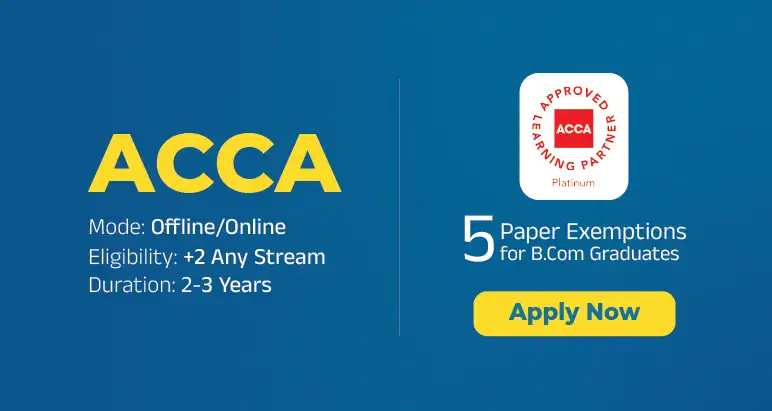
Exemptions are another of the practical ACCA course benefits, although they vary by qualification.
ACCA currently permits up to nine exemptions across Applied Knowledge and Applied Skills. It does not offer exemptions from Strategic Professional exams. Check the exact institution, course, and graduation year before assuming that an advertised exemption count applies to you.
An exemption saves an exam attempt. You should still revise the underlying subject if your knowledge feels weak.
Who Should Consider ACCA with MBA in India?
ACCA with MBA in India deserves consideration if you enjoy accounting but also want to understand decisions outside the finance department.
It may suit:
- A final-year commerce student planning a postgraduate finance pathway.
- A graduate interested in reporting, budgeting, or commercial analysis.
- An early-career accountant seeking broader business knowledge.
- A professional who can protect regular study time alongside work.
Your interests matter more than collecting another qualification. If you strongly prefer marketing or human resources, consider whether professional accounting study serves your plans.
MBA eligibility varies between universities. Check graduation, minimum marks, entrance tests, and any other admission conditions. Assess ACCA entry separately; the ACCA course overview can help you begin that discussion.
Choosing an ACCA MBA Route You Can Manage
There is more than one ACCA MBA route. You can study through an integrated programme, begin with ACCA, or consider an MBA after gaining experience.
A graduate may prefer a coordinated timetable. Someone working through month-end deadlines might need a slower pace. Neither choice is inherently better.
Before enrolling, sketch an ordinary week. Include commuting, classes, work, meals, rest, and independent revision. Then consider what happens when an assignment deadline falls close to an ACCA exam.
Ask the provider:
- How do the two assessment calendars fit together?
- What happens if I need to repeat an exam?
- Can I adjust my study load?
- When can I gain relevant work experience?
ACCA’s redesigned Strategic Professional exams begin in September 2027. Students starting now should ask how their planned progress fits the transition arrangements.
Making Sense of ACCA MBA Salary in India
A search for ACCA MBA salary in India may produce an attractive figure without explaining who earned it. Was that person a fresher? Did they already have five years of experience? Was it the highest offer from one placement batch?
Without that context, the number tells you little.
When evaluating an ACCA MBA salary claim, ask for:
- The job title and experience level.
- Fixed pay separately from bonuses or incentives.
- The batch’s median salary, where available.
- The number of students who secured placements.
- The location and nature of the work.
For your own planning, compare vacancies that match your likely profile after studying. A qualification can support your application, but interviews, practical skills, and work experience still matter.
What Should ACCA MBA Fees Include?
Ask for a complete breakdown of ACCA MBA fees before comparing providers. One quotation may include revision classes while another covers tuition alone.
Check whether you must budget separately for:
- University admission, tuition, and examination charges.
- ACCA registration and annual subscriptions.
- Applicable exam, exemption, and ethics-module fees.
- Books, practice materials, and additional coaching.
- Resits, travel, and accommodation.
Also consider earnings you may give up during full-time study. Keep some room in the budget for delays; completing every assessment on the first attempt is a goal, not a financial planning assumption.
Comparing MBA with ACCA Colleges in India
When shortlisting MBA with ACCA colleges in India, first establish who awards the MBA and who teaches the ACCA component.
For universities offering ACCA MBA pathways, examine the programme’s applicable recognition, assessment arrangements, and confirmed exemptions. Ask to see a sample timetable rather than relying on a description such as “flexible learning.”
Find out what placement assistance includes. Interview preparation, employer introductions, and an assured job are different things.
IIC Lakshya, an ACCA Approved Platinum Learning Partner, offers an integrated pathway. Discuss the relevant centre, university arrangement, and academic support before deciding whether it suits you.
Also Read
- MBA + ACCA Consulting Jobs: Roles & Career Scope
- Career Options after MBA in Finance
- ACCA Approved Employer: Meaning, Benefits & Companies
- ACCA + MBA Career Progression into Senior Management
- Pursuing CFA After MBA - Is It Worth It?
Decide What You Want the Combination to Achieve
The benefits of ACCA course study become clearer when you connect them to work you want to perform. Likewise, ACCA benefits in India should be weighed against your chosen role, budget, and opportunity to gain experience.
An MBA with ACCA in India can be a worthwhile choice for someone who wants accounting depth and wider business understanding. Taking the qualifications in stages may be equally sensible.
Before committing to an ACCA MBA, choose two or three roles to investigate. Compare their requirements with what the programme teaches. If you need course-planning guidance, bring those roles to the discussion along with your academic records and budget. That gives the conversation a useful starting point: the work you want to become capable of doing.
Related Blogs