
Who Should Study Management Accounting? A Simple Self-Check
Last Updated On -31 Oct 2026
Choosing a finance course becomes easier when you understand where the subject can take you. If you are interested in how companies control expenses, set budgets and plan for growth, management accounting is worth exploring. It connects accounting knowledge with the everyday decisions involved in running a business.
A Management Accounting Course can appeal to students exploring career options, graduates preparing for their first job and professionals looking to move beyond routine accounting work. Learners from non-commerce backgrounds can explore it too, with time set aside to build their accounting foundations.
Before choosing a course, consider your interests, current knowledge and the kind of work you would like to do. This guide offers a simple self-check to help you assess whether management accounting suits you, understand where to begin and decide whether a professional qualification such as the CMA USA course fits your career plans.
Management Accounting Meaning, Without the Jargon
Management accounting helps people inside a business use information to make decisions. That includes setting budgets, studying costs, comparing results and estimating what might happen next.
Consider a bakery receiving a large order. The customer wants a discount. Before accepting, the owner needs answers:
- Will the price cover ingredients, packaging and additional labour?
- Will existing customers lose their usual delivery slots?
- Does the order require overtime or another oven?
- How much will the bakery actually earn?
Recording the sale is one task. Working out whether the order makes commercial sense is another.
A useful introduction to management accounting brings these questions into the classroom. Calculations matter, but so does knowing which costs belong in the decision.
Who Might Enjoy a Management Accounting Course?
A commerce background can make the opening lessons more familiar. It does not, by itself, tell you whether you will like the subject.
Think about your current situation:
|
Where you are now |
A reason to explore the subject |
|
You are studying B.Com or BBA. |
You enjoy applying costing and budgeting concepts to business problems. |
|
You have graduated and are looking for work. |
You want to explore reporting, cost analysis or junior finance roles. |
|
You already work in accounts. |
You want to understand the reasons behind monthly results. |
|
You come from a non-commerce stream. |
You are curious about finance and willing to study its foundations. |
|
You run a business or manage a department. |
You need greater confidence with budgets, margins and spending decisions. |
For the last group, a short course may be enough. A professional qualification makes more sense when it supports a broader career plan.
Five Questions to Ask Yourself
1. Does an Unexplained Difference Bother You?
You budgeted ₹8,000 for a college event. The final bill reaches ₹10,500.
Would you simply record the difference, or check what caused it? Perhaps attendance increased. Perhaps the supplier charged more. Those explanations suggest different decisions for the next event.
If you enjoy this kind of investigation, you have a good reason to explore the subject.
2. Will You Work Through Unfamiliar Basics?
Terms such as accruals and contribution margin can slow beginners down. That is a learning gap you can address.
Before advanced preparation, learn basic accounting well enough to explain:
- Why a profitable business might still run short of cash.
- How buying equipment differs from paying an electricity bill.
- What customers owe the business.
- Which expenses change when production increases.
Being able to repeat a definition is a start. Using it correctly in a fresh question takes practice.
3. Can You Stay Patient With Detailed Work?
Some tasks involve checking spreadsheets, tracing differences and correcting errors. The answer may take longer than expected.
Consider whether you can tolerate that process. Enjoying business discussions helps, but you must also be willing to inspect the figures supporting them.
You can improve your accuracy through habits: label assumptions, check formulas and review unusual results.
4. Would You Explain Your Answer to Someone Else?
Suppose you recommend reducing a discount. A sales manager asks whether customers will leave.
You need to explain your reasoning, listen to the concern and reconsider your assumptions where necessary. A spreadsheet cannot handle that conversation for you.
Practise by writing three sentences about a calculation: what happened, what caused it and what you would investigate next.
5. Where Will Study Fit Into Your Week?
Look at an ordinary week, including travel, assignments or office deadlines. Identify specific study slots.
Then try that routine before enrolling. Complete a short lesson and solve questions without looking at the answers.
This small trial tells you more about your readiness than an ambitious timetable you have never followed.
Starting Without a Commerce Background
You may understand percentages comfortably but find a balance sheet confusing. Start there.
A sensible sequence for accounting basics for non commerce students is:
- Understand common accounting terms and everyday transactions.
- Learn how the main financial statements connect.
- Practise percentages, ratios and spreadsheet calculations.
- Move into costs, budgets and simple business decisions.
Compare accounting courses for beginners by looking at exercises and teaching depth. A certificate alone tells you little about what you will practise.
For online accounting courses for beginners, check whether you can ask questions and receive useful feedback. Recorded access helps with scheduling, but difficult topics still need attention.
The CMA USA guide for non-commerce students offers another starting point for reviewing your preparation needs.
Choose the Course Around the Work You Need
Similar course names can hide quite different syllabuses.
An accounting for non accountants course may suit a department manager who needs to read reports and discuss budgets.
An accounting and finance course may provide broader exposure to reporting, finance concepts and business decisions.
A financial management course may give more attention to funding, investment choices and working capital.
When comparing accounting courses, ask for a sample lesson. Check whether the teaching starts at your level and covers the tasks you want to understand. “Beginner-friendly” should mean more than a label on the brochure.
Where CMA USA Fits Into the Decision
CMA USA is a professional certification, so the commitment extends beyond learning a few accounting concepts.
IMA’s certification requirements include:
- Active IMA membership.
- Successful completion of both examination parts.
- An eligible bachelor’s degree or accepted professional qualification.
- Two continuous years of relevant management accounting or financial management experience.
- Compliance with IMA’s ethical standards.
Completing the examinations does not automatically mean you have met every certification requirement. Review your education and experience separately.
Before paying, also calculate the full cost. Include coaching, examination charges, materials and a possible resit. Choose your preparation schedule around your starting knowledge and available study time.
Jobs, Salary and the Longer Career Path
The management accountant career path can begin in several places. Your first job might involve reporting support, finance operations or cost analysis.
Read the responsibilities carefully. A role offering budget comparisons and monthly reporting could provide useful experience, even without an impressive title.
As your experience develops, you may explore budgeting, forecasting, FP&A or wider finance responsibilities. Progress depends on the work you can handle and the opportunities available.
Treat salary figures with the same care you would give a financial report:
- Check whether the figure covers freshers or experienced employees.
- Separate fixed pay from bonuses and other benefits.
- Compare similar roles in your intended location.
- Ask what skills and responsibilities justify the advertised pay.
For longer-term preparation, practise checking data and explaining results alongside using spreadsheets and reporting tools. Employers need usable work, not just familiarity with software names.
Also Read
- How CMA USA Frames the Decision to Cut or Invest?
- Why CA and CMA USA is perfect Combination for Corporate India?
- Performance Management in CMA USA
- Cost Management in CMA USA
- CMA USA Work Experience Requirement
Make a Small Test Before a Big Commitment
Try one costing lesson. Build a simple monthly budget. Read five job descriptions and note which responsibilities appeal to you.
If you enjoy the exercise but struggle with terminology, begin with foundations. If the work itself leaves you uninterested, explore other finance specialisations before enrolling.
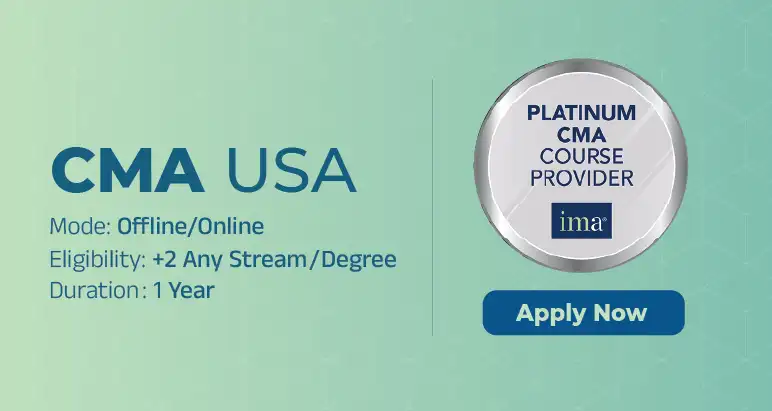
A Management Accounting Course should support a direction you understand. For help assessing that direction, discuss your background and study commitments with IIC Lakshya, a Platinum CMA Course Provider. Review the CMA USA syllabus and course details during that conversation, and ask where you should begin not only how quickly you can finish.
Related Blogs