MBA with ACCA: Audit & Assurance Career Guide
Last Updated On -06 Nov 2026
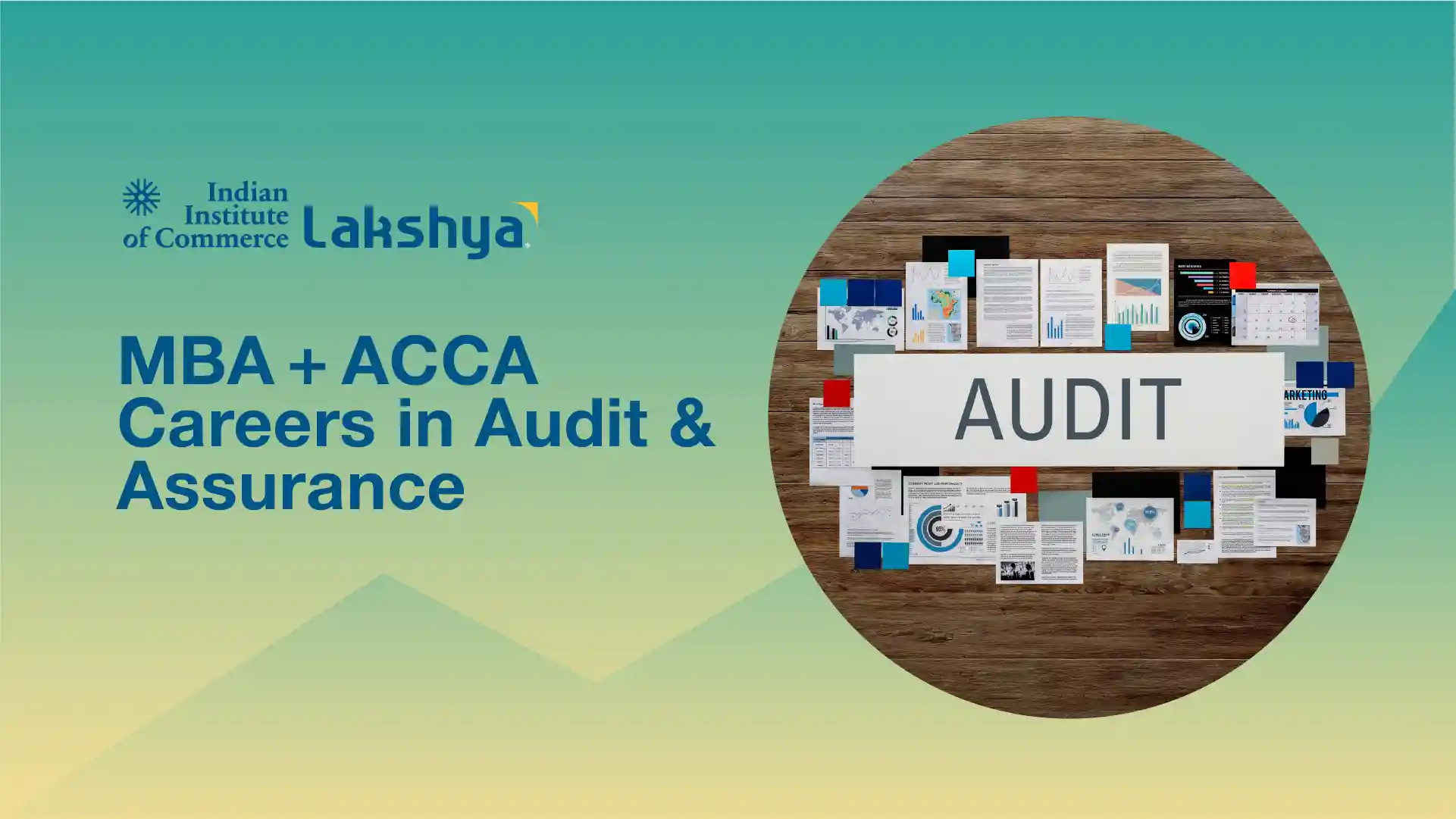
Have you ever wondered who checks whether a company's financial statements are reliable? Or who investigates financial fraud and helps organisations manage business risks?
Audit and Assurance professionals perform these important responsibilities. If you want to build a career in this field, combining an MBA with ACCA can give you a valuable mix of technical finance knowledge and business management skills. You can learn how it can be gainful when pursuing ACCA for audit and finance professionals.
ACCA develops your understanding of accounting, auditing, financial reporting, and professional ethics. An MBA adds leadership, strategic thinking, communication, and management skills. Together, these qualifications can prepare you for several career paths in audit and assurance. Let's explore them.
Key Career Pathways in Audit & Assurance
Audit and Assurance is a broad career field. It goes beyond checking financial statements and verifying accounting records.
Professionals in this industry help organisations maintain transparency, manage risks, strengthen internal controls, and build stakeholder confidence. An MBA + ACCA background can support three important career pathways:
- External Audit and Statutory Assurance.
- Internal Audit and Risk Advisory.
- Specialty Assurance, including Forensic and ESG Auditing.
Your career choice will depend on your interests, professional experience, and the type of organisation you want to work with.
External Audit & Statutory Assurance
External auditing involves examining an organisation's financial statements and supporting records. Auditors check whether financial information presents a reliable picture of the company's financial position and performance.
They also review accounting policies, supporting documents, internal controls, and financial transactions. You can take online ACCA coaching for professionals with irregular schedules to learn more about these aspects.
The Advantage
ACCA provides technical knowledge in auditing, accounting standards, financial reporting, and professional ethics. An MBA adds business understanding and management skills. You can understand how different departments operate and how their activities affect financial performance.
This combination can help you understand both the numbers and the business behind them. It can also prepare you for international audit engagements, particularly those involving multinational companies and overseas reporting requirements.
Important for Indian students: ACCA members can build careers in audit teams and assurance functions in India. However, ACCA alone does not authorise you to sign statutory audit reports for Indian companies. Indian statutory audit signing rights are reserved for eligible ICAI-qualified Chartered Accountants. If statutory audit practice in India is your goal, the CA qualification remains essential.
Target Roles
You can explore roles such as:
- External Audit Associate.
- Audit Senior or Senior Associate.
- Assurance Analyst.
- Audit Manager.
- International Audit Professional.
- Financial Reporting and Assurance Specialist.
The actual job title and eligibility requirements will depend on the employer and the country in which the audit takes place.
Internal Audit & Risk Advisory
Internal auditing focuses on an organisation's internal processes, controls, and risk management systems. Unlike external auditors, internal auditors work closely with management to identify weaknesses and recommend improvements.
This is what a day in the life of an auditor, an accountant, and a business analyst looks like. For example, a company may experience repeated inventory losses or unexplained expenses.
An internal auditor investigates the processes, identifies control gaps, and recommends corrective action. Risk advisory professionals also help businesses identify financial, operational, regulatory, and technology-related risks.
The Advantage
ACCA develops your understanding of governance, risk management, internal controls, and financial processes. An MBA strengthens your ability to understand organisational structures, business strategy, and management decisions.
These skills can help you move beyond routine checking and contribute to better business practices. Your MBA training can also help you communicate audit findings to department heads and senior management.
Target Roles
Some relevant career options include:
- Internal Audit Analyst.
- Internal Audit Executive.
- Risk Advisory Associate.
- Internal Controls Specialist.
- SOX Compliance Analyst.
- Risk and Governance Consultant.
- Internal Audit Manager.
These positions offer opportunities across banking, insurance, technology, manufacturing, retail, and consulting.
Specialty Assurance: Forensic & ESG Auditing
As businesses become more complex, organisations need professionals with specialised audit and assurance skills. Two growing areas are forensic auditing and ESG assurance.
Forensic Audit
Forensic auditing combines accounting, investigation, and analytical skills to identify financial irregularities. Forensic professionals investigate suspected fraud, suspicious transactions, financial misconduct, and disputes. A lot of people pursue a career path in forensic auditing after a CA course as well.
For example, imagine that a company discovers unusual payments to a supplier. A forensic auditor examines transaction records, supporting documents, approval processes, and financial evidence to understand what happened.
An ACCA background provides useful accounting and financial analysis knowledge. An MBA adds business understanding, stakeholder management, and strategic thinking.
Target Roles
- Forensic Audit Associate.
- Fraud Investigation Analyst.
- Forensic Accountant.
- Financial Crime Analyst.
- Forensic Advisory Consultant.
Professionals may need additional training in forensic investigation, data analytics, and financial crime regulations.
ESG (Environmental, Social & Governance) Assurance
ESG assurance focuses on the reliability of an organisation's sustainability and non-financial disclosures. Companies increasingly report information about their environmental impact, employee practices, governance systems, and sustainability goals.
Investors and other stakeholders want reliable information rather than unsupported sustainability claims. ESG assurance professionals review reporting processes, supporting evidence, data quality, and relevant disclosure requirements.
ACCA provides a foundation in reporting, ethics, and professional judgement. An MBA helps professionals understand business strategy and sustainability-related decisions. An MBA + ACCA career scope in financial reporting is quite diverse, and candidates can prepare for it effectively.
Target Roles
- ESG Reporting Analyst.
- Sustainability Assurance Associate.
- ESG Audit Consultant.
- Sustainability Reporting Manager.
- ESG Risk and Compliance Specialist.
Additional knowledge of sustainability reporting frameworks and assurance standards can strengthen your profile.
Career Progression & Hierarchical Map
Candidates can apply for different roles in the professional world across career stages. Here is a tabular representation of various career stages, the typical roles, and focus areas at these stages.
|
Career Stage |
Typical Roles |
Focus Area |
Estimated Compensation (India Market) |
|
Entry-Level(0–2 Years) |
• Audit Associate • Analyst (Statutory/Internal) |
Technical execution, testing controls, extracting and validating financial data. |
INR 6,00,000 - INR 9,00,000 per annum |
|
Mid-Management(3–6 Years) |
• Audit Manager • Assistant Vice President (AVP) |
Managing audit teams, coordinating multi-jurisdictional assignments, client relations. |
INR 12,00,000 - INR 22,00,000 per annum |
|
Senior Leadership(7+ Years) |
• Audit Director • Head of Internal Audit / Partner |
Driving firm strategy, signing off on risk frameworks, high-level corporate governance. |
INR 25,00,000 - INR 50,00,000+ per annum |
Top Global Employers for This Profile
An MBA + ACCA combination can help you explore opportunities across professional services, banking, financial institutions, and multinational companies. Furthermore, candidates should develop insights into the ACCA career path in shared services and global finance hubs. Here are some major employers worth researching.
Professional Services (The Big 4)
The Big Four accounting and consulting networks offer career opportunities across audit, assurance, risk, and advisory services. They include:
- Deloitte
- EY
- KPMG
- PwC
These organisations provide exposure to different industries, international clients, audit methodologies, and complex business environments.
In India, ACCA professionals may find relevant opportunities in global delivery centres, assurance support, risk advisory, internal controls, and international engagements. However, always check the specific job requirements. Indian statutory audit signing remains an ICAI CA function.
Global Financial Institutions & Banks
Banks and financial institutions need audit and risk professionals to review transactions, strengthen controls, and manage regulatory requirements. You can explore opportunities with organisations such as:
- JPMorgan Chase
- Goldman Sachs
- HSBC
- Barclays
- Standard Chartered
- Citi
Relevant departments may include internal audit, operational risk, financial crime compliance, regulatory assurance, and controls testing. Aspirants get to learn about the career options after an MBA in Finance.
An MBA can help you understand banking operations, while ACCA strengthens your financial reporting and accounting knowledge.
MNC Global Capability Centers (GCCs)
Global Capability Centres manage important business and finance activities for multinational companies. Many GCCs handle internal audit support, financial controls, reporting, compliance, risk management, and assurance-related activities.
Companies such as Amazon, Microsoft, IBM, Accenture, and other global organisations offer potential career destinations. India's major GCC hubs include Bengaluru, Hyderabad, Mumbai, Pune, Chennai, and Gurugram. These centres can provide exposure to international processes and cross-border teams.
Strategic Advantage: Why Employers Pay a Premium
Why would an employer consider someone with both an MBA and ACCA? The answer lies in the combination of technical expertise and business understanding.
However, remember that two qualifications do not automatically guarantee a higher salary. Employers reward relevant experience, performance, specialist skills, and the ability to deliver results. Here are three potential advantages.
Zero Training Time
An MBA + ACCA professional may enter a role with a strong foundation in accounting, auditing, business management, and financial reporting. This can reduce the initial learning curve for certain responsibilities.
However, no qualification eliminates workplace training. Every organisation has its own audit systems, software, procedures, industry requirements, and reporting standards. Practical exposure remains essential.
Boardroom Communication
Audit professionals often need to explain complex financial findings to senior managers and business leaders. Technical knowledge alone is not enough. Furthermore, you can learn about the ACCA Exemptions for MBA Finance in India.
An MBA can strengthen your presentation, negotiation, leadership, and stakeholder communication skills. ACCA develops professional judgement and the ability to interpret financial information. Together, these skills can help you present audit findings clearly and recommend practical solutions.
Fast-Track to Management
The combination can support progression into senior and managerial positions. As you gain experience, you may move from audit associate to senior auditor, assistant manager, audit manager, or risk advisory manager.
An MBA can support your leadership development, while ACCA provides a strong technical foundation. Your progression will still depend on professional performance, experience, industry knowledge, and the opportunities available within your organisation.
Wrapping Up!
An MBA + ACCA combination can create interesting career opportunities in Audit and Assurance. From external audit and internal controls to forensic investigations and ESG assurance, the field offers several specialisations for finance professionals.
ACCA develops your technical accounting and auditing knowledge. An MBA adds management, leadership, and strategic business skills. If you are a Class 12 commerce student, start by building a strong foundation in accounting, economics, and business studies.
Explore the CA and ACCA pathways before deciding on your long-term professional goals. If you are already working in commerce or accounting, consider adding practical skills in data analytics, risk management, audit software, and communication.
Remember: a successful auditor does more than identify mistakes. A successful auditor helps organisations build trust, improve controls, and make better decisions.
Read More
- Should You Pursue ACCA? 5 Career Profiles Compared
- ACCA for Audit & Finance Professionals: Who Gains Most?
- How to Choose the Right Course After 5 Years of Experience
- ACCA vs Executive MBA: Which Career Paths Fit You?
- CPA Crash Course vs Regular CPA Course
Frequently Asked Questions
Can an ACCA professional perform statutory audits in India?
ACCA professionals can work in audit teams and assurance departments in India. However, ACCA membership alone does not provide statutory audit signing rights in India. Eligible ICAI-qualified Chartered Accountants hold those rights.
What is the difference between external audit and internal audit?
External audit involves independently examining an organisation's financial statements and supporting information. Internal audit focuses on evaluating internal controls, operational processes, risk management, and governance systems.
What is ESG assurance, and why is it important?
ESG assurance evaluates the reliability of an organisation's environmental, social, and governance disclosures. It helps stakeholders assess the credibility of sustainability information and understand how businesses manage their non-financial risks.
Does an MBA + ACCA guarantee a higher salary?
No. Although the combination can strengthen your professional profile, employers consider several factors when deciding compensation. These include work experience, technical skills, employer requirements, industry knowledge, and job responsibilities.
What is the future of Audit and Assurance careers in India?
Audit and Assurance careers continue to evolve as businesses face greater regulatory, financial, technological, and sustainability-related risks. Internal audit, cybersecurity controls, forensic accounting, ESG assurance, and international audit support offer interesting opportunities for skilled finance professionals.
Related Blogs