
ICAI Study Material vs Practice Manual: Getting CA Success
Last Updated On -04 Aug 2026
By Sagnika Sinha
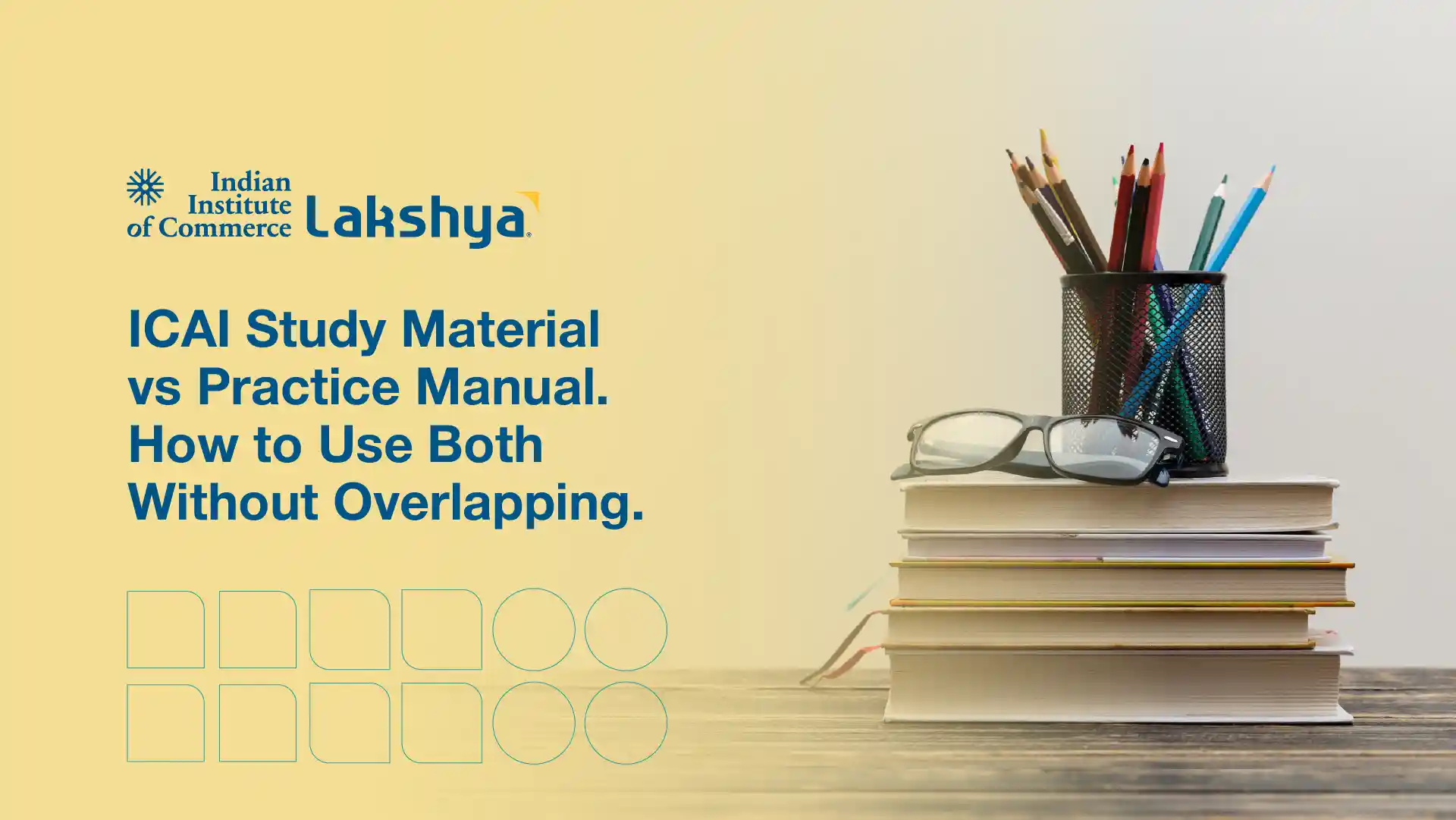
If you are someone who is preparing for the Chartered Accountancy (CA) examination, you will need to do more than just read textbooks and solve problems. The focus is to excel in both conceptual understanding and practical application knowledge with the integration of the Institute of Chartered Accountants of India (ICAI) syllabus. This is where two important resources become essential:
- ICAI Study Material
- ICAI Practice Manual
Many CA students make a common mistake. Either you spend a lot of time developing theoretical knowledge without having the solving ability, or you perform practical applications without any knowledge of the concepts. Through this, CA aspirants can learn about the importance of conceptual clarity in the CA syllabus.
Your foundation becomes stronger with study materials, while the practical manual trains you in implementing concepts in practical situations. Let’s explore all these study resources and how they are different from concept building and practical implications.
Phase 1: Concept Building via Study Material
Here is the first stage for aspirants preparing for the CA exam, where you can focus and develop conceptual clarity. You have to solve questions, but before that, you need to understand the application of the concepts, principles, and logic behind the problems.
Read Core Text
The first step is to read all the core chapters that are available from the ICAI Study Material. You have to avoid solving questions right away. While studying each chapter:
- Understand definitions clearly
- Learn the underlying concepts
- Focus on important provisions
- Identify practical applications
- Make short revision notes
The objective of this phase is not to complete the maximum number of pages. Candidates need to create a strong knowledge base. This is how the life of a CA student goes, where they must have a balance between concept understanding and practical implications.
Study Embedded Illustrations
One of the biggest advantages of the ICAI Study Material is its illustrations. These examples demonstrate how theoretical concepts work in practical situations. Students should carefully analyse:
- The information provided
- The approach used
- The calculation method
- The conclusion
Do not treat illustrations as optional reading. They often reflect the type of thinking ICAI expects from students. You should set a timetable for self-study for the CA Intermediate level because it will require your complete focus.
Skip Heavy Question Solving
This is your concept-building phase where you have to avoid getting into solving a large number of questions. Try to understand the concepts discussed in the chapters and postpone attempting multiple practice questions. This creates confusion because:
- Concepts remain unclear
- Mistakes increase
- Students memorize solutions as compared to understanding logic
You must focus on:
- Reading the chapter
- Understanding examples
- Highlighting important points
- Creating conceptual notes
Once your foundation becomes strong, move towards intensive question practice. You can also pursue the career path of a Cost Accountant in manufacturing companies with these foundation knowledge.
Remember:
First understand. Then apply.
This simple approach makes CA preparation more efficient.
Phase 2: Problem-Solving via Practice Sets
This is the next step after completing the conceptual learning phase. The ICAI Practice Manual is invaluable for all aspirants. It improves:
- Problem-solving ability
- Exam writing skills
- Speed and accuracy
- Confidence
However, students should use it differently from Study Material. The purpose is not to learn concepts again but to practise applying them.
Attempt back-to-chapter Questions
Once you complete a chapter from the Study Material, move to the relevant questions in the Practice Manual. This sequence is important. Avoid randomly solving questions from different chapters because it can interrupt your learning flow. A better approach is:
- Complete one concept from the Study Material
- Revise important points
- Attempt related Practice Manual questions
- Analyse mistakes
- Improve your approach
This method helps your brain connect concepts with practical application. For example, after studying Partnership Accounts, immediately practising related problems helps you understand how ICAI tests partnership concepts. You will also develop a better understanding of the mistakes to avoid when preparing for CA Inter and corporate laws.
Treat Questions as Tests
Do not treat Practice Manual questions as simple exercises. Treat them as mini examinations. Before checking the solution:
- Attempt the question independently
- Follow proper presentation methods
- Manage your time
- Avoid looking at hints
This approach improves your exam readiness. After completing each question, analyse:
- Did I understand the requirement?
- Did I select the correct method?
- Did I make calculation mistakes?
- Did I miss any important points?
It is one of the fastest ways to learn from mistakes, which will help in bringing improvement in your CA preparation. You should also develop knowledge and expertise about important questions for the CA Articleship Interview.
Mark Repeated Patterns
While solving Practice Manual questions, identify repeated patterns. ICAI often tests important concepts in different ways. Look for:
- Frequently tested concepts
- Common adjustment areas
- Repeated formats
- Important practical applications
You have to maintain a separate digital file or an information note to notice patterns. It is during revisions that the file or notebook is significantly valuable; thus, you can focus on concepts you need to highlight. Here are some examples:
- Accounting adjustments
- Tax computation formats
- Audit reporting areas
- Legal provisions frequently tested
Wrapping Up!
In conclusion, the ICAI Study Material and Practice Manual are not competitive resources; instead, the focus should be on using them as complementary resources. To have a successful CA preparation strategy, you have to learn the concepts, understand the illustrations, practice questions, analyse all mistakes, and revise all preparations strategically. For all CA aspirants, graduates, and 12 students, this is a significant guide to understanding why ICAI study material and practice manual shouldn’t be pitted against each other but instead used together.
Read More
- The IFRS Skills That AI Cannot Replace
- From Zero Finance Background to ACCA Affiliate
- The Hidden Cost of Choosing the Wrong ACCA Institute
- Career Opportunities after BA + CA
- How does Coaching help non-commerce students Crack CA exams?
- Career Path after BA Economics + CA
Frequently Asked Questions
Is ICAI Study Material enough for CA Foundation students?
Yes, the ICAI Study Material is enough for CA Foundation students because it helps build the fundamentals necessary for higher-level education and professional practice. Your speed and accuracy will increase with regular practice of the study material.
Is ICAI Study Material enough to clear the CA exam?
Definitely, ICAI Study Material is enough to clear the CA exam, as it is one of the most significant resources for preparation. Students must go through the official material because it is designed based on the examinations and syllabus.
Should I complete ICAI Study Material before solving Practice Manual questions?
Ideally, you should complete the ICAI Study Material before you solve the Practice Manual questions because understanding the concepts before applying them is important. It will help you understand the logic, avoid unnecessary mistakes, improve application skills ans identify weak areas.
How should beginners use ICAI Study Material?
Beginners should read the chapter with complete focus and understand definitions and concepts. If necessary, start making short notes and revise significant points. It will then lead to effective solving of the practice-related questions.
Are ICAI Practice Manual questions important for exams?
Yes, the ICAI Practice Manual questions are significant for exams because it helps students to understand the testing concepts, along with improving calculation accuracy, time management, and interpretation skills.
Related Blogs