


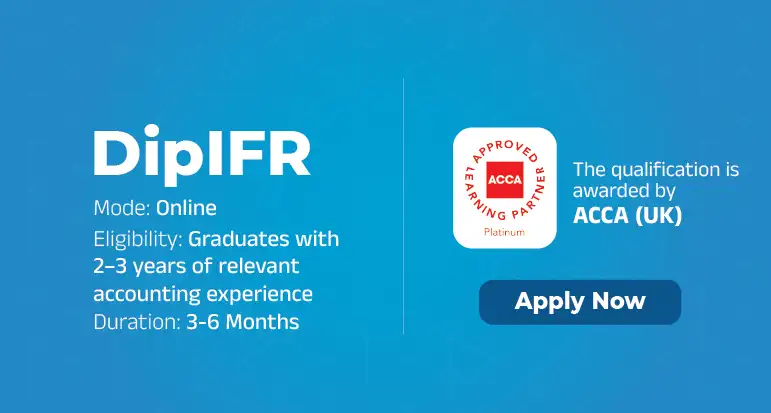
DipIFRS Exam Format 2026
Last Updated On -03 Aug 2026
By Nishtha Singh

The ACCA Diploma in International Financial Reporting (DipIFRS) is one of the most respected qualifications for finance and accounting professionals looking to build expertise in International Financial Reporting Standards (IFRS). While mastering IFRS standards is essential, understanding the DipIFRS exam format is equally important for achieving a good score.
Many candidates spend months studying accounting standards but overlook how the examination is structured. As a result, they struggle with time management, question interpretation, and answer presentation despite having strong technical knowledge. Knowing what to expect on exam day allows you to prepare strategically and perform more confidently.
In this article, we'll explain the DipIFRS Exam Format for 2026, discuss the types of questions you can expect, and share practical preparation strategies to help you succeed.
Why Understanding the Exam Format Matters?
The DipIFRS examination assesses more than your ability to memorise accounting standards. It evaluates whether you can apply IFRS principles to practical business scenarios, analyse financial reporting issues, and justify your accounting decisions.
Understanding the exam format helps you:
- Prepare with a clear strategy
- Manage exam time effectively
- Understand examiner expectations
- Practise relevant question types
- Improve answer presentation
- Reduce exam anxiety
- Identify high-weightage topics
- Build confidence before exam day
Students who practise according to the actual exam structure are often better prepared.
DipIFRS Exam Structure 2026
The DipIFRS qualification is assessed through a single Computer-Based Examination (CBE). The examination focuses on the practical application of IFRS standards rather than testing theoretical definitions alone.
The exam structure includes:
- One Computer-Based Exam (CBE)
- Examination duration of 3 hours and 15 minutes
- Four compulsory questions
- Total of 100 marks
- Scenario-based questions
- Numerical calculations
- Written explanations
- Application of multiple IFRS standards
Candidates must demonstrate both technical accuracy and professional judgement throughout the examination.
Breakdown of the Question Paper
Each question tests different aspects of international financial reporting and often combines multiple IFRS standards within a single business scenario.
The paper generally includes:
- Consolidated financial reporting
- Financial statement preparation
- Financial reporting issues
- IFRS interpretation
- Accounting treatments
- Disclosure requirements
- Ethical considerations
- Professional judgement
Students should expect integrated case studies rather than isolated theoretical questions.
Types of Questions You Can Expect
The DipIFRS examination focuses heavily on practical business situations that require candidates to analyse, calculate, and explain accounting treatments.
Common question types include:
- Case-study questions
- Consolidation problems
- Financial statement adjustments
- IFRS application scenarios
- Numerical calculations
- Narrative explanations
- Professional judgement questions
- Disclosure-based questions
Many questions require candidates to apply several accounting standards simultaneously.
IFRS Standards Commonly Tested
Although the exact paper changes every session, several core IFRS standards appear frequently because they form the foundation of financial reporting.
Students should thoroughly prepare:
- IFRS 15 – Revenue from Contracts with Customers
- IFRS 16 – Leases
- IFRS 9 – Financial Instruments
- IFRS 18 – Presentation and Disclosure in Financial Statements (where applicable to the syllabus)
- IAS 12 – Income Taxes
- IAS 36 – Impairment of Assets
- IAS 21 – Effects of Changes in Foreign Exchange Rates
- IAS 37 – Provisions, Contingent Liabilities and Contingent Assets
A strong understanding of these standards significantly improves exam readiness.
How Marks Are Awarded
The DipIFRS examination rewards both technical knowledge and the ability to apply IFRS principles logically. Candidates who explain their reasoning clearly often perform better than those who simply present calculations.
Examiners generally assess:
- Correct accounting treatment
- IFRS application
- Technical accuracy
- Professional judgement
- Logical explanations
- Clear calculations
- Appropriate disclosures
- Well-structured answers
Presentation and clarity are important alongside technical correctness.
Time Management During the Exam
Time management is one of the biggest challenges for DipIFRS candidates. Because every question is compulsory, students must allocate their time carefully to maximise marks.
Effective exam management includes:
- Reading the requirements carefully
- Identifying easy marks first
- Allocating time based on marks
- Avoiding excessive time on one question
- Showing all calculations
- Writing concise explanations
- Reviewing answers if time permits
- Maintaining a steady pace
Practising under timed conditions is one of the best ways to improve exam performance.
How to Prepare Effectively for the DipIFRS Exam?
Success in DipIFRS requires more than reading the IFRS standards. Students should combine conceptual learning with regular application and exam practice.
An effective preparation plan includes:
- Studying the latest ACCA syllabus
- Understanding every examinable IFRS standard
- Practising past examination papers
- Attempting mock examinations
- Reviewing examiner reports
- Strengthening consolidation skills
- Revising regularly
- Improving written answer techniques
Consistent practice helps students become comfortable with the examination style.
Common Mistakes Students Should Avoid
Even well-prepared candidates sometimes lose marks because of avoidable errors during the examination.
Some common mistakes include:
- Memorising standards without understanding
- Ignoring question requirements
- Poor time management
- Incomplete calculations
- Weak answer presentation
- Missing disclosure requirements
- Limited mock exam practice
- Studying outdated syllabus materials
Avoiding these mistakes can significantly improve overall performance.
How Coaching Can Improve Exam Preparation
Preparing for DipIFRS independently can be challenging, particularly when dealing with complex reporting scenarios involving multiple IFRS standards. Structured coaching helps students understand difficult concepts while developing effective examination techniques.
A quality coaching programme offers:
- Expert faculty guidance
- Structured study plans
- Updated study materials
- Comprehensive IFRS coverage
- Regular mock examinations
- Personalised doubt-clearing
- Performance evaluation
- Exam-oriented revision
Professional guidance helps students prepare systematically and build confidence before the examination.
Frequently Asked Questions (FAQs)
What is the DipIFRS exam format for 2026?
The DipIFRS qualification is assessed through a single Computer-Based Examination (CBE) lasting 3 hours and 15 minutes, consisting of four compulsory questions carrying a total of 100 marks.
Is the DipIFRS exam theory-based?
No. The examination is primarily application-based and tests your ability to apply IFRS standards to practical business scenarios through numerical calculations and written explanations.
Which topics are most important for DipIFRS?
Core topics include group accounting, IFRS 15, IFRS 16, IFRS 9, IFRS 18 (where applicable), IAS 12, IAS 36, IAS 21, IAS 37, financial statement preparation, and disclosure requirements.
How can I prepare effectively for the DipIFRS exam?
Prepare using the latest ACCA study guide, practise past papers and mock exams, revise core IFRS standards regularly, review examiner reports, strengthen consolidation concepts, and focus on applying standards rather than memorising them.
Related Blogs






.webp)