What to Look for in a Dip IFRS Training Program in India?
Last Updated On -23 Jul 2026
By Sajith R S

Most finance professionals who sign up for a Dip in IFRS ACCA program pick the first institute a colleague mentions or the first ad that keeps following them online. A few weeks in, some realise the recorded lectures were shot two standards ago. Others find that the senior faculty is actually one tired instructor running four batches. By then, the sitting is close, so switching feels riskier than staying.
You can spare yourself that. The Dip in IFRS ACCA, formerly the Diploma in International Financial Reporting, is a short qualification with one exam. But the preparation is heavy, and the institute you choose decides how ready you feel when the exam gets closer. So treat this as a plain guide on how to choose a DipIFR coaching institute, covering faculty, pass rates, study material, format, and fees. It is not here to sell a course, just to help you ask the questions most brochures hope you skip.
Is the Dip in IFRS ACCA right for your stage?
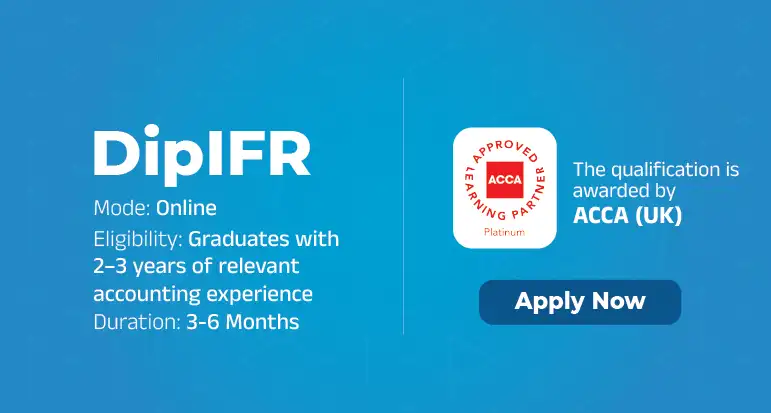
Starting honestly by checking whether the Dip IFRS even fits you yet. ACCA DipIFR eligibility is built for people already working with accounts. Qualified CAs, CMAs, and CPAs usually get in directly. A BCom or MBA Finance graduate typically needs about two years of accounting or audit work. No degree? Roughly three years of relevant full-time experience often does it.
A decent institute checks this before enrolling you; if a counsellor rushes past it, treat that as a quiet red flag. Confirm the live criteria on the ACCA website, and our DipIFR eligibility guide lists the documents you may be asked for.
Is DipIFR worth it in India? For anyone touching Ind AS, statutory reporting, or MNC finance, usually yes. Listed Indian companies already report under standards close to IFRS, so this Dip IFRS certification sits on top of work you may already be doing.
Faculty experience over marketing claims
Faculty is where your fee quietly does its job and it is also the hardest thing to size up from a homepage. Ask, by name, who handles the consolidation and group-accounting sessions. Goodwill, non-controlling interest, and fair value adjustments all landing in one question is where marks vanish. Someone who has graded real scripts or trained serious working batches teaches it differently from someone simply reading slides.
Real DipIFR faculty experience runs deeper than a year's count. Has this trainer taught IFRS to working professionals? Do they have doubts after class? Are they comfortable explaining both the numbers and the written reasoning? One trial class can tell you more than a page of testimonials.
Ask about pass rates, and how they count them
Nearly every institute waves a DipIFR pass rate at you, and almost nobody measures it the same way. So push a little. How many students went into that number? One strong batch, or every sitting? Were the dropouts counted, or quietly left out of the maths?
A modest figure, someone can explain, beats a glossy one that nobody will break down. ACCA releases global pass data for the diploma each sitting use that as your reality check against whatever a local flyer claims.
Look closely at the study material
Two things make DipIFR study material worth the money. First, it follows the syllabus as it stands today, not two revisions back. Second, it trains you on the exact shape of the exam: four compulsory questions, 25 marks each, with a mix of number-work and written reasoning.
Before you pay, ask for a sample chapter and flip through it. Is it updated for the current standards? Do genuine past papers, with full worked solutions, come bundled in? Strong DipIFR exam preparation is mostly about sitting with whole questions against the clock, not rereading notes again and again. Generic PDFs with no question bank usually mean buying the support separately later.
Online DipIFR coaching in India vs classroom
Most people taking this Dip IFRS course work full time, which is why online DipIFR coaching in India has grown so quickly. There is no commute, and you can replay a brutal consolidation lecture at 11 p.m. The catch is that discipline recordings are very easy to put off.
Here is where I would dig in when weighing the best DipIFR online classes. When a doubt hits on a Sunday night, who answers, and how fast? Is there a live doubt-clearing slot, or a comment box nobody watches? Once the exam is done, do the recordings stay or vanish?
The Dip IFRS classes worth trusting usually pair live weekend teaching with recordings you can revisit. That works better for many working professionals than recorded-only batches or rigid live-only schedules. Pick for how you actually study, not whichever demo looked slickest.
Read reviews, but read them properly
One glowing DipIFR coaching review means little on its own. Patterns mean plenty. Read fifteen across Google, LinkedIn, and finance forums, and watch for what repeats: the same teacher praised again and again, or the same complaint about slow doubt resolution.
Be wary of listings that are all five stars and have no details, and of an institute with no reviews at all. When you can, message a past student and ask one blunt question: would you enrol again? They tend to answer straight.
Understand the real DipIFR coaching fees
DipIFR coaching fees in India swing a lot, and the headline price hides most of the story. The ACCA exam fee is billed on its own at around £147, which lands near ₹18,000 give or take the day’s exchange rate, so treat it as a ballpark and check the live number on the ACCA portal. Coaching sits on top, and the range is broad. Some batches open near ₹40,000, while fuller programmes can push past ₹1,00,000.
Before comparing figures, ask what each price covers. Study material, past papers, doubt support, and a repeat sitting if you defer are often billed separately. A higher bundled fee can beat a cheap package stacked with paid extras. Both “cheap” and “expensive” mislead until you see what is actually inside the DipIFR course details.
Quick checklist: green flags vs warning signs
|
Green flags |
Warning signs |
|
Checks your eligibility honestly |
Enrols anyone who pays |
|
Named, experienced faculty for consolidation |
Vague “expert team” claims |
|
Explains how it counts pass rates |
Round numbers, no denominator |
|
Current material with past papers |
Outdated or generic notes |
|
Clear doubt-support process |
No answer on post-class support |
Making the final call
There is no clean winner for everyone. The best DipIFR training institute in India, for you, is the one that holds up against a few honest checks of your eligibility, the faculty, its own pass-rate story, the material, the format, the reviews, and the full cost. Weigh what matters most for how you learn and the time you have before your exam.
Want a second opinion first? IIC Lakshya runs free counselling where a mentor talks through your eligibility and whether Dip IFRS coaching fits your timeline, with no pressure to sign up. Our DipIFR exam guide also shows what the sitting really asks of you.
Also Read
- What is Diploma in IFRS Course?
- Busting the Crazy Myths for DipIFRS
- Career Progression in Financial Reporting After DipIFRS
- 20 Tips to Handle Work-Life Balance While Preparing for DipIFRS
Frequently Asked Questions
Is DipIFR worth it for working professionals in India?
If your work touches Ind AS, statutory reporting, or MNC accounts, it tends to pay off, because Indian standards track IFRS closely. As a focused add-on, its value comes down to whether your role rewards IFRS know-how.
What is the ACCA DipIFR eligibility?
Qualified CAs, CMAs, and CPAs usually get in directly. A relevant graduate normally needs around two years of accounting experience; someone without a degree, closer to three. Check ACCA’s site before registering, as the rules may be revised.
How long does the DipIFR exam preparation take?
Plan for 100 to 200 hours, usually spread over three or four months, while you keep working. How much you need depends on your existing IFRS or Ind AS exposure.
Are online DipIFR classes as good as classroom coaching?
For working professionals who need flexibility, often yes. Format matters less than the teacher, the doubt support, and how well the material mirrors the exam. A live-plus-recorded blend usually works best.
How much do DipIFR coaching fees cost in India?
Coaching runs from roughly ₹40,000 to past ₹1,00,000, separate from the ACCA exam fee of about £147. Look at what is inside each package before judging the sticker price.
Related Blogs