
CPA in AI Skillsets
Last Updated On -20 Aug 2026
By Nishtha Singh
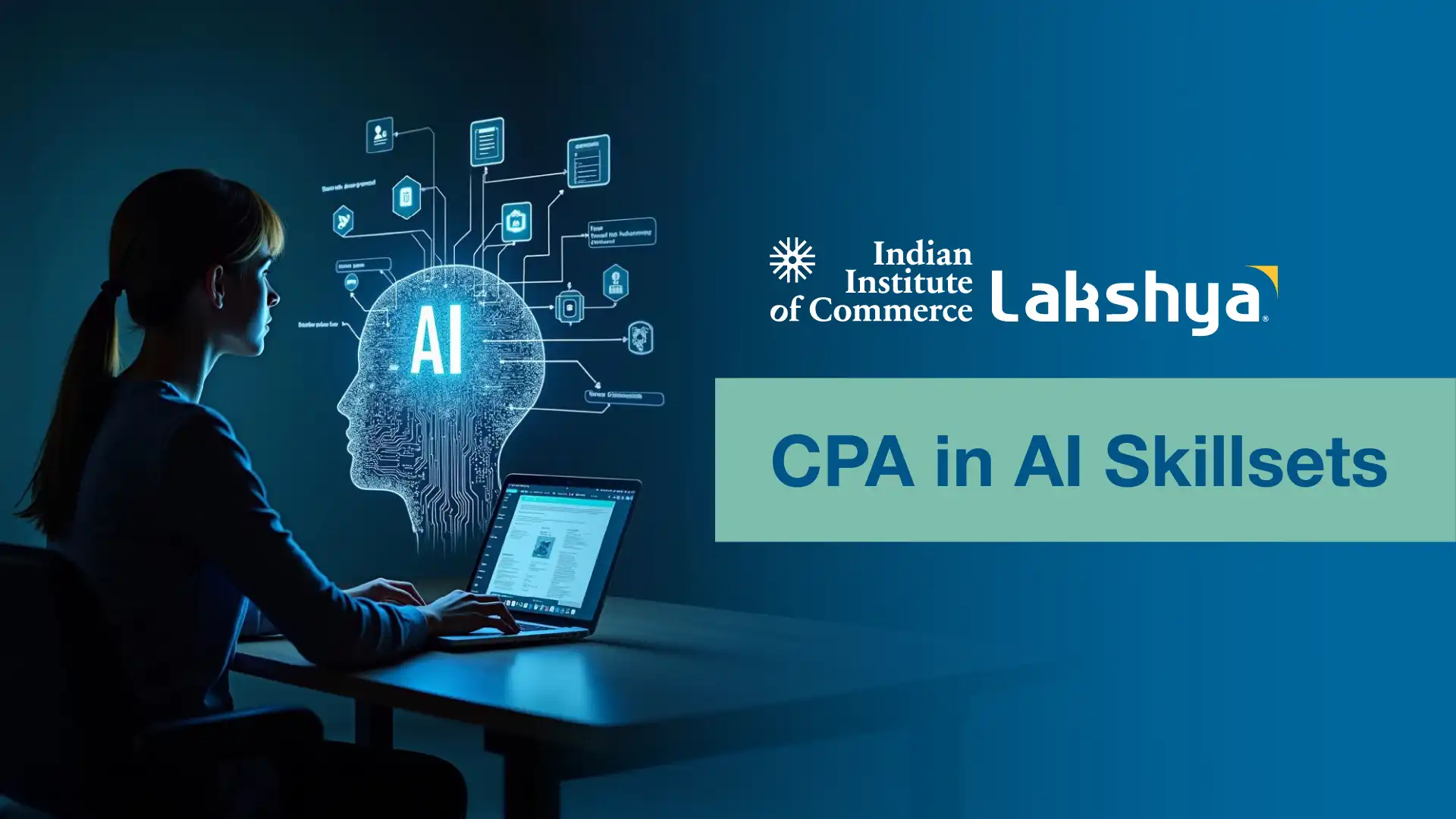
"Will AI replace accountants — or make CPAs more valuable?" It's a question on the mind of every finance professional right now, and the honest answer is reassuring but demanding: artificial intelligence is changing what CPAs do, not removing the need for them. AI is automating routine work and, in doing so, raising the value of the judgement, analysis, and advisory skills that define a good CPA. But that shift rewards those who adapt. This blog explains the AI-related skillsets that will define successful CPAs and how you can position yourself on the right side of this change.
Why AI Matters for CPAs?
AI now automates many tasks that once filled an accountant's day — data entry, reconciliations, transaction matching, and basic reporting. Rather than threatening the profession, this shifts where a CPA's value lies: away from mechanical processing and toward interpretation, judgement, and advice, which machines can't own. Tellingly, the CPA exam itself has already moved in this direction. CPA Evolution increased the emphasis on data analytics and technology, and the exam's simulations increasingly involve working with data. The message is clear: the profession expects future CPAs to be comfortable in a technology-driven environment.
Key AI Skillsets for Modern CPAs
The clearest way to think about it is this: AI raises the floor on routine accounting and raises the ceiling on strategic work. The mechanical parts of the job get easier and cheaper, while the demand for insight, judgement, and advice grows. CPAs who combine strong core accounting expertise with AI-era skills — analytics, technology awareness, judgement, and communication — are positioned for the highest-value roles in finance. Far from making the CPA obsolete, the AI era makes a well-rounded, adaptable CPA more sought-after than ever.
Data Analytics
As routine processing is automated, the ability to interpret data becomes central. Modern CPAs need to work with datasets, spot patterns and anomalies, and turn raw numbers into decisions and insights. This skill is now embedded in the exam, particularly in the Business Analysis and Reporting (BAR) discipline, and it's increasingly expected on the job.
Working Alongside AI Tools
Using AI-powered tools — for automation, anomaly detection, forecasting, and analysis — is becoming a core competency. Just as important is understanding their limits: knowing when to trust an AI output, when to question it, and how to verify it. CPAs who can partner effectively with these tools while applying professional scepticism will be far more effective than those who either avoid them or trust them blindly.
Technology and Controls Awareness
As businesses run on complex systems, understanding IT systems, data governance, and cybersecurity matters more than ever. This is reflected directly in the CPA's ISC (Information Systems and Controls) discipline. Even CPAs not specialising in technology benefit from a solid grasp of how systems and controls work, because so much of modern finance depends on them.
Critical Judgement and Professional Scepticism
As AI handles the routine, the distinctly human contributions — judgement, ethics, and professional scepticism — become a CPA's most valuable assets. Deciding what's material, spotting when something doesn't add up, weighing ambiguous situations, and standing behind a professional conclusion are things AI can't do for you. These are precisely the higher-order skills the exam's evaluation-level questions test.
Advisory and Communication Skills
Data and AI produce insights, but those insights only create value when someone can translate them into clear, actionable guidance for clients and leadership. CPAs who can communicate what the numbers mean — and what to do about them — stand apart. As technical processing becomes commoditised, this advisory ability becomes a defining differentiator.
How CPAs Stay Ahead?
The winning mindset is to treat AI as a tool that amplifies your expertise, not a replacement for it. CPAs who build analytics fluency, develop a working understanding of the relevant technology, and lean into advisory and judgement-based work will find themselves more valuable, not less. Rather than fearing automation, embrace it for the routine work and redirect your energy toward the higher-value tasks it frees up. The exam's growing focus on data and technology is a signal of exactly where the profession is heading, and preparing accordingly serves you both in the exam and in your career.
Read More:
Frequently Asked Questions (FAQs)
Will AI replace CPAs?
No. AI automates routine tasks and shifts CPA value toward judgement, analysis, and advisory work that machines can't replicate. It changes what CPAs do rather than removing the need for them.
What AI skills do CPAs need?
Data analytics, comfort working with AI tools (including understanding their limits), technology and controls awareness, critical judgement and professional scepticism, and strong advisory communication skills.
Does the CPA exam test technology skills?
Yes. CPA Evolution increased the focus on data analytics and technology, and simulations increasingly involve working with data. The ISC and BAR sections in particular reflect this emphasis.
How can I future-proof my accounting career?
Build analytics fluency, develop a working understanding of relevant technology, strengthen your judgement and advisory skills, and treat AI as a tool that amplifies your expertise. Combining core accounting knowledge with these AI-era skills is the strongest position.
Related Blogs