CPA After 12th in India: Eligibility & Step-by-Step Roadmap
Last Updated On -23 Sep 2026
By Nishtha Singh

"Can I do the US CPA right after 12th?" Many ambitious students, eager to fast-track a global finance career, ask this exact question. The honest answer is nuanced and worth understanding clearly, because acting on wrong assumptions can waste time. You can absolutely start building toward the CPA immediately after 12th, but full eligibility to sit the exam has specific higher-education requirements that you won't meet straight out of school. This blog lays out the realistic pathway so you can plan an early, effective start rather than chasing a shortcut that doesn't exist.
Understanding CPA Eligibility
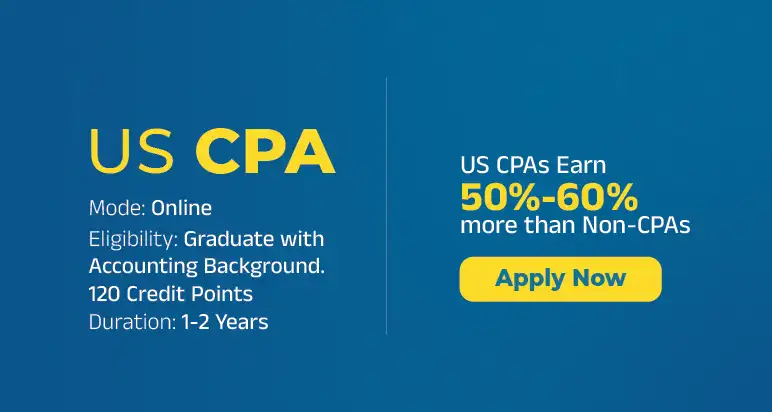
The US CPA is a professional credential that requires a certain level of higher education. Typically, candidates need around 120 semester credit hours to sit the exam and 150 credit hours to obtain the license, including a specified amount of accounting and business coursework. The exact requirements vary by US jurisdiction (state board), but the common thread is clear: you generally need to be at or near degree level to sit the exam. This means the CPA exam itself isn't something you take immediately after 12th — but 12th is exactly the right time to start planning the route.
Hpw to take CPA after 12th?
Step 1 – Enrol in a Relevant Degree
The foundation of a CPA journey from 12th is a relevant undergraduate degree — most commonly a commerce or accounting degree such as B.Com. This begins building the credit hours and the accounting and business knowledge the CPA requires. Choosing the right degree early keeps your path efficient.
Step 2 – Understand the Credit-Hour Requirement
Because the CPA requires a substantial number of credit hours, it's important to know where your chosen degree leaves you. A three-year Indian B.Com, for example, may not by itself provide the full number of credits some jurisdictions require. Many Indian students therefore combine graduation with additional study to close the gap.
Step 3 – Consider a Bridge or Integrated Route
To meet the credit requirements, some students pursue a bridge course, a master's such as M.Com, or an integrated pathway that pairs their degree with CPA-oriented preparation. This is a normal and well-trodden part of the journey for Indian candidates, not a setback — it simply ensures you meet the eligibility bar.
Step 4 – Build Toward Eligibility and Sit the Exam
As you accumulate the required accounting and business credits, you position yourself to apply through a state board, receive your Notice to Schedule, and begin the exam's core and discipline sections. Many students begin CPA-focused preparation in parallel with the later stages of their degree, so they're ready to sit as soon as they qualify.
Why Start Planning for CPA Early?
Even though you can't sit the exam right after 12th, starting to plan then gives you a significant advantage. You can choose a degree that aligns with CPA credit requirements from the outset, avoiding a scramble to make up credits later. You can map out the full timeline, including any bridge study, so there are no surprises. And you can begin building foundational accounting knowledge and even CPA preparation alongside your degree. Students who plan from 12th often qualify years sooner than those who only start thinking about the CPA after graduation.
Setting Realistic Expectations
It's worth being clear-eyed. The CPA is a demanding professional qualification, and the journey from 12th to licensed CPA takes several years — degree study, meeting credit requirements, passing four exam sections, and fulfilling experience requirements. But that timeline is comparable to, and often more efficient than, many other chartered qualifications. For a student who knows early that they want a global finance career, starting the planning at 12th is one of the smartest moves you can make.
Making the Most of Your Head Start
If you're deciding this at 12th, use the time well. Research jurisdictions and their credit requirements so you choose your degree path wisely. Focus on building strong fundamentals in accounting during your degree, since they underpin the entire CPA syllabus. And stay informed about the CPA structure and any updates, so your preparation is current when you begin. Early clarity, combined with steady progress, is what turns an ambitious 12th-grade goal into a qualified CPA career.
Read More:
Frequently Asked Questions (FAQs)
Can I take the CPA exam right after 12th?
Not directly. The CPA requires higher-education credit hours — typically around 120 to sit the exam — so you generally need to be at or near degree level. However, 12th is an ideal time to start planning the pathway.
What should I do after 12th to become a CPA?
Enrol in a relevant commerce or accounting degree such as B.Com, understand your chosen jurisdiction's credit requirements, and build toward eligibility — adding a bridge course or further study if needed to meet the credit hours.
Do 3-year B.Com graduates qualify for CPA?
Often they need additional credits to meet a jurisdiction's requirement, which is commonly addressed through a bridge course or a further qualification such as M.Com. Requirements vary by state board.
How long does it take to become a CPA from 12th?
It typically takes several years — completing a degree, meeting credit requirements, passing the four exam sections, and fulfilling experience requirements. Planning early makes the journey more efficient.
Related Blogs