
CMA India for IT-to-Finance Career Transition: Guide
Last Updated On -01 Sep 2026
By Sagnika Sinha
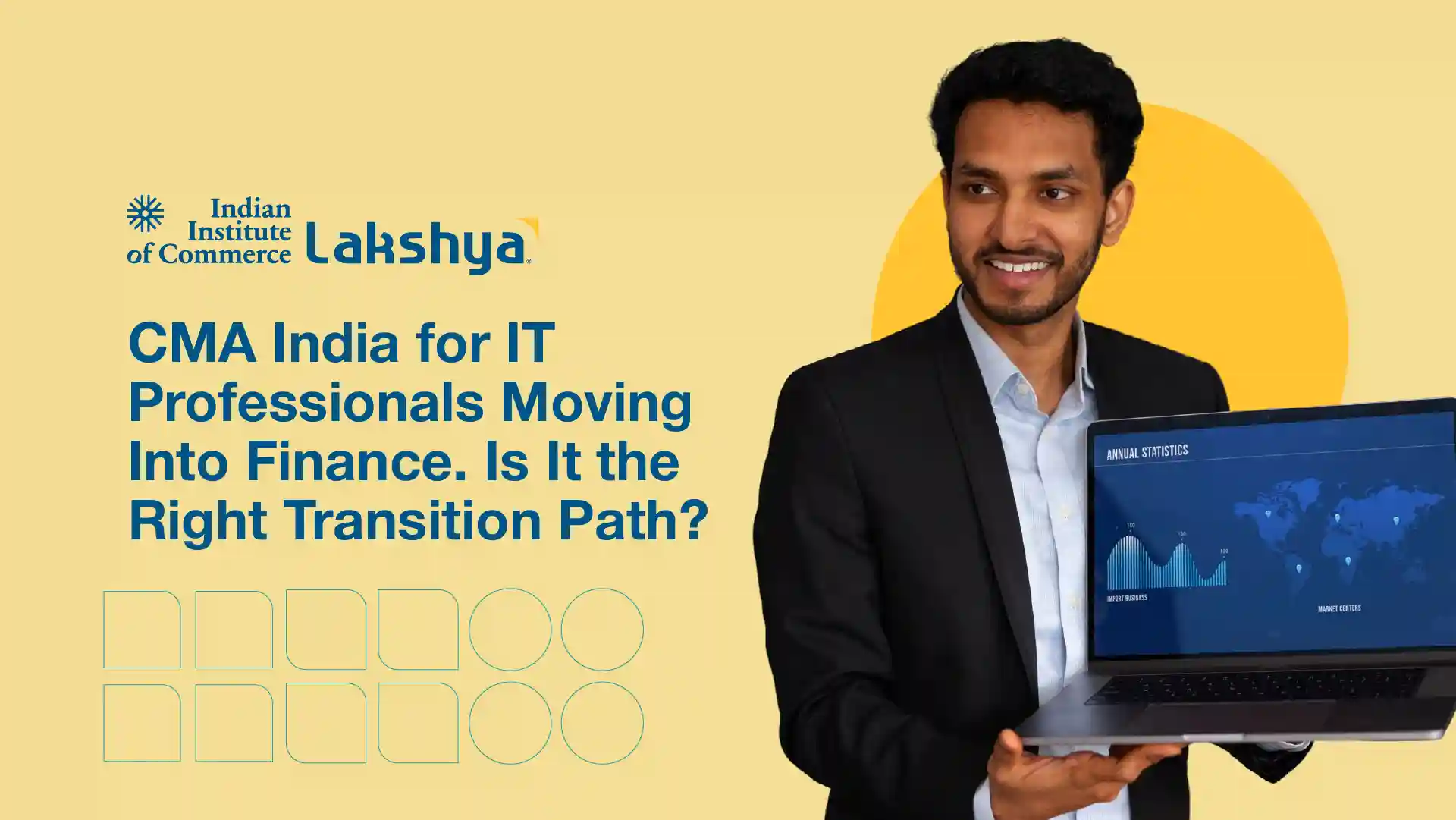
Moving from IT to finance can seem like a major career change. After all, technology and finance appear to require different skill sets. But look closer, and you will find an important connection.
Modern finance depends heavily on technology. Finance teams use ERP systems, automation, data analytics, dashboards, financial models, and business intelligence tools every day. This creates opportunities for IT professionals who understand both technology and business.
If you are considering this transition, CMA India can be one option to explore. It can help you build knowledge in cost accounting, management accounting, financial management, and business decision-making. With the CMA India after graduation, you can develop expertise in information technology.
However, it is not the only option. In fact, one of the headings in this article refers to CMA US, which is a different qualification from CMA India. Understanding this distinction matters before you choose a path.
Why CMA US Fits IT-to-Finance Transitions Better
If your goal is specifically to move from IT into corporate finance, management accounting, FP&A, or business finance, CMA US can be worth comparing with CMA India.
CMA US, awarded by the Institute of Management Accountants, focuses strongly on management accounting and financial management. Its areas include:
- Financial planning
- Performance management
- Cost management
- Internal controls
- Financial analysis
- Strategic decision-making
- Technology and analytics
This can align well with an IT professional's existing analytical background. However, that does not mean CMA US is automatically better than CMA India. The CMA India qualification after 12th will lead you to a solid finance career.
CMA India can be particularly relevant if you want to build a career in India's accounting, costing, taxation, compliance, and management accounting environment. Your target role should determine your choice.
- If you want corporate FP&A, compare CMA US.
- If you want a broader Indian cost and management accounting pathway, evaluate CMA India.
Shorter Timeline
Time matters when you are already working. An IT professional may not want to spend several years completing another long academic program before switching careers.
This makes professional qualifications attractive. CMA India follows a structured professional pathway with Foundation, Intermediate, and Final levels, subject to applicable eligibility and current regulations.
CMA US follows a different structure and examination model. Apply for Big 4 careers after CMA USA qualification, highlighting the diverse opportunities available. The important point is to compare the total journey, not just the number of examinations. Consider:
- Eligibility
- Examination structure
- Study time
- Training requirements
- Total cost
- Career objective
- Recognition in your target market
Do not select a qualification simply because someone says it is "faster." A shorter qualification that does not match your target role may waste more time in the long run.
Global Relevance
IT professionals often work in global environments. You may already collaborate with teams in the US, Europe, Singapore, Australia, or the Middle East. That experience can make internationally oriented finance careers attractive. CMA US has a strong international management accounting orientation.
CMA India, meanwhile, provides a professional pathway focused on cost and management accounting with strong relevance to the Indian business environment.
- If your goal is to work for a multinational company in India, either qualification may be relevant depending on the role.
- If you plan to move internationally, research the qualification requirements in your target country before enrolling.
A qualification's value depends heavily on the employer, role, and location.
Skill Synergy
This is where IT professionals can have an interesting advantage. You already understand technology. Finance increasingly needs technology. That creates a useful intersection. For example, an IT professional may already understand:
- Data structures
- Databases
- Automation
- Reporting systems
- Business applications
- Data visualization
- Process optimization
Finance adds another layer:
- Financial statements
- Cost analysis
- Budgeting
- Forecasting
- Financial planning
- Management accounting
- Business performance
Combine both, and you can position yourself as someone who understands financial information and the systems that produce it. That combination can be valuable in modern finance teams. To become a perfect candidate for CMA USA certification, you need to develop expertise in the same.
Alternative Pathways to Consider
CMA India is not the only route into finance. Before committing, identify the exact role you want. Do you want to become an FP&A analyst? Or a financial data analyst?
Are you aiming to become a management accountant? An investment professional? A finance transformation specialist? Each career has different requirements. Let's look at some alternatives.
Financial Data & FP&A Roles
Financial Planning and Analysis (FP&A) is an attractive transition area for technology professionals. FP&A teams typically work on:
- Budgeting
- Forecasting
- Management reporting
- Variance analysis
- Business performance
- Financial modelling
- Scenario analysis
IT professionals with strong Excel, SQL, Power BI, Python, or data analytics skills can potentially build a strong foundation for finance analytics roles.
You can add finance knowledge through CMA India, CMA US, or targeted finance courses. For professionals who enjoy working with numbers but do not want a traditional accounting-only role, FP&A can be worth exploring.
CFA (Chartered Financial Analyst)
If your goal is investment management rather than corporate finance, CFA may be more relevant. The CFA Program focuses heavily on:
- Investment analysis
- Portfolio management
- Financial markets
- Equity investments
- Fixed income
- Derivatives
- Economics
- Ethics
It can suit professionals interested in areas such as investment research, asset management, portfolio management, and related financial roles. However, CFA may not be the best choice if your primary goal is cost accounting or corporate management accounting. You should develop expertise in the complete guide to CMA Articleship in India (ICMAI).
Certifications in Analytics
You may not even need another major professional qualification immediately. Suppose you already have strong IT experience. Adding certifications in:
- Power BI
- Advanced Excel
- SQL
- Python
- Data visualization
- Financial modelling
could help you move toward finance analytics roles.
For example, imagine an IT professional who knows Power BI and SQL but has limited finance knowledge. Adding budgeting, accounting, and financial analysis skills can create a profile suitable for financial data and business intelligence roles.
Wrapping Up!
CMA India can be a useful transition path for IT professionals who want to move into finance, particularly areas related to cost management, management accounting, financial analysis, and business finance.
However, it is important to choose based on your destination. If you want corporate management accounting, compare CMA India and CMA US. The strongest career transition may not be about abandoning your IT background.
If you are a Class 12 student planning your future, this is an important lesson too. Do not choose a qualification simply because it is popular. First, understand the kind of work you enjoy. If you already work in IT, you have another advantage: you know what the technology industry feels like.
Read More
- CFA vs CMA Salary Comparison: India, USA & Abroad
- IMA CMA Scholarship: Eligibility, Benefits & Application Tips
- CMA India Exam Day Essentials: Admit Card, ID and Everything in Between
- What to Carry to the ICMAI CMA Exam Centre?
- CMA Career Path Guide in Operations and Production Finance
Frequently Asked Questions
Can an IT professional move into FP&A?
Yes. IT professionals with analytical and data skills can transition into FP&A by developing knowledge of budgeting, forecasting, financial modelling, accounting, and business performance.
Should I quit my IT job while studying CMA?
Not necessarily. If financially and professionally feasible, many working professionals prefer to study alongside employment. Your existing IT experience can also strengthen your eventual transition.
What jobs can I target after combining IT and CMA?
The jobs that you can target after you have combined IT and CMA are management accounting professions, financial analyst, business finance professional, and finance transformation roles.
Should I learn Power BI for a finance career?
Power BI can be useful for finance professionals working with dashboards, management reporting, data visualization, and business performance analysis.
Can I pursue CMA India without a commerce background?
Eligibility depends on the entry level and your educational qualifications. Check the latest eligibility requirements before registration.
Related Blogs