
MBA Graduates: Should You Pursue ACCA?
Last Updated On -06 Nov 2026

You have completed your MBA. You understand business strategy, management, marketing, finance, and leadership. You may already work in a corporate role or plan to enter the finance industry.
So, what comes next? Should you pursue another qualification? And more importantly, can ACCA add something meaningful to your MBA?
The answer depends on the professional you want to become. An MBA develops business and management skills. ACCA builds specialist knowledge in accounting, financial reporting, audit, taxation, and financial management. At times, candidates can make choices between ACCA vs Executive MBA.
Together, they can create a strong profile for certain finance careers. However, the combination does not suit everyone. Let's look at what each qualification brings to the table.
What Is It Like to Have an MBA?
An MBA prepares you to understand how businesses operate. It teaches you to analyse problems, manage teams, make decisions, and connect different business functions. Depending on your specialisation, you may study:
- Financial management and corporate finance
- Business strategy and operations
- Marketing and human resource management
- Leadership and organisational behaviour
- Business analytics and decision-making
An MBA in Finance gives you a useful understanding of financial concepts. You may learn budgeting, investment analysis, valuation, and financial planning. However, an MBA does not always provide the detailed technical training that specialist accounting roles demand.
For example, can you prepare financial statements under international accounting standards? Can you evaluate complex audit risks or explain the accounting treatment of a difficult transaction?
If you want to handle these responsibilities, you may need deeper professional knowledge. That is where ACCA enters the picture.
What ACCA Adds
The ACCA qualification develops technical and professional skills across accounting and finance. It covers financial reporting, taxation, audit, financial management, performance management, and strategic business leadership.
An MBA teaches you to understand the business as a whole. ACCA helps you understand its financial structure, reporting responsibilities, and controls in greater depth. Consider this example to learn more about MBA + ACCA jobs in finance roles and career paths.
An MBA graduate may know how to evaluate a company's profitability and recommend a growth strategy. An ACCA professional can add expertise in analysing financial statements, assessing reporting risks, and understanding the accounting impact of business decisions.
This combination can be useful in corporate finance, financial planning and analysis, financial reporting, risk management and finance leadership. Let's explore its main advantages.
Technical Depth
An MBA provides a broad understanding of finance. ACCA takes you deeper into the technical side. Its syllabus develops knowledge in areas such as:
- Financial reporting: Understanding financial statements and international reporting requirements.
- Audit and assurance: Evaluating controls, audit evidence and financial reporting risks.
- Taxation: Understanding tax principles and their effect on business decisions.
- Financial management: Assessing investments, funding decisions and business performance.
- Strategic business leadership: Connecting financial knowledge with organisational strategy.
This knowledge can help you move beyond general management responsibilities. For instance, if you work as a Finance Manager, you may need to review financial reports, discuss accounting treatments, and support business decisions.
ACCA can help you approach these responsibilities with greater technical confidence. However, remember that practical experience matters too. A qualification can build your knowledge, but you must apply it in the workplace.
Global Portability
Do you want to work with multinational companies or explore opportunities outside India? ACCA can support that ambition. You can also develop insights into the MBA + ACCA career scope in financial reporting.
The qualification has international recognition and a strong connection with global accounting and finance practices. Its focus on International Financial Reporting Standards (IFRS) can also help professionals understand financial reporting in multinational business environments. This can be useful when applying for roles involving:
- Global financial reporting
- Shared service centres and Global Capability Centres (GCCs)
- International financial planning and analysis
- Internal audit and risk management
- Group finance and consolidation
For example, a professional working in an Indian GCC may support reporting activities for a business operating across several countries. Knowledge of international accounting practices can help in such roles.
Still, global recognition does not mean automatic permission to practise in every country. Local licensing, experience, and regulatory requirements may apply, especially in statutory audit and public practice.
CFO Credibility
Could an MBA and ACCA help you move towards a Chief Financial Officer (CFO) role? They can provide a useful foundation. A CFO needs more than accounting knowledge. The role involves financial strategy, business planning, risk management, capital allocation, governance, and communication with senior leadership.
An MBA can develop your strategic thinking and management capabilities. ACCA can strengthen your understanding of financial reporting, controls, risk and professional ethics. Together, they can help you understand both sides of financial leadership.
However, qualifications alone do not make someone a CFO. Employers also look for years of relevant experience, leadership ability, commercial judgement and a record of delivering business results. Think of the MBA as a business leadership foundation and ACCA as an additional layer of financial expertise.
Exemptions
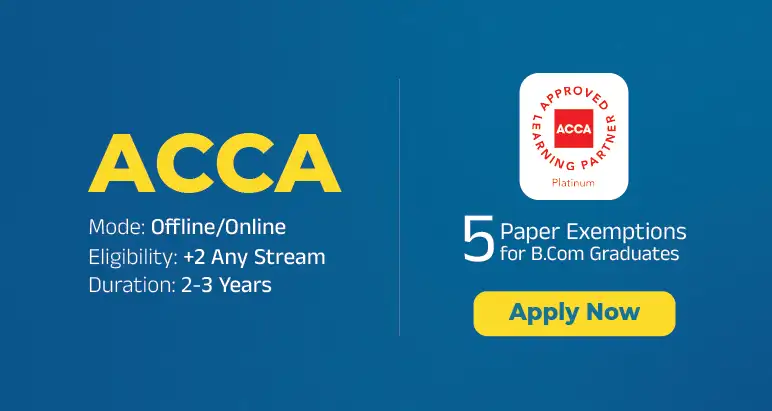
Here is some good news for MBA graduates: you may qualify for exemptions from certain ACCA exams. ACCA assesses exemption eligibility based on your previous qualifications, institution, course content, and graduation details.
Some MBA programmes, especially those with relevant accounting or finance content, may qualify for exemptions. However, do not assume that every MBA automatically receives the same exemptions. Before you enrol in ACCA, you need to learn about fees, exams and exemptions.
Before you register, use the official ACCA Exemptions Calculator to check your eligibility. You may need to provide details of your university, qualification, and graduation year. Also remember:
- Exemptions depend on ACCA's current assessment rules.
- You may still need to complete several exams.
- Exemption fees may apply.
- You cannot receive exemptions from the Strategic Professional level.
Check your exact position before planning your study schedule or budget.
Limitations to Consider
ACCA can add value, but you should understand its limitations before committing. The qualification requires consistent preparation, exam fees, and study time. If you already have a demanding job, balancing professional responsibilities with exam preparation may be challenging.
You should also consider whether your target role actually requires advanced accounting knowledge. For example, if you work in marketing, general management, human resources or business development, ACCA may not offer enough career value to justify the investment.
Ask yourself one important question: Will ACCA help me qualify for the roles I want, or am I pursuing it simply because another qualification looks impressive? Your career objective should guide your decision.
No Statutory Audit
This point is especially important for MBA graduates in India. ACCA does not grant you the legal right to sign statutory audit reports for Indian companies. Indian company statutory audit appointments are governed by Indian law, and the relevant signing authority is reserved for eligible members of the Institute of Chartered Accountants of India (ICAI).
Therefore, if your main goal is to become a statutory auditor in India, you should understand the distinction between ACCA and the Indian CA qualification. ACCA can still support careers in internal audit, risk advisory, financial reporting, assurance-related work, and multinational finance teams.
However, it does not replace the legal requirements for statutory audit signing in India. Always check the regulatory rules for the country where you plan to practise. Furthermore, you need to learn about ACCA registration exemption documents.
Extra Exams
An MBA does not automatically make you an ACCA member.
You must complete the applicable ACCA examinations after considering any exemptions you receive. You must also meet ACCA's practical experience and ethics requirements to become a member.
The exact number of exams depends on your exemption assessment. This means you should consider the full commitment before enrolling:
- How many exams will you need to complete?
- How much time can you dedicate each week?
- Can you manage the exam and exemption fees?
- Does your employer support professional development?
- Will the qualification help you move into your target role?
A realistic plan can make the journey easier. Avoid rushing into registration without understanding the requirements.
Niche Payoff
The MBA + ACCA combination can deliver the strongest value when your career requires both business understanding and specialist financial knowledge. Consider roles such as:
- Financial Planning and Analysis (FP&A): Support budgeting, forecasting, and business performance reviews.
- Financial Reporting Manager: Manage reporting processes and improve compliance with accounting standards.
- Finance Business Partner: Connect financial insights with operational and strategic decisions.
- Internal Audit and Risk Manager: Review internal controls, assess risks, and recommend improvements.
- Finance Manager: Oversee reporting, planning, financial controls and business support.
- Group Finance or Consolidation Specialist: Support reporting across business units and international entities.
The combination may also help professionals who want to progress towards senior finance leadership. However, employers will assess more than your certificates. They will also consider your work experience, communication skills, analytical ability, technology skills, and understanding of the industry.
If you want to make your profile stronger, develop practical skills in Excel, financial modelling, Power BI, ERP systems, and data analysis alongside your qualifications.
Wrapping Up!
So, you already have an MBA. Does ACCA add anything? Yes, if you want to build a career that combines business leadership with specialist accounting and finance knowledge.
Your MBA gives you a broad understanding of business strategy and management. ACCA can add technical depth, international accounting knowledge, and stronger preparation for specialist finance responsibilities. But it is not a compulsory next step for every MBA graduate.
If you want to work in financial reporting, FP&A, internal audit, risk management or senior corporate finance, ACCA may be worth considering. If your career lies outside accounting and finance, another qualification or a focused professional skill may offer better value.
Before making a decision, review your career goals, check your possible exemptions, and understand the time and cost involved.
The best qualification is not the one that adds another line to your CV. It is the one that helps you move towards the career you actually want.
Read More
- How to Apply for ACCA Exemptions?
- ACCA Exemptions for CA Intermediate & CA Final
- Exemptions in CPA
- Online ACCA Coaching for Professionals with Irregular Schedules
Frequently Asked Questions
What does ACCA add to an MBA in Finance?
ACCA adds specialist knowledge in financial reporting, audit, taxation, financial management, and professional ethics. An MBA in Finance usually provides broader business and financial management knowledge, while ACCA develops deeper accounting expertise.
Do MBA graduates get exemptions in ACCA?
Some MBA graduates may receive exemptions, depending on their university, programme, course content, and graduation year. ACCA assesses each qualification against its exemption criteria. Use the official ACCA Exemptions Calculator to check your eligibility.
Is an MBA + ACCA better than an MBA alone?
It can be better for roles that require both management knowledge and specialist accounting skills. For example, financial reporting, FP&A, internal audit, and finance management may benefit from this combination. However, an MBA alone may be sufficient for careers in other business functions.
Can an MBA + ACCA help me become a CFO?
The combination can provide a strong educational foundation for a future CFO role. An MBA supports strategic and leadership skills, while ACCA develops financial and accounting expertise. You will still need relevant experience, commercial judgement, and leadership ability.
Can I work abroad with an MBA and ACCA?
Yes, the combination can support applications for international finance and accounting roles. Employers may value your business education and technical accounting knowledge. Your work experience, communication skills, local regulations, and visa eligibility will also influence your opportunities.
Related Blogs