ACCA Registration Exemption Documents
Last Updated On -30 Sep 2026
By Nishtha Singh
"What documents do I need to claim my ACCA exemptions?" If you're registering with a prior qualification — a degree, an AAT certificate, or another professional credential — exemptions can save you significant time and money by letting you skip papers you've already effectively studied. But exemptions are never automatic. ACCA has to verify your prior learning, and that verification depends entirely on you submitting the right documents in the right format. This blog gives you a clear checklist so your registration goes smoothly the first time.
Why Documents Matter for Exemptions?
Exemptions exist to avoid duplication of learning. If you've already covered the content of an ACCA paper in a previous degree or qualification, ACCA doesn't want you to sit the same exam again. But to grant that exemption, ACCA needs proof — it maps the subjects you studied against its own syllabus to confirm equivalence. Clear, correctly certified documents are the difference between a smooth registration and weeks of back-and-forth delays that can push back your first exam sitting.
Documents Required to Claim ACCA Exemptions
For qualifications from institutions ACCA is less familiar with, or where the subject mapping isn't obvious, ACCA may request detailed module descriptions or syllabus outlines to assess equivalence properly.
Professional Body Membership Proof (if applicable)
If you're claiming exemptions based on another professional qualification, you'll need evidence of your membership or completion status with that body.
Proof of Identity
A valid passport or government-issued photo ID is required to confirm your identity during registration. Your name must match across all your documents, so use the same official name consistently.
Academic Transcripts and Mark Sheets
These are the most important documents for exemptions. Official transcripts list every subject and grade for your degree or diploma, allowing ACCA to assess exactly which of its papers your studies cover. Partial or unofficial transcripts can slow the process or result in fewer exemptions.
Degree or Qualification Certificate
The final certificate confirming you completed your qualification — whether that's a B.Com, BBA, M.Com, AAT Level 4, or another recognised credential. This proves completion, while the transcript proves content.
Official Translations (if applicable)
If your documents are not in English, ACCA requires certified English translations submitted alongside the original documents. Uncertified or informal translations are usually not accepted.
How to Submit Your Documents?
Register through your myACCA account, navigate to the exemptions section, and upload clear scanned copies of the required documents. ACCA reviews them and confirms your approved exemptions on your account. You then pay the applicable exemption fee for each paper. A crucial rule: always apply for exemptions and get them confirmed before booking any exams, because your confirmed exemptions must appear on your account before you can register for higher-level papers.
Tips to Avoid Delays
Small mistakes cause most exemption delays, and they're easy to avoid. Use clear, full-page scans rather than phone photos taken at an angle. Ensure your name is spelled identically across your ID, transcript, and certificate. Check ACCA's online exemptions calculator before you apply, so you already know which papers you qualify for and aren't surprised. Submit complete documents the first time rather than in pieces. And keep digital copies of everything you upload in case ACCA requests clarification.
What Happens After Submission
Once ACCA verifies your documents, your exemptions are added to your student account. You'll see exactly which papers you no longer need to sit, and you can then plan your study path around the remaining exams. Remember that exemptions only apply to the Applied Knowledge and Applied Skills levels — no student can be exempted from the Strategic Professional papers, which everyone must sit.
Streamlining Your ACCA Exemption Journey
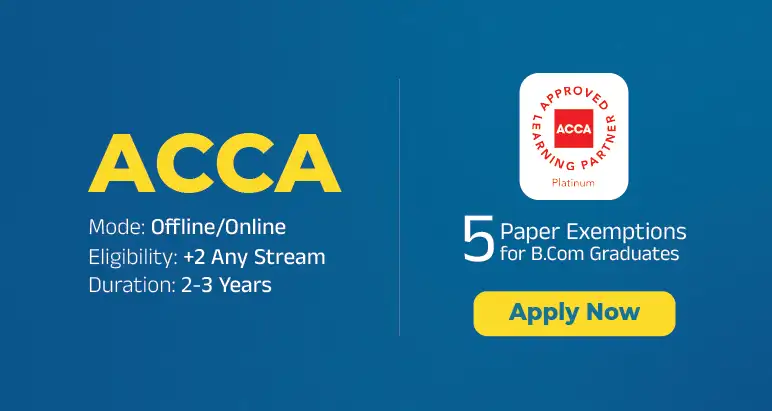
Claiming ACCA exemptions based on prior qualifications like a B.Com, BBA, or professional credentials can save you significant time and money by allowing you to bypass foundational papers you have already mastered. However, ensuring a smooth verification process requires submitting accurate academic transcripts, official certificates, and proof of identity without discrepancies. As an ACCA Approved Platinum Learning Partner, IIC Lakshya provides expert guidance on evaluating your eligibility, managing your documentation seamlessly, and designing an efficient study roadmap to help you navigate your ACCA exams with confidence.
Read More:
- What Is ACCA? Full Course Details
- ACCA Eligibility Criteria Explained
- ACCA Salary in India
- ACCA Course Duration and Levels
Frequently Asked Questions (FAQs)
Are ACCA exemptions granted automatically?
No. You must actively apply and submit supporting documents. ACCA reviews each case individually based on your specific qualification, subjects studied, and grades achieved.
Do I need to pay for exemptions?
Yes. ACCA charges an exemption fee for each paper you're exempted from. However, this fee is far lower than the cost and effort of actually sitting and studying for those papers.
Can I claim exemptions after registering?
It's strongly recommended to claim them at registration and before booking any exams. Claiming late can complicate your study plan and delay your ability to register for the papers you still need.
Related Blogs