

What is Deflation?
Last Updated On -18 Aug 2026
By IIC Lakshya
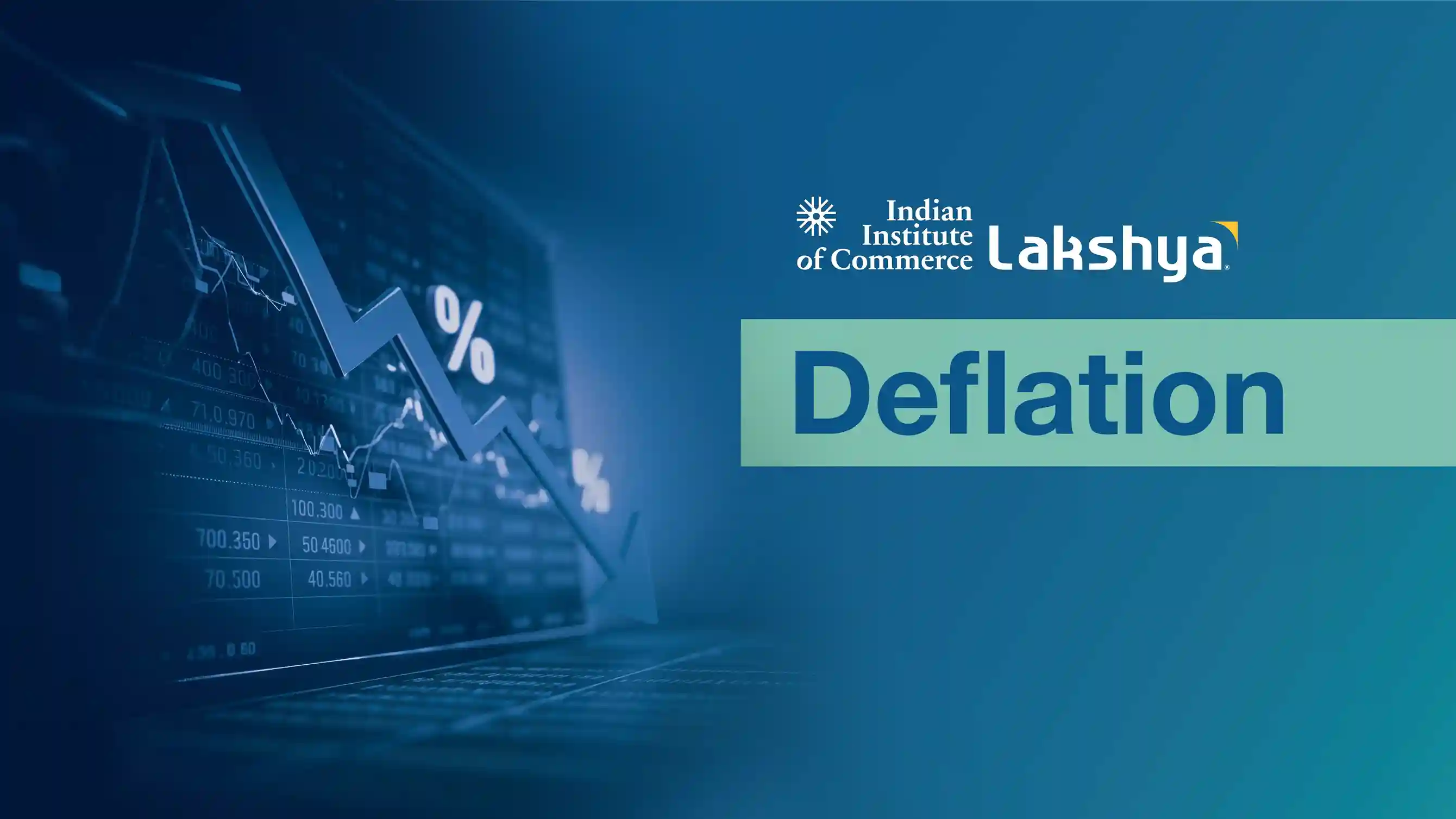
Deflation is an economic condition in which the general price level of goods and services in an economy continuously falls over a period of time. It is the opposite of inflation, where prices rise continuously. During deflation, the purchasing power of money increases because consumers can buy more goods and services with the same amount of money.
Although lower prices may appear beneficial to consumers initially, prolonged deflation can negatively affect businesses, employment, investments, and economic growth. Deflation often leads to reduced consumer spending because people expect prices to fall further in the future. This decline in demand can reduce company profits, lower production levels, and increase unemployment.
History of Deflation
Deflation has occurred in different economies throughout history, often during economic recessions and financial crises. One of the most famous examples was the Great Depression of the 1930s, when severe declines in demand and production caused widespread deflation in many countries. Businesses suffered heavy losses, unemployment increased significantly, and economic activity slowed down drastically.
Japan also experienced a long period of deflation during the 1990s and early 2000s after the collapse of its asset price bubble. This period, often referred to as Japan’s “Lost Decade,” showed how prolonged deflation can weaken economic growth and consumer confidence.
Modern governments and central banks now closely monitor deflation because excessive declines in prices can create economic instability and reduce business investments.
Key Features of Deflation
Deflation affects the economy, businesses, and consumers in various ways. For commerce, economics, and finance students, understanding deflation is essential because it plays an important role in macroeconomics, monetary policy, and economic planning. This blog provides a detailed explanation of deflation, its causes, features, effects, advantages, disadvantages, and importance in the economy.
Here are the key features of deflation:
- It involves a continuous fall in the general price level.
- The purchasing power of money increases during deflation.
- Consumer demand and spending often decline.
- Business profits and revenues may decrease.
- Deflation can lead to reduced production and employment.
- It is commonly associated with economic slowdowns or recessions.
- Investment activities may decline due to weak market demand.
- Central banks may adopt expansionary monetary policies to control deflation.
Causes of Deflation
Deflation can occur due to several economic and financial factors that reduce demand or increase the supply of goods and services.
The major causes of deflation are listed below:
- Decline in consumer demand
- Reduction in money supply
- High unemployment levels
- Decrease in government spending
- Technological advancements reducing production costs
- Weak business and consumer confidence
- High interest rates
- Excess supply of goods in the market
- Economic recession or slowdown
- Reduced investments and industrial production
Explanation of Causes of Deflation
Each cause of deflation affects the economy differently and contributes to falling price levels.
Let us look at the major causes of deflation in detail:
Decline in Consumer Demand
When consumers reduce spending due to uncertainty, unemployment, or lower income, businesses experience lower sales. To attract buyers, companies reduce prices, leading to deflation.
Reduction in Money Supply
A decrease in the money supply reduces the amount of money available for spending and investment. Lower spending demand can cause prices to fall across the economy.
High Unemployment
High unemployment reduces household income and purchasing power. Consumers spend less on goods and services, which decreases demand and pushes prices downward.
Technological Advancements
Technological improvements can reduce production costs significantly. Businesses may lower product prices to remain competitive, contributing to deflation in some industries.
Economic Recession
During recessions, economic activity slows down, investments decrease, and consumer confidence weakens. Businesses may reduce prices due to falling demand and excess inventory.
How does Deflation work?
Deflation works through a decline in aggregate demand or an increase in supply within the economy. When businesses cannot sell products at existing prices due to weak demand, they lower prices to attract customers.
Let us look at the working process of deflation:
- Consumer spending and investments decrease.
- Businesses experience lower sales and revenues.
- Companies reduce product prices to increase demand.
- Lower prices reduce company profits and business expansion activities.
- Production and employment levels may decline.
- Economic growth slows down further if deflation continues for a long period.
- Central banks may reduce interest rates or increase money supply to stimulate demand.
Advantages of Deflation
Although deflation can be harmful in the long term, it may provide certain short-term benefits for consumers.
The advantages of deflation are listed below:
- Consumers can purchase more goods with the same amount of money.
- Lower prices may improve living standards temporarily.
- Savings may increase in value due to higher purchasing power.
- Businesses may become more efficient to reduce costs.
- Imported goods may become more affordable.
Disadvantages of Deflation
Deflation often creates serious economic challenges when it continues for a long period.
The disadvantages of deflation are listed below:
- Business profits and revenues decline.
- Unemployment levels may increase.
- Consumers may delay purchases expecting further price reductions.
- Economic growth and investments may slow down.
- Loan repayment burdens may increase in real terms.
- Deflation can lead to economic recession and financial instability.
- Stock market performance may weaken due to lower corporate earnings.
Career Opportunities Related to Economics and Finance
Knowledge of deflation is important for careers in economics, finance, banking, and policymaking because professionals regularly analyze economic conditions and market trends.
Here is a list of professions related to economics and financial analysis:
- Economist
- Financial Analyst
- Investment Banker
- Banking Professional
- Policy Analyst
- Risk Analyst
- Research Analyst
- Corporate Finance Manager
Key Differences between Inflation and Deflation
Inflation and deflation are opposite economic conditions affecting prices, purchasing power, and economic activity.
The Key Differences between Inflation and Deflation:
Inflation |
Deflation |
|
General price level increases |
General price level decreases |
|
Purchasing power of money decreases |
Purchasing power of money increases |
|
Consumer spending usually increases |
Consumer spending usually decreases |
|
Businesses often earn higher revenues |
Businesses may face lower profits |
|
Moderate inflation supports economic growth |
Prolonged deflation may slow economic growth |
|
Common during economic expansion |
Common during economic recession |
Importance of Understanding Deflation
Understanding deflation is important because it helps governments, businesses, and individuals make better financial and economic decisions. It also helps policymakers maintain economic stability and growth.
Let us look at the importance of understanding deflation:
- It helps governments design effective economic policies.
- Businesses can prepare strategies to manage falling demand and profits.
- Investors can analyze market conditions and risks more effectively.
- Understanding deflation improves financial planning and forecasting.
- It helps central banks manage money supply and interest rates.
- Businesses can adapt pricing and production strategies during economic slowdowns.
- Understanding deflation supports better economic decision-making and stability.
See Also
Frequently Asked Questions (FAQs)
What is deflation?
Deflation is a continuous decline in the general price level of goods and services in an economy over time.
Is deflation good or bad for the economy?
Short-term deflation may benefit consumers through lower prices, but prolonged deflation can harm businesses, employment, and economic growth.
What causes deflation?
Deflation can be caused by reduced consumer demand, lower money supply, high unemployment, technological advancements, and economic recessions.
What is the difference between inflation and deflation?
Inflation refers to rising prices, whereas deflation refers to falling prices in the economy.
Related Articles