Live Online CPA Classes vs Recorded Lectures for Working Professionals
Last Updated On -04 Nov 2026
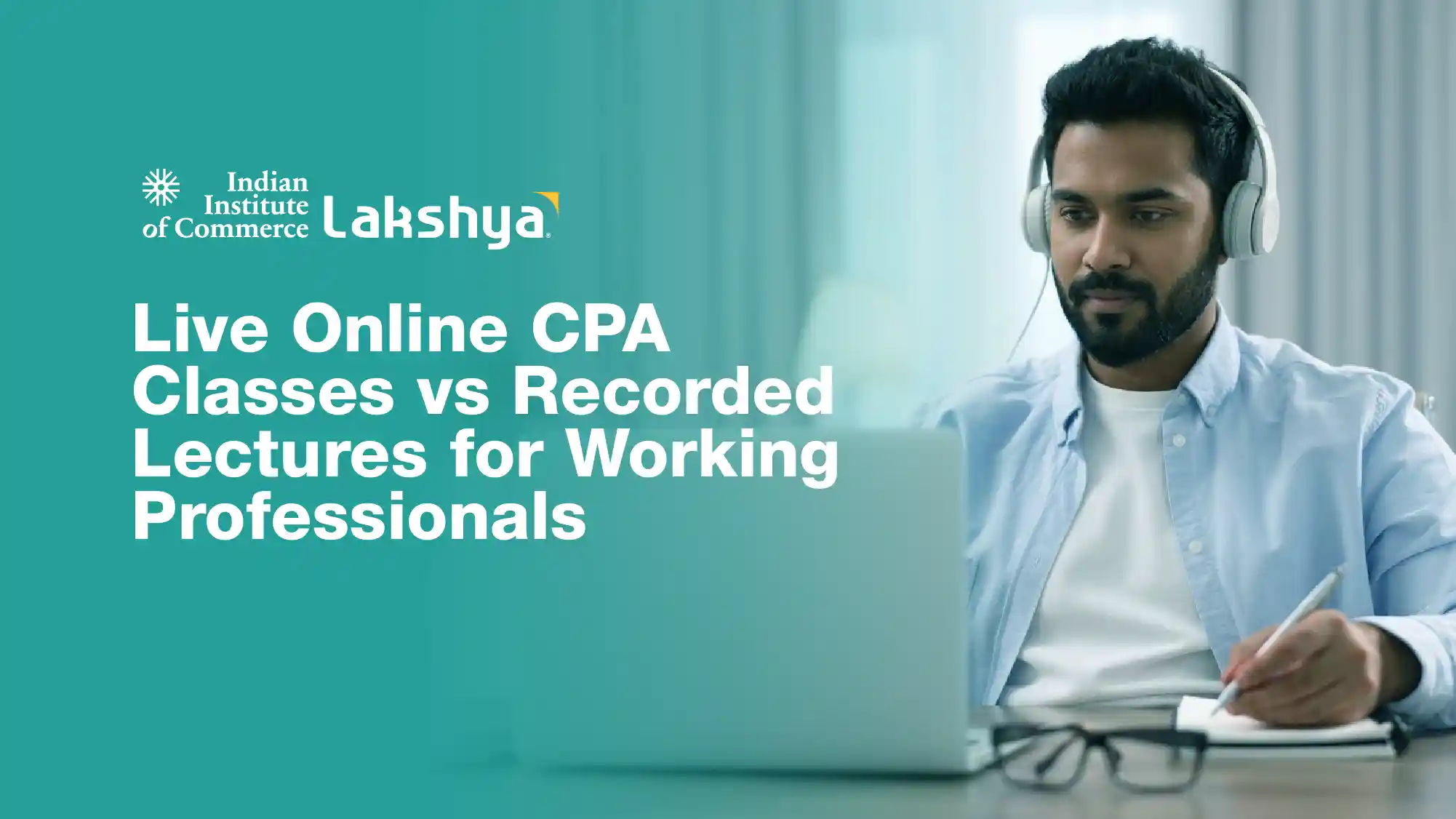
Choosing the right CPA online courses starts with understanding how you study best and how much time your work schedule allows. Live classes offer structure and direct interaction with faculty, while recorded lectures give you the flexibility to learn at your own pace. For working professionals, both can be useful, depending on the support and routine you need.
This guide compares CPA live classes and recorded CPA video lectures, covering their benefits, limitations and costs to help you choose a format that fits your working life. If you are new to the qualification, start with our US CPA course overview.
What Do CPA Online Courses Include?
A US CPA online course prepares you for the Uniform CPA Exam. Since January 2024, the exam has four sections of four hours each:
- Core sections (compulsory): Auditing and Attestation (AUD), Financial Accounting and Reporting (FAR), and Taxation and Regulation (REG)
- Discipline section (pick one): Business Analysis and Reporting (BAR), Information Systems and Controls (ISC), or Tax Compliance and Planning (TCP)
Once you pass your first section, most state boards now allow 30 months or more to pass the remaining three. Confirm the exact credit window with your chosen board. Discipline sections are offered in the first month of each quarter in 2026. For someone with a full-time job, these timelines matter as much as the teaching style.
Most CPA review classes, live or recorded, cover the same core elements:
- Concept lectures for every section
- Question banks with MCQs and task-based simulations
- Full-length mock exams
- Study notes or e-books
- Doubt support through chat, email or scheduled sessions
The real difference lies in how the teaching fits into your day.
Live CPA Classes vs Recorded Lectures at a Glance
|
Factor |
Live Online CPA Classes |
Recorded CPA Video Lectures |
|
Schedule |
Fixed slots, usually evenings or weekends |
Anytime, within your access period |
|
Doubt-solving |
Questions answered during class |
Forums, email or separate doubt sessions |
|
Pace |
Set by the batch |
Set by you |
|
Self-discipline needed |
Moderate |
High |
|
Interaction |
Faculty and peers in real time |
Mostly one-way |
|
Fees |
Usually higher |
Usually lower |
|
Best suited to |
Professionals who need structure |
Professionals with irregular shifts |
Neither format wins in every case. Your job pattern and learning style help determine which one works for you.
How CPA Live Classes Help Working Professionals
CPA live classes follow a fixed timetable, with faculty teaching in real time on a video platform. For many professionals, this structure helps them stay consistent enough to complete the syllabus.
Benefits of live online classes
- A fixed schedule builds a study habit, even after a tiring workday
- You can ask “why” the moment a concept stops making sense
- Faculty can link US GAAP topics to Ind AS, which helps if you work with Indian standards daily
- Batchmates keep you accountable, so you notice quickly when you fall behind
- Regular class tests show where you stand before you book an exam date
Limitations of live classes
- Class timings can clash with month-end close, audit fieldwork or US-shift work
- Missing three or four sessions in a row makes catching up difficult
- One pace for the whole batch can feel slow on familiar topics and rushed on difficult ones
- Live formats usually cost more
From what our faculty see each year, FAR is where working candidates often benefit from live teaching. Consolidations, leases and governmental accounting can be hard to absorb from a video after a nine-hour day, especially when you need an explanation before moving on.
When Recorded CPA Video Lectures Make More Sense
Recorded CPA video lectures give you full control over time and pace. You can watch a 40-minute session at 6 a.m. before work or split it across two lunch breaks.
Benefits of recorded lectures
- Study at any hour, which suits rotational and night shifts for US clients
- Pause, rewind and replay difficult topics as often as you need
- Move faster through areas you already handle at work, such as basic audit procedures
- Pay lower fees in most cases
- Revise quickly before the exam, provided your lecture access remains valid
Limitations of recorded lectures
- Without mentor check-ins, nobody may notice whether you studied this week
- Doubts can pile up while you wait for a reply
- Watching without solving questions creates a false sense of progress
- Study plans can stretch by months, and momentum fades
One pattern comes up again and again. A professional buys recorded CPA lectures, covers half of AUD in three weeks, and then quarter-end arrives. Two months later, they restart from chapter one. The content was fine. The routine was missing.
Which Format Suits Your Work Schedule?
Like most online courses for working professionals, a CPA programme works best when it fits your real week, not your ideal one. Start with your current job pattern.
Choose live CPA classes if you:
- Work regular day shifts with predictable evenings or weekends
- Have tried self-study before and found it hard to stay consistent
- Are new to US GAAP or US taxation
- Want to work towards completing all four sections on a fixed timeline
Choose recorded CPA lectures if you:
- Work rotating, night or US-time-zone shifts
- Travel often for audits or client visits
- Already have strong accounting and tax basics
- Can meet a weekly study target without reminders
Consider a hybrid plan if you:
- Have a schedule that changes from month to month
- Want live teaching for tough sections like FAR and REG, and recordings for revision
- Prefer regular mentor check-ins over daily fixed classes
Many CPA online coaching programmes now share recordings of live sessions. IIC Lakshya, for example, offers live online classes and weekend sessions alongside recorded video lectures and one-on-one mentoring. Whichever institute you consider, confirm which teaching formats and support services your plan includes before you enrol.
Understanding CPA Online Course Fees
CPA online course fees usually have two parts:
- Review course fee: What you pay the coaching provider for classes, study material, question banks and mocks
- US exam-related charges: Credential evaluation, application and section-wise exam fees, paid in US dollars and revised from time to time
What changes the review course fee:
- Live classes generally cost more than recorded-only plans because faculty time is involved
- Licensed content from global review providers adds to the price
- Mentoring, extra doubt sessions and mocks may be bundled or charged separately
- Access validity for recorded content differs between providers
Compare value, not just price. A cheaper course you abandon halfway can cost you more in lost time and repeat preparation than a slightly more expensive one you finish. Ask for a written fee breakdown, including exam and evaluation charges, before you pay.
Common Mistakes Professionals Make While Choosing
- Choosing on price alone without checking how doubts get answered
- Joining a live batch whose timing clashes with your busiest weeks
- Ignoring the credit window and starting sections without a plan for all four
- Watching lectures but skipping MCQs and simulations
- Not checking CPA login access to your learning platform before classes begin
- Skipping the eligibility check before paying for a CPA exam preparation course
The last point deserves attention. Indian graduates generally need a credential evaluation, and licensing rules differ by state. Several states now offer a licensure route based on a 120-credit bachelor’s degree plus two years of relevant experience, alongside passing the CPA Exam and meeting prescribed coursework and other requirements. This may suit some working professionals, but availability and effective dates vary.
Confirm the current rules with NASBA or your chosen state board, and read our guide on US CPA eligibility criteria in India before you commit.
Study Tips That Work With Any CPA Classes
- Block fixed weekly study slots and treat them like client meetings
- Solve MCQs right after each lecture instead of waiting for the chapter to end
- Attempt your toughest section, often FAR, while your energy is high
- Keep a doubt log and clear it every week
- Take at least two full-length mocks before each exam
- Share your exam dates with your manager early so leave planning is easier
For professionals studying steadily alongside their job, 12 to 18 months can be a useful planning range for completing the exams. Your workload, preparation needs and any retakes will affect that timeline. Our article on US CPA course duration explains how your pace changes it.
Also Read
- CPA Roles and Responsibilities
- Why Should You Do CPA? Complete Career Benefits Guide
- CPA Exam Format 2026: Sections, Question Types & Structure
- Importance of CPA Mock Exams
- Career Benefits of Doing CPA
Choosing the Right CPA Online Course for Your Career
Live classes give you structure, accountability and real-time doubt-solving. Recorded lectures give you flexibility, usually at a lower cost. A hybrid plan gives you a bit of both. The best CPA online courses for working professionals are the ones that match your actual workload and keep you moving through all four sections within the credit window.
What you learn can also help at work. US CPA knowledge applies directly in Big 4 firms, global capability centres and finance teams handling US GAAP reporting, audit or US tax.
If you are still unsure, a counselling session can help. At IIC Lakshya, you can discuss your work schedule, eligibility and preferred section order with academic mentors, then explore the live, recorded or hybrid options available for the US CPA programme. Go into that conversation with a realistic picture of your week and the support you need to keep studying.
Related Blogs