
How Lakshya is helping with CPA Coaching with Application and Credential-Evaluation Support?
Last Updated On -05 Nov 2026
Preparing for the US CPA begins with understanding both the exam and the steps needed to apply. For Indian students and working professionals, this means checking US CPA eligibility, getting academic qualifications evaluated and choosing a state board that suits their education and licensing goals.
The CPA application process can feel unfamiliar at first, but clear guidance makes it easier to plan. Alongside exam preparation, good CPA coaching helps you understand the documents, evaluation requirements and registration steps involved.
This guide explains how IIC Lakshya supports you through foreign credential evaluation, CPA exam registration in India and planning for licensing, so you can move forward with a clearer understanding of what comes next. If you are exploring the qualification, start with our US CPA course page.
What Is the CPA Application Process?
The CPA application process is the set of steps you follow to establish your eligibility and register for the Uniform CPA Examination. The exam is the same across the US, but the CPA application requirements are not. Each of the 55 US jurisdictions sets its own rules.
For Indian candidates, the usual order is:
- Choose a state board that fits your education and goals.
- Get your qualifications assessed by an approved evaluation agency.
- Submit your exam application and fees.
- Receive your Notice to Schedule (NTS).
- Register for international testing and book a Prometric centre in India.
- Pass all four sections within your credit window.
- Complete your state's licensing requirements.
Each step builds on the one before it, so getting the order right matters more than rushing through it.
US CPA Eligibility and CPA Education Requirements
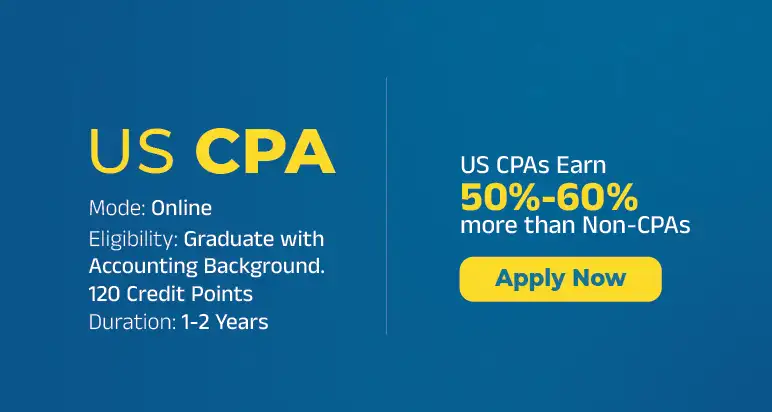
Most state boards ask for 120 semester credit hours to sit for the exam, often with minimum accounting and business credits. Licensure has traditionally required 150 credits.
That rule is changing. A growing number of states now offer an additional licensure route: 120 credits plus two years of experience, subject to their degree and coursework requirements. The 150-credit route stays open too, so the new path is an extra option, not a replacement. Check whether your chosen state's route is already in effect before planning around it.
|
Stage |
Typical requirement |
What it means for Indian students |
|
Sitting for the exam |
120 semester credits, with set accounting and business credits |
A three-year B.Com alone may fall short |
|
Licence (traditional route) |
150 credits + 1 year of experience |
B.Com with M.Com or other accepted additional education may help meet the requirement |
|
Licence (new route, selected states) |
120 credits + 2 years of experience |
Helpful for graduates who meet the education requirements and start working early |
A three-year Indian bachelor's degree may evaluate to around 90 US credits, though the outcome varies. Students often explore an M.Com, MBA, CA, CMA or another recognised qualification to close the gap. Acceptance of professional qualifications depends on the agency and board. NAAC accreditation may help with some evaluations, but nothing is automatic until the evaluation report confirms it.
Mentor tip: Finalise your study timeline only after you know your likely credits. Our guide to US CPA eligibility in India explains common education combinations.
How CPA Credential Evaluation Works?
US boards need Indian academic records assessed because grading systems, course names and degree lengths differ. A foreign credential evaluation translates your education into US credit hours and subject categories.
NASBA International Evaluation Services (NIES) serves more than 50 jurisdictions, and some states accept only NIES reports. Others accept additional evaluation agencies. Check your board's approved list before paying any agency; NACES membership alone does not establish board approval.
Evaluators usually check:
- Total credits across all your qualifications
- Accounting credits, such as auditing, taxation and cost accounting
- Business credits, such as economics, law and finance
- Recognition of your institution and the authenticity of each document
Official records usually must come directly from your university, not from you. This requirement can cause delays, so request official transcripts early and confirm the accepted delivery method.
CPA Application Documents You Will Need
Requirements differ by state and agency, but most Indian applicants prepare these CPA application documents:
- Degree certificates and semester-wise mark sheets
- Official transcripts, sent by the university in sealed envelopes or electronically
- Provisional certificates, where accepted, if your final degree is pending
- CA, CMA or CS mark sheets, if the agency and board will consider them
- A valid passport, with your name matching all other records
- Receipts for evaluation and application fees
Name mismatches are common. If your passport says “Mohammed” and your degree says “Mohd”, ask the agency what supporting evidence it accepts before applying. You may need an affidavit or a correction through your institution.
CPA Exam Registration and Scheduling in India
Once your application is approved, you receive a Notice to Schedule (NTS). It lists the sections you can book, and your state board determines how long it stays valid.
Indian candidates can take every section at Prometric centres in India. NASBA's international testing process works like this:
- Receive your NTS after your exam application is approved.
- Register for international testing in your NASBA account, section by section.
- Pay the India testing fee, currently $460 per section, on top of regular exam fees.
- Wait at least 24 hours.
- Book your date and centre through Prometric.
International fees are non-refundable, so register only for sections you can prepare for within your NTS validity period. Alabama, Idaho, North Carolina and the US Virgin Islands do not currently participate in international testing, so these jurisdictions will not work if you plan to test in India.
Exam Structure at a Glance
- Core sections: AUD, FAR and REG, available throughout the year
- Discipline section (choose one): BAR, ISC or TCP, offered in quarterly windows
- Format: 4 hours per section, with a passing score of 75
- Credit window: Commonly 30 months, though some states allow longer; confirm your board's rule and how it calculates the window
Core and Discipline sections follow different testing schedules, so check available dates before setting your study plan.
City-wise details are in our guide to Prometric CPA centres in India.
CPA Licensing Requirements After the Exam
Passing the exam does not make you a licensed CPA. Licensing is a separate step, and each state sets its own CPA licensing requirements. Common requirements include:
- 150 credits, or 120 credits under an available alternative route, with the required degree and coursework
- One or two years of relevant experience, verified according to the board's rules
- An ethics exam or course, in many states
- In some jurisdictions, residency, citizenship or US Social Security number conditions
That last point surprises many students. A state that accepts you for the exam may not suit your licence plans, so choose the board carefully at the start.
Common Mistakes Students Make
Many delays come from avoidable errors. Our mentors see these most often:
- Copying a friend's state choice. Your credits and goals may differ.
- Paying the wrong agency. A CPA credential evaluation your board does not accept has to be redone.
- Assuming a B.Com equals 120 credits. A three-year degree may need to be supplemented with an accepted qualification.
- Requesting transcripts late. University offices can slow down during exam and admission seasons.
- Booking sections too early. Non-refundable international fees make an unprepared attempt costly.
- Ignoring the credit window. Passed sections can expire if you do not clear the rest in time.
A short planning session at the start can help you avoid many of these problems.
How Our Mentors Support Your CPA Application?
Good CPA coaching covers both the exam and the paperwork behind it. At IIC Lakshya, academic counsellors guide students through the application while they attend their CPA review classes.
|
Support area |
What students get |
|
Profile check |
An early review of qualifications to estimate likely credits |
|
State selection |
Guidance on boards that fit your education, testing location and licence goals |
|
Evaluation support |
Help choosing the right agency and preparing a complete document set |
|
Application filing |
Step-by-step help with the board application and NTS |
|
Exam scheduling |
Guidance on international registration and Prometric booking |
|
Licensing roadmap |
A plan for experience, ethics and any remaining credits |
Students can join CPA exam classes in live online and weekend formats, use recorded lectures for revision, and book one-on-one CPA exam tutoring for tougher topics. Our CPA exam prep courses follow the current Core and Discipline structure.
We are also clear about the limits of this support. We cannot change a board's rules or promise a credit count, since only the agency and the board decide that. What we can do is help you avoid unnecessary delays and plan with accurate information.
Is the US CPA the Right Choice for You?
The CPA suits commerce graduates and early-career professionals aiming for US accounting, audit, tax or reporting roles. Big 4 firms, Global Capability Centres (GCCs) and multinational finance teams in India hire for these skills.
Benefits
- Four exam sections, which many candidates aim to finish in 12 to 18 months
- Testing available within India
- Demand for US GAAP, audit and tax skills
- Recognition across US jurisdictions and with global employers
Drawbacks to Weigh
- Costs in US dollars, including evaluation, exam and testing fees
- Credit gaps that may need an extra qualification
- A licence that depends on experience and state-specific steps
- A demanding exam that needs steady study alongside college or work
Salaries vary by city, employer and experience, so treat the CPA as a long-term career investment. When comparing CPA certification courses or CPA review courses, ask whether the provider also helps with evaluation and scheduling. Some CPA accounting courses focus only on the syllabus. Our article on US CPA course duration can help you plan a realistic timeline.
Also Read
- US CPA Course Duration
- Top Countries Hiring ACCA/CPA for Big 4 Jobs in 2026
- CPA Certification After Master’s: Requirements & Preparation
- CPA vs CMA USA: Salary, Eligibility, Fees & Career Scope
- Jobs After CPA
Planning Your CPA Application Process the Right Way
The CPA application process rewards early planning. Check your credits first, choose a state that fits both your exam and licence goals, and get your documents moving while you plan your studies. Once the paperwork is settled, you can give more attention to preparation.
Whether you prefer weekend CPA exam review classes or flexible CPA online exam courses, the right support makes the process easier to manage. If you are unsure where you stand, book a free counselling session with IIC Lakshya. Our mentors will review your profile and help you plan the next step.
Related Blogs