
Can You Take CMA USA Without Work Experience? A Kerala Fresher's Exam-to-Certification Roadmap
Last Updated On -24 Oct 2026
Every year, BCom and BBA students from Kochi, Thrissur, and Kozhikode bring the same worry to our counselling sessions. They want to start the US CMA, but they've never held a full-time job. Will that hold them back? It won't, US CMA work experience requirements let you write the exam first and complete your experience later. Many freshers don't know this, so they wait a year or two for no real reason.
Still, starting early is only half the story. You need two continuous years of the right kind of work before IMA awards your US CMA certification. Choose the wrong first job, and those two years may not count toward your credential.
This guide explains what IMA actually asks for, which entry-level roles qualify, and how a Kerala fresher can plan the full journey from registration to final certificate. You'll also see the mistakes we notice most often, so you can avoid them from day one. If you're new to the qualification, start with our CMA USA course details page.
Do I Need Work Experience for CMA US? The Quick Answer
No. You don't need any work experience to register for the CMA programme or sit for the exam. Here is how the timeline works in practice:
- You can write both Part 1 and Part 2 with zero work experience.
- IMA lets you complete two continuous years of qualifying experience before the exam or within seven years after passing it.
- You can register in your final year of college, since your degree proof is also due within seven years of passing.
- Once you pay the CMA entrance fee, you have three years to clear both parts.
- IMA awards the US CMA certification only after verifying both your degree and your experience.
So if your search history reads can I sit for the exam without experience for US CMA, the answer is yes. The experience requirement for CMA certification sits at the end of the process, not the start.
US CMA Work Experience Requirements Explained
IMA asks for two continuous years of professional experience in management accounting or financial management. "Continuous" means no long breaks, though you are free to change employers. These US CMA certification experience requirements apply uniformly to every candidate, wherever they studied.
- Full-time roles: Two continuous years in a qualifying position.
- Part-time roles: Jobs of 20 hours or more a week count at half value, so two part-time years equal one full-time year.
- Location: Experience from Kerala, Bengaluru, the Gulf, or anywhere else counts if the work itself qualifies.
- Verification: After passing both parts, you submit an official Experience Verification Form signed by your supervisor.
CMA USA Eligibility Criteria at a Glance
|
Requirement |
What IMA Asks For |
Deadline |
|
Membership |
Active IMA membership and CMA entrance fee |
Before exam registration |
|
Exam |
Pass Part 1 and Part 2 (360 out of 500 each) |
Within 3 years of paying the entrance fee |
|
Education |
Bachelor's degree in any discipline, or an IMA-approved professional certification |
Within 7 years of passing the exam |
|
Experience |
2 continuous years in management accounting or financial management |
Before the exam or within 7 years of passing |
CMA Work Experience Examples: What Counts and What Doesn't?
IMA looks for roles where you regularly make judgments using management accounting and financial management principles. Your daily work responsibilities matter far more than your job title.
Roles That Usually Qualify
- Financial or FP&A analyst preparing budgets and forecasts
- Cost accountant tracking product and process costs
- Management accountant preparing MIS reports and variance analysis
- Internal or external auditor in industry or a practising audit firm
- Treasury or credit analyst reviewing cash flow and credit risk
Roles That Usually Don't Qualify
- Internships, however long or well paid
- Trainee positions without direct accounting responsibilities
- Clerical work such as routine data entry or basic invoice posting
- Sales, marketing, HR, or engineering jobs that use accounting only occasionally
A tip from our counselling desk: before accepting your first offer, ask the hiring manager what a typical week looks like. If it's mostly entering invoices, the role may not support your CMA work experience requirement, even with "Finance Associate" in the title.
US CMA Eligibility for Indian Students Still Studying
CMA USA eligibility doesn't depend on your academic stream, so a BCom, BBA, BA, BSc, or BTech degree all work. IMA accepts degrees from an extensive list of international universities directly. If yours isn't on that list, you may need an independent credential evaluation.
Final-year students also get a cost advantage, since IMA's student pricing is significantly lower than professional rates:
- Student members: $225 CMA entrance fee and $407 exam fee per part
- Professional members: $300 CMA entrance fee and $545 exam fee per part
- Membership: Annual IMA membership is charged on top, again at a lower student rate
The exam has two parts, and you can take them in any order. Each part runs four hours, with 100 multiple-choice questions followed by two case-based questions. From the September/October 2026 window, these case-based questions have replaced the older essays. The syllabus and the passing score of 360 out of 500 stay the same.
Fees change from time to time, so confirm the latest figures on IMA's CMA certification page before you register.
Your Exam-to-Certification Roadmap as a Kerala Fresher
Here is how a typical commerce student can plan the full route. Timelines vary, but this sequence works reliably for most freshers we guide:
- Final year of graduation: Join IMA as a student member, pay the entrance fee, and start your three-year exam window.
- Next 12 to 18 months: Prepare for and clear Part 1 and Part 2, one testing window at a time.
- After graduation: Ask your university to send your degree transcripts to IMA.
- First qualifying job: Pick a role with real analysis or reporting work, and record your start date, designation, and duties.
- Two continuous years later: Submit your Experience Verification Form with your supervisor's signature.
- Certification: Once IMA approves everything, you can use the CMA designation and begin 30 hours of annual CPE, including 2 hours of ethics.
On this plan, a final-year starter can realistically hold the certificate three to four years later. That's often sooner than students who wait to "get some experience first" before they begin studying.
CMA USA Fresher Jobs in India: Where to Start
Kerala students don't always need to move far for qualifying roles. Shared services and global capability centres in Kochi's Infopark and Thiruvananthapuram's Technopark hire commerce graduates for finance work. Bengaluru, Chennai, and Hyderabad offer a larger pool, and many students target the Gulf after a year or two.
Common CMA USA job opportunities for freshers include:
- Junior financial or FP&A analyst
- Cost and management accounting associate
- Record-to-report (R2R) analyst handling month-end close and reporting
- Audit associate in a Big 4 or mid-size firm
- Business finance analyst supporting sales or operations teams
Keep salary expectations grounded. Starting pay depends on the city, the employer, and the skills you bring beyond the exam. IMA's salary surveys have consistently shown a pay premium for CMA holders, and the gap is often wider among younger professionals. From what we see in placements, freshers who pair the CMA with strong Excel, an ERP like SAP, and clear communication get better offers.
Our guide on CMA USA job opportunities covers roles and career growth in more detail.
Common Mistakes Freshers Make With the Experience Rule
- Counting an internship: Even a paid six-month internship won't count toward your two years.
- Choosing a job on salary alone: A better-paying clerical role can cost you two years of non-qualifying experience.
- Skipping the paperwork: Keep offer letters, relieving letters, and a short note of your duties for every role.
- Leaving long gaps between jobs: The requirement is continuous, so plan job switches carefully.
- Losing track of the seven-year window: Miss it, and your exam results lapse, which means writing the exam again.
- Using the title too early: Until IMA certifies you, write "Passed both parts of the CMA USA exam" on your CV, not "CMA."
- Waiting for experience before starting: This is the costliest mistake, because you lose time and often miss student pricing.
Should You Start Without Experience? Pros and Cons
Starting early suits most freshers, but it's worth weighing both sides honestly.
Why it works:
- You clear the exam while your study habits are still sharp.
- Your CV stands out in entry-level finance interviews.
- You can pick your first job with the experience rule in mind.
Where it gets harder:
- You carry "exam passed" status for two years before the certificate arrives.
- Fees are in US dollars, so exchange rates affect your budget.
- The exam alone won't land a job. Interview skills and practical tools still matter.
Choosing US CMA Course Support in Kerala
If you're comparing options for the best CMA USA institute in Kerala, look past the brochures and ask direct questions:
- Is the institute an official IMA learning partner?
- Does the faculty train students for the new case-based questions?
- Does placement support focus on roles that qualify for the experience rule?
- Can you speak with students who have already cleared both parts?
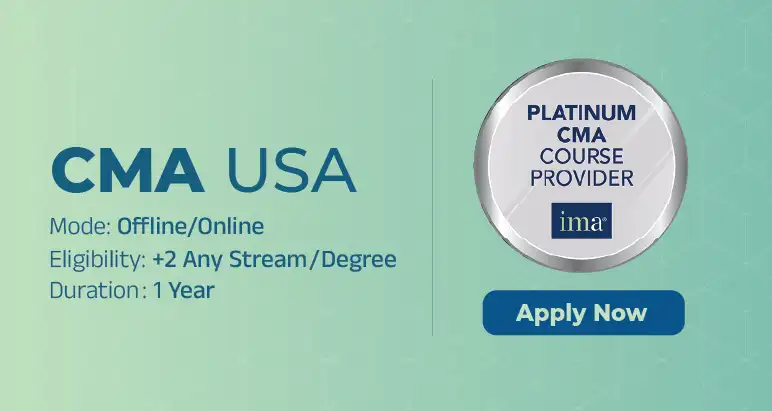
IIC Lakshya, an IMA Platinum Learning Partner, offers free career counselling for students who want to map out exam windows, budget, and first-job plans before joining a US CMA course.
Also Read
- The Four Stages of CMA USA: Registration, Exams, Experience and Certification
- Costing, Budgeting, Forecasting for CMA USA
- Cost Management in CMA USA
- When Do You Actually Become a Certified CMA USA if You Start in College?
- What Does CMA USA Part 1 and Part 2 Build in Practice?
Final Word on US CMA Work Experience Requirements
The US CMA work experience requirements are far friendlier to freshers than most students expect. You can register in your final year, clear both parts around graduation, and build two continuous years of qualifying experience within the seven-year window. The real decision is your first job, because that role decides whether your experience counts.
If you're unsure about your US CMA eligibility or which job offers will support your certification, book a free counselling session with an IIC Lakshya counsellor. One honest conversation can help you plan your exams, budget, and career path together.
Related Blogs