DipIFRS vs. CFA - Which Is Better for a Career in Finance and Investment Reporting?
Last Updated On -04 Aug 2026
By Sajith R S

If you are a commerce graduate or a young professional trying to decide between CFA and DipIFR, you have probably already read five different opinions online, and none of them agreed. That's normal. These two courses look similar on the surface, both are international, both are respected, and both open doors in finance but they actually prepare you for very different jobs.
One builds you into an investment analyst who reads markets and values companies. The other sharpens you into a reporting specialist who ensures financial statements follow global standards. Picking the wrong one because a senior 'said it's good' can cost you a year or two of misdirected effort. This article breaks down what CFA and DipIFR actually involve, who each course suits, and how the career outcomes and pay differ in the Indian job market.
What Is CFA and What Does It Cover?
CFA stands for Chartered Financial Analyst, a globally recognised charter awarded by the CFA Institute in the US. It's built for people who want to work in investment banking, equity research, portfolio management, or corporate finance. The Chartered Financial Analyst course goes deep into valuation, financial modelling, portfolio strategy, economics, and ethics.
It's not a reporting-focused qualification. Think of it as training for someone who decides where money should be invested, not someone who checks whether a balance sheet is compliant.
What Is DipIFR and Where Does It Fit In?
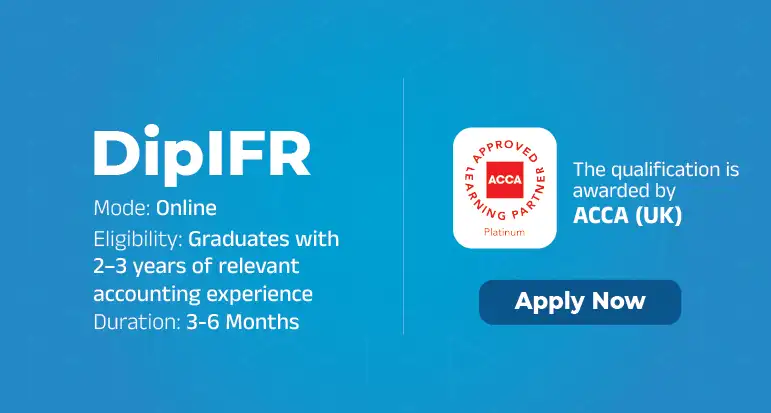
DipIFR (Diploma in International Financial Reporting) is offered by ACCA, and it exists for one clear purpose: teaching professionals how to prepare and interpret financial statements under IFRS, the accounting framework used across most of the world outside the US. ACCA DipIFR is popular among accountants, auditors, and finance managers who already work with numbers but need formal IFRS certification.
Companies with global operations, as well as Indian firms reporting to overseas parent companies, often look for this expertise. A DipIFRS course is short compared to CFA, and it's aimed at people already working in accounting rather than fresh graduates entering finance from scratch.
CFA vs DipIFR: Key Differences
Here's a side-by-side view that usually clears up most of the confusion:
|
Parameter |
CFA |
DipIFR |
|
Focus Area |
Investment analysis, portfolio management |
International financial reporting |
|
Ideal For |
Finance and commerce graduates, investment aspirants |
Accountants, auditors, working professionals |
|
Duration |
2.5–4 years (three levels) |
6 months to 1 year |
|
Governing Body |
CFA Institute |
ACCA |
|
Career Path |
Investment analyst, portfolio manager, research analyst |
Financial reporting manager, IFRS consultant |
|
Prior Experience Needed |
Not mandatory |
Helpful, ideally in accounting |
Notice the gap in scope. CFA is a career-defining qualification that you can build your finance career around. DipIFR is more of a specialised add-on that strengthens an accounting profile you already have.
Eligibility: Who Can Actually Apply?
For CFA Level I, you can apply with a bachelor's degree or as an undergraduate whose selected exam window is 23 months or fewer before graduation. CFA Institute also provides an eligibility route based on professional work experience or a combination of work experience and higher education.
DipIFR eligibility is different. Professional accountants or auditors qualified to national standards can apply. Other routes generally require relevant accounting experience combined with an eligible degree or ACCA's Certificate in International Financial Reporting. Candidates with three years of relevant accounting experience may also qualify.
The diploma assumes you already understand basic accounting concepts and moves quickly into IFRS specifics. A first-year BCom student attempting DipIFR without practical accounting exposure will genuinely struggle this isn't a course meant for beginners.
CFA Course Duration, Levels and Fees
The CFA course is structured across three levels Level I, Level II, and Level III and each requires roughly 300 hours of study. Most candidates take anywhere between two and a half and four years to clear all three, depending on their preparation and the number of attempts required. You can explore the CFA course duration in more detail before planning your study timeline.
On the CFA course fees front, candidates sitting for exams in 2026 should budget approximately USD 3,520 to USD 4,600 across all three levels, depending on whether they register during the early or standard registration period. DipIFR, by comparison, is a single exam that you can prepare for in six to twelve months, and it costs a fraction of what CFA does. If your priority is speed and affordability, DipIFR wins that particular round easily.
Career Scope: Where Each Course Takes You
A CFA qualification can open doors to roles such as investment analyst, equity research associate, portfolio manager, and risk analyst mostly in asset management firms, investment banks, hedge funds, and research houses. The investment analyst career path genuinely rewards CFA candidates because the curriculum maps closely to the work. Understanding the wider CFA scope and job opportunities can help you judge whether those roles match your interests.
DipIFR leads towards financial reporting manager, IFRS consultant, or technical accounting advisor roles, usually within Big Four firms, MNCs with overseas reporting requirements, or consulting practices. It's a strong credential, but the pool of roles asking specifically for DipIFR in India is smaller than the pool asking for CFA. That's worth knowing before you commit.
Salary Expectations in India
CFA salary in India varies considerably by role, city, employer, and experience. Freshers who have cleared CFA Level I or II and work as research or investment analysts typically start at around ₹5–8 LPA in tier-one cities. This can rise sharply often to ₹15–25 LPA or higher after completing all three levels and gaining three to five years of relevant experience.
DipIFR holders, especially those already qualified as CAs or ACCAs, may see a salary increase of ₹2–5 LPA over their existing accounting pay after adding the diploma, since it signals specialised reporting expertise. However, it isn't a course that transforms your salary on its own. DipIFR works best for working professionals as an addition to an existing accounting qualification, not a replacement for one.
Which One Should You Choose?
Honestly, if you're a fresh graduate or in the first two years of your career and trying to build a finance career from the ground up, CFA is the stronger bet. It's broader, more recognised across investment roles, and the CFA Institute's brand carries real weight with recruiters in asset management and research.
If you're already an accountant or auditor and want to specialise further in international financial reporting without switching fields entirely, DipIFR makes more sense. It's faster, cheaper, and directly useful in your current role.
There's no universal right answer here, and anyone claiming that one course is objectively better than the other is oversimplifying. It genuinely depends on whether you want to analyse investments or report on them.
Also Read
- Eligibility for IFRS Certification: Who Can Apply in 2026
- How ACCA Is Preparing DipIFRS Students for a Reporting World Driven by Technology?
- Implementing IFRS in India: Key Steps and Challenges
- Career Progression in Financial Reporting After DipIFRS
- Countries Using IFRS: Global Accounting Standards Explained
What to Consider Before You Decide?
Choosing between CFA and DipIFR isn't a decision to rush based on what's trending or what a friend picked. Look honestly at your academic background, your interests, numbers and markets versus numbers and compliance and where you see yourself in five years.
If you're still unsure, a conversation with academic mentors at IIC Lakshya, who have guided students through both CFA exam preparation and IFRS certification pathways, can help you map out your eligibility, course duration, and realistic career outcomes before you spend a rupee on registration.
Whichever path you pick, both CFA and DipIFR are respected internationally. The real risk isn't choosing the 'less popular' one; it's choosing a qualification that doesn't match what you actually want to do every day at work.
Related Blogs